Giannis Joins Miami Heat: A New Era Begins
The Miami Heat didn’t just tweak around the edges this offseason. They tore up the blueprint and dropped a two-time MVP at the center of it.
Giannis Antetokounmpo is a Heat player now, pried from Milwaukee in a blockbuster that instantly shifts the balance of power in the East. For a franchise that finished 43-39 last season and slipped out in the SoFi Play-In Tournament, this is not a gentle course correction. It’s a hard reset.
A Frontcourt Built to Bully the League
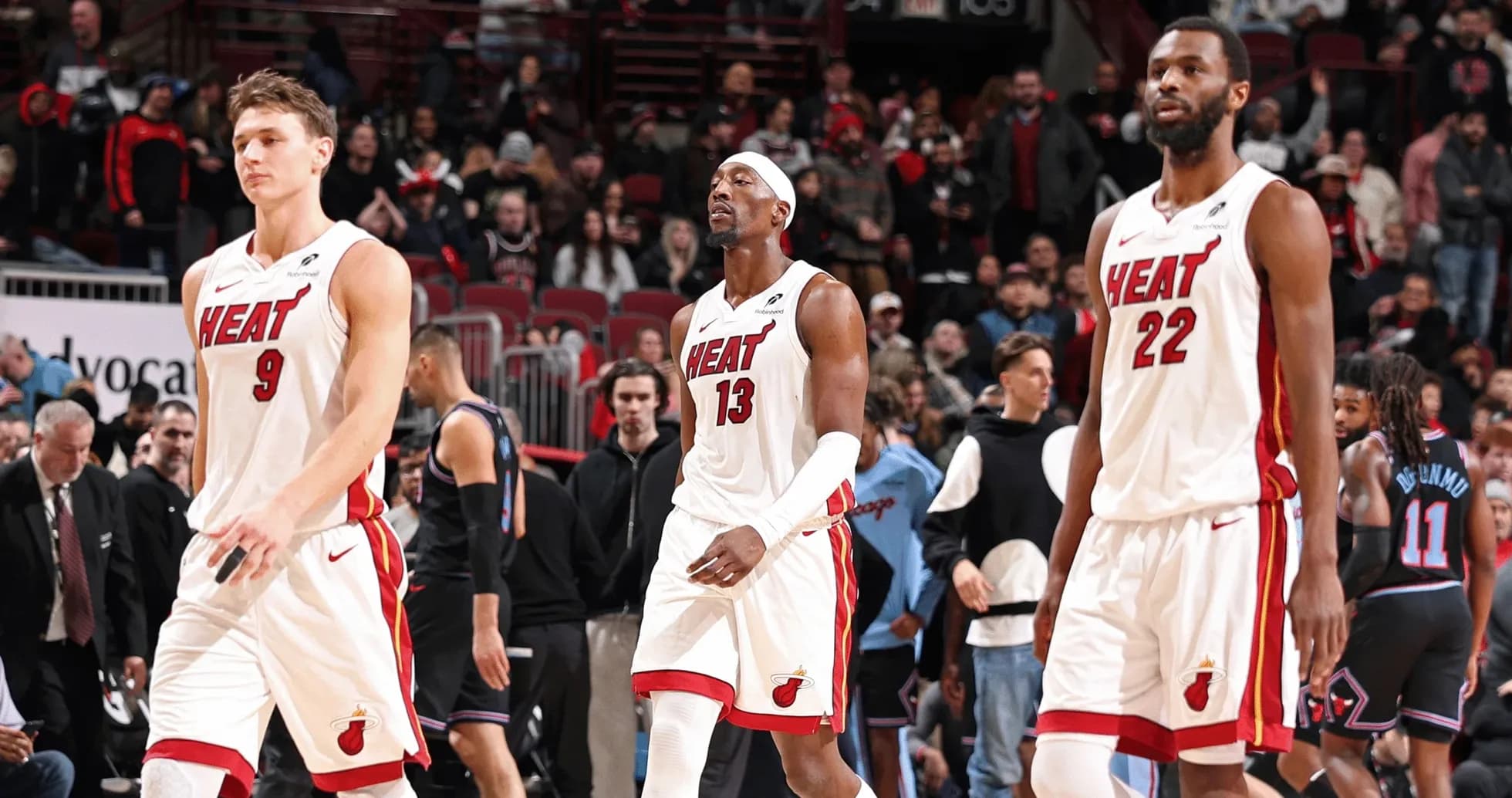
On paper, Erik Spoelstra now has a frontcourt that looks like something out of a video game. Giannis and Bam Adebayo, side by side, swallowing space, erasing drives, and igniting breaks.
Defensively, they can form the most intimidating wall in the league. Both protect the rim, both can switch, both can blow up actions before they even develop. Offensively, they bend the floor in a different way: downhill force, short-roll playmaking, dribble handoffs, and constant pressure at the rim.
Half-court spacing will be a talking point all season. Neither Giannis nor Adebayo is a reliable perimeter shooter. That’s real. But Miami didn’t ignore the math. They attacked it.
The Shooting Question, Answered in Bulk
The first question after the Giannis trade was obvious: where do the threes come from?
Miami’s response was to stack the roster with proven marksmen.
- Tim Hardaway Jr. arrives off a season with 224 made 3s at 40.7%.
- Klay Thompson, still a feared shooter, knocked down 202 triples at 38.3% and should find cleaner looks with defenses collapsing on Antetokounmpo and Adebayo.
- Andrew Wiggins quietly hit 138 threes at a blistering 41.4%.
- Bobby Portis drilled 135 and shot 45.6% from deep, one of just two players in the last five years to finish top five in 3-point percentage at least twice.
That’s not patchwork. That’s an arsenal.
Spoelstra now has the luxury of surrounding his two non-shooting stars with lineups that can space the floor at four spots. Giannis attacking downhill with Klay and Hardaway spotting up, Wiggins slashing, Portis popping out to the arc — these are the kinds of combinations that turn a transition terror into a relentless 48-minute problem.
And this is a veteran group. Antetokounmpo, Adebayo, Wiggins, Portis, Thompson, Hardaway — every one of them has at least nine NBA seasons behind him. This locker room comes loaded with Finals appearances, All-NBA nods, an MVP, a Sixth Man of the Year candidate, and the scars that come from long playoff runs.
The Fastest Team in the Room Just Got Faster
Miami already reinvented itself last season. A quarter of their possessions — 24.9% — came in transition, the highest rate in the 22 seasons Synergy has tracked play types. They turned stops into sprints and lived in the open floor.
Now they’ve added one of the deadliest transition players of his era.
Over the last five seasons, Antetokounmpo has averaged 1.21 points per transition possession. The rest of the league sits at 1.13. Give him a runway and it’s almost unfair. Give him that runway with shooters flaring to the corners and a big like Adebayo trailing, and it becomes a system that dares opponents to miss.
Yes, the half court will still be a grind at times. There will be nights when defenses sag, when jumpers don’t fall, when the paint feels crowded. But with Giannis and Bam anchoring the defense, Miami has every incentive to keep running, keep attacking, and keep forcing the game into the chaos where they thrive.
Pelle Larsson’s Fight for Space
On a roster full of decorated veterans, Pelle Larsson is the name that might sneak up on people.
The third-year guard carved out a meaningful step forward last season, averaging double figures (11.4 points per game) for the first time and shooting 49.6% from the field. He had 26 games with 15 or more points — not empty stats, but flashes of a player who can punish second units and keep the offense humming when the stars sit.
The gap is obvious: perimeter shooting. Larsson’s career 3-point mark sits at 32.8%. On this team, with this spacing puzzle, that number has to climb. If he nudges that percentage up while maintaining his efficiency inside the arc, Miami suddenly has another reliable weapon off the bench.
The signs are encouraging. In his last four FIBA World Cup qualifying games for Sweden, Larsson averaged 26 points, including 31 against Finland and 23 against France in late August. Different stage, different stakes, but the scoring punch is real. If he brings even part of that aggression into this season, he’ll force Spoelstra to find him minutes in a crowded rotation.
Spoelstra’s Lab
This is the kind of roster that keeps a coach awake at night — in the best way.
Training camp will revolve around one central project: building an ecosystem around Giannis that maximizes his strengths without muting Adebayo’s growth. Those two have overlapping zones on the floor, but also complementary traits. Bam is an elite short-roll passer and handoff hub. Giannis is a freight train in space and a cutter who can finish through anyone. The challenge is to create a system where they don’t just coexist, they amplify each other.
The likely starting group around them could feature Davion Mitchell, Thompson, and Wiggins. That’s a perimeter trio that brings on-ball defense, shooting, and secondary creation. Behind them, Spoelstra must sort through a bench that mixes youth and experience: Nikola Jović, Simone Fontecchio, Nick Richards, and the question of who backs up Mitchell at point guard. Does Miami solve it by committee? Or does an open roster spot turn into a specialist?
These are not problems. They’re options.
Dates That Will Define the Story
Some nights on the calendar already feel heavy.
- October 21, Timberwolves vs. Heat: Giannis’ official Miami debut. The first glimpse of this new version of the Heat in a game that counts.
- November 27, Heat vs. Knicks: A brutal stretch of games against 2026 playoff teams hits its peak with the defending champions in town. The only non-playoff opponent in that run? The Bucks — Giannis’ former team — in his first meeting against them.
- December 25, Heat vs. Celtics: Boston took its swing at Antetokounmpo and came up short. Instead, he’ll be wearing Miami colors on Christmas Day, in a matchup that will be measured for playoff implications before the ball even goes up.
- January 28, Heat vs. Bucks: The return to Milwaukee. Thirteen seasons, one title, and an entire franchise identity built around him. This one will be emotional, loud, and impossible to treat like just another regular-season game.
- April 8, 76ers vs. Heat: LeBron James and Philadelphia visit Miami in the third-to-last game of the regular season, with the Heat facing a player they also had interest in adding. By then, seeding and storylines could be colliding.
A Contender, or Something More?
Miami didn’t chase Giannis Antetokounmpo to be “dangerous” or “interesting.” They went all-in to win.
They have a frontcourt that can suffocate offenses, shooters who can tilt the floor, a coach who thrives on reinvention, and a rising guard in Pelle Larsson trying to elbow his way into the core.
The question isn’t whether the Heat are relevant again. That part is settled.
The question now is whether this experiment, with all its star power and risk, can carry them all the way back to a championship stage — and whether anyone in the East is truly ready for a Giannis-led Miami running at full speed.