Harry Kane's Ballon d'Or Candidacy: A Historic Challenge
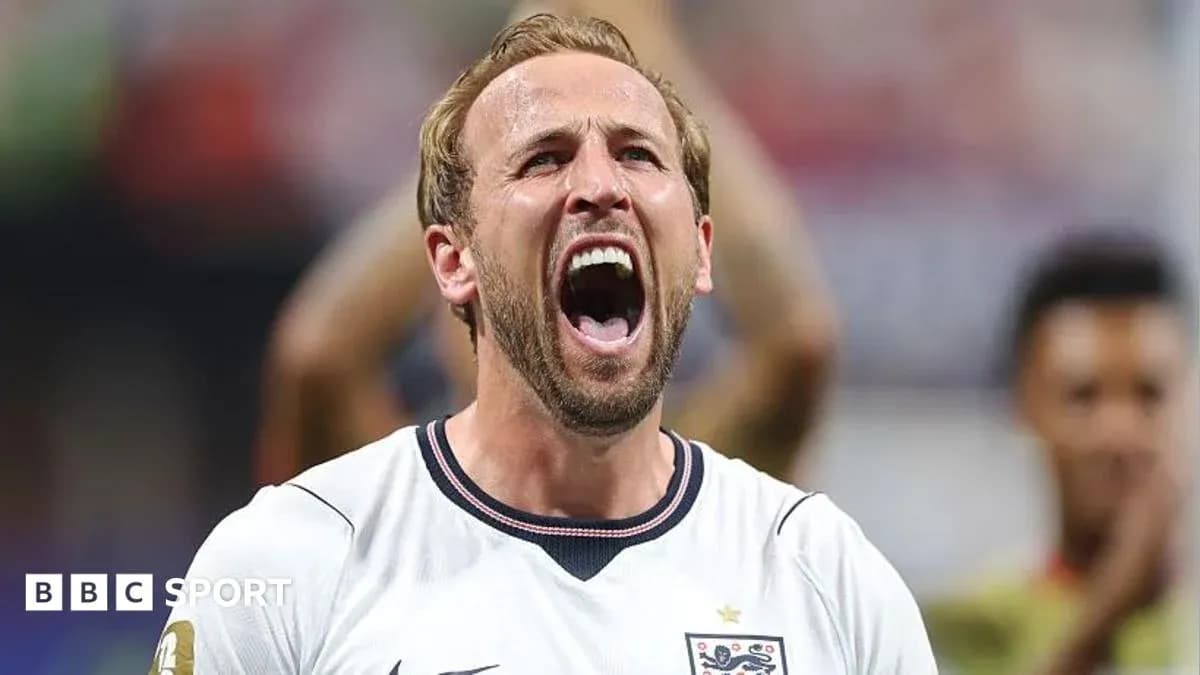
Harry Kane stands on the brink of the Ballon d'Or shortlist as the bookmakers' clear favourite, the numbers behind him as bold as the odds. Goals for club, goals for country, records toppled in a season that has felt like a personal crusade.
A prize shaped by the biggest stages
Since 1956, when Sir Stanley Matthews walked away with the very first Ballon d'Or, the award has bowed to football’s grandest arenas. World Cups, European Championships, the Champions League, Copa America – these are the stages that bend voters’ pens.
World Cup years, especially, have left a clear trail. The pattern is so strong it almost reads like a rulebook.
Raymond Kopa set the tone in 1958, winning the Ballon d'Or after driving France to the semi-finals on home soil. When France Football revisited every pre-1995 edition for the award’s 60th anniversary in 2016, the magazine effectively rewrote the honour roll. Pele, they concluded, would have taken the prize in 1958 for dragging Brazil to their first World Cup title at 17.
The same exercise handed retrospective glory to Garrincha in 1962, recognised as the true star of Brazil’s back-to-back World Cup wins, and again to Pele in 1970 after he inspired Brazil to their third crown. On the official list, Josef Masopust is the 1962 winner after captaining Czechoslovakia to the final. On the pitch, Brazil’s icons had already made their case.
By then, the trend was unmistakable. Lift the World Cup, lift the Ballon d'Or.
Bobby Charlton in 1966. Paolo Rossi in 1982. Lothar Matthaus in 1990. Zinedine Zidane in 1998. Ronaldo in 2002. Fabio Cannavaro in 2006. All world champions, all coronated as the planet’s best player in the same year.
Even when the trophy slipped away, deep World Cup runs still carried enormous weight. Johan Cruyff took the 1974 Ballon d'Or after leading the Netherlands to the final and redefining how a team could play. Luka Modric did the same in 2018, his artistry hauling Croatia to a first World Cup final and finally breaking the Messi–Ronaldo duopoly.
The South American shadow
For decades, though, the story was incomplete. The Ballon d'Or was closed to non-European players until 1995, a quirk that shut out some of the game’s greatest names at their peak.
France Football’s retrospective review tried to correct that. Its verdict was stark: had the award always been open to every nationality, every South American World Cup-winning side between 1958 and 1994 would have produced the Ballon d'Or winner.
Mario Kempes in 1978, Diego Maradona in 1986, Romario in 1994 – all, in the magazine’s eyes, would have worn the crown in their World Cup years. Kevin Keegan officially took the 1978 prize despite England not even reaching the tournament, another reminder of how the original rules shaped the roll of honour.
The message from that review was clear. The World Cup has not just influenced the Ballon d'Or. It has defined it.
Modern era: trophies as a ticket
The World Cup is not the only competition that sways voters now. Recent history suggests you almost need a major trophy as an entry pass.
Across the last 19 Ballon d'Or editions, only four winners have failed to lift either the Champions League, World Cup, European Championship or Copa America in the year they were crowned.
Those four names underline just how freakish Lionel Messi and Cristiano Ronaldo have been.
Messi took the award in 2010 despite Argentina falling in the World Cup quarter-finals. He did it again in 2012 and 2019 without a major international or continental trophy in his hands, his individual brilliance bending the usual logic of the vote.
Ronaldo did something similar in 2013. Portugal went no further than the World Cup play-offs, but his season with Real Madrid – the volume of goals, the relentless impact – forced voters to look past the absence of silverware.
The flip side is brutal. Wesley Sneijder’s treble with Inter Milan and run to the 2010 World Cup final was not enough. Franck Ribery’s pivotal role in Bayern Munich’s 2013 treble fell short. Mohamed Salah’s record-breaking 2017-18 campaign with Liverpool could not topple the Messi–Ronaldo narrative either.
Individual excellence matters. It just usually needs a trophy to lean on.
Kane against the weight of history
That is the backdrop to Kane’s candidacy. His season belongs in the modern scoring pantheon, a blur of ruthless finishing and consistency. Few players have entered a Ballon d'Or race with stronger personal statistics.
But the familiar question returns: will goals be enough without the game’s biggest prizes?
Standing opposite him is a cast built on medals and moments.
Rodri looks like the most serious rival. The midfielder anchored Spain’s latest World Cup triumph, dictating games with a calm authority and walking away with the Golden Ball as the tournament’s best player. His year has the one thing Kane lacks – the ultimate international trophy.
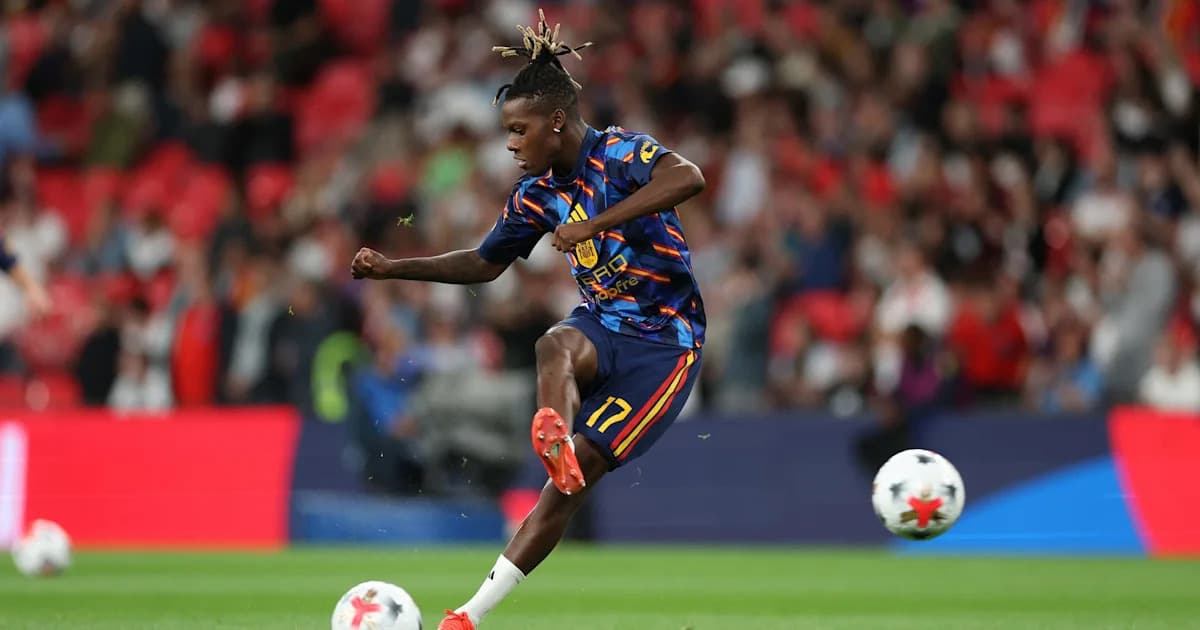
Lamine Yamal’s story is different but just as eye-catching. A World Cup winner’s medal as a teenager, a key role in Barcelona’s return to the top of La Liga, and a season that felt like the start of something generational. Pau Cubarsi, his young team-mate, took the Fifa Young Player Award after a string of standout displays, underlining how deep that Spanish talent pool runs.
Then come the familiar giants.
Kylian Mbappe finished the World Cup as top scorer with 10 goals, a haul that would define most careers on its own. He also claimed the Champions League Golden Boot and finished as La Liga’s leading scorer. Yet France did not reach the final, and Real Madrid ended the season without a major trophy. The numbers scream for recognition; the honours list whispers caution.
Messi, at 39, still refuses to fade into the background. He captained Argentina to a second successive World Cup final and scored eight goals at the tournament, another chapter in a career that already stretches the imagination of what longevity at the top looks like.
A rare English shot at gold
If Kane does break through, the achievement will echo beyond his own story.
He would become only the fifth Englishman to win the Ballon d'Or, joining Matthews, Charlton, Keegan and Michael Owen. For a football nation that still sees itself as a superpower, that list is strikingly short.
He would also be the first player representing a Bundesliga club to claim the award since Matthias Sammer in 1996, a nod to the scale of what he has done in Germany and how rarely that league supplies the world’s officially anointed best.
History says the odds are against him. The pattern points to the World Cup winners, to the players with medals around their necks on the biggest nights.
Yet history has never seen this exact version of Kane – a striker at the peak of his powers, carrying one of the most prolific seasons of the modern era into a vote that still wrestles with the balance between team glory and individual greatness.
Now it falls to the international jury, one journalist from each of the top 100 men’s football nations, to decide what matters more in 2024: the cold weight of trophies, or the hot, relentless certainty of a striker who simply could not stop scoring.
If Kane’s name is read out as the winner, it will not just be a personal coronation. It will be a statement about what this era values most.