The Hawks' New Era: Post-Trae Young Transformation
The Atlanta Hawks didn’t trade Trae Young for draft picks or a blue-chip prospect. They traded him for clarity.
They enter this season not as a star-centric, defensively leaky curiosity, but as one of the East’s deepest, nastiest perimeter units — and a team that quietly turned into a problem after the All-Star break.
Last year: 46-36, sixth in the East, out in the first round. That’s the dry version. The reality: they had the eventual champion New York Knicks wobbling at 2-1 in that series and couldn’t finish the job. That sting is all over this roster.
A New Identity, Not a Rebuild
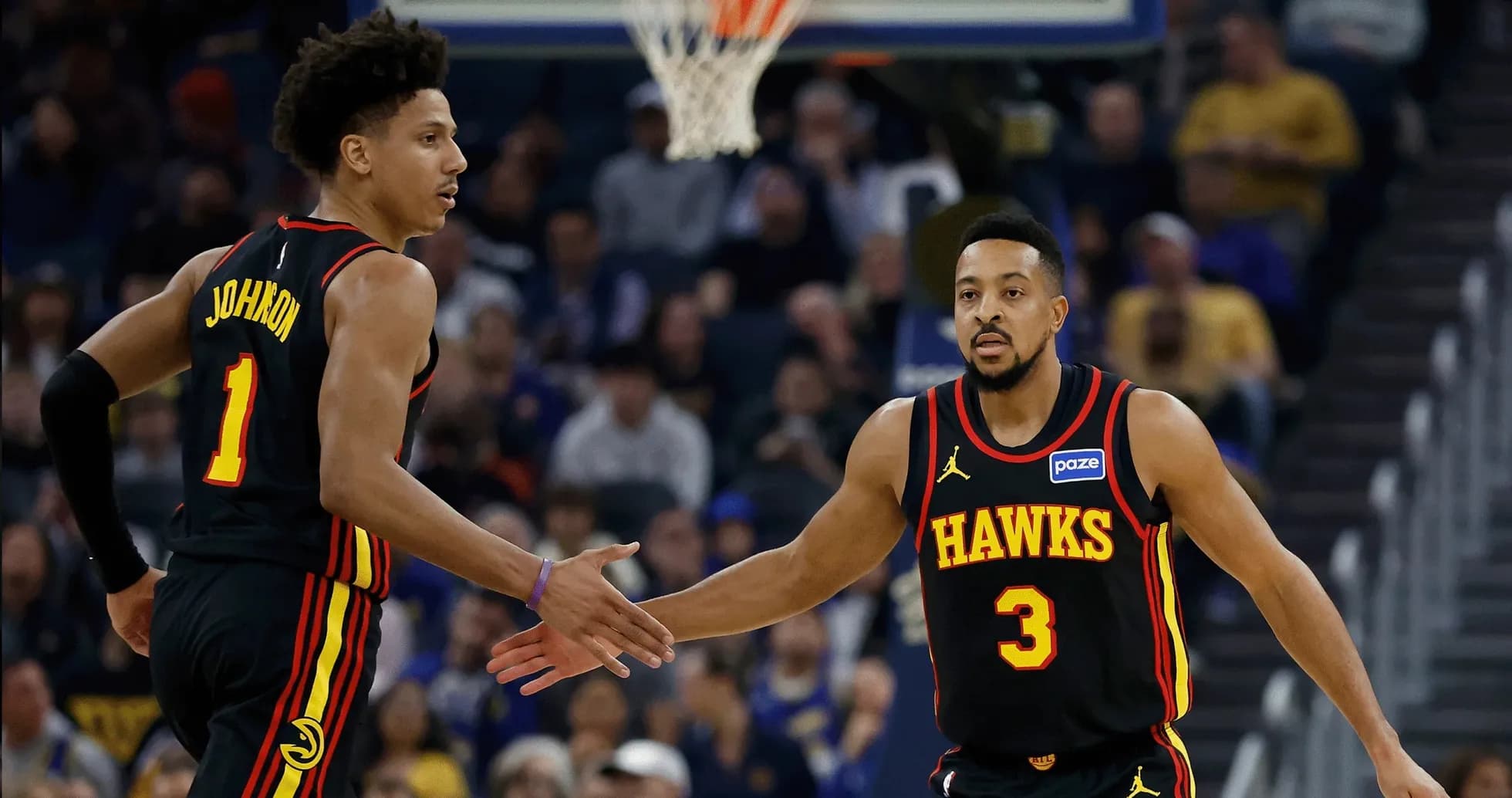
The headline move was Young out, CJ McCollum in. On paper, that’s a short-term play. On the floor, it changed everything.
With McCollum in the lineup, the Hawks went 27-14, climbing from ninth to sixth in the East over the final two months. Their net rating after the break? Plus-9.7 per 100 possessions, fourth-best in the league. Before the break, they sat at minus-1.3. An 11.0-point swing — the biggest post-break jump any team has managed in the last 27 years.
Soft schedule or not, that’s not a blip. That’s a team figuring out who it is.
Quin Snyder has leaned hard into a defense-first perimeter group that hunts turnovers and turns them into threes. He wants his team firing up close to 40 attempts from deep a night. When it works, the Hawks don’t just score; they avalanche.
The Core: Star Power Without the Drama
Jalen Johnson is no longer a “nice young piece.” He’s the franchise axis.
Last season he crashed through the ceiling with his first All-Star and All-NBA nods, averaging 22.5 points, 10.3 rebounds, 7.9 assists and 1.2 steals. Those are stat lines that usually come attached to MVP conversations, not quiet ascents. Johnson controls games now — on the glass, as a playmaker, as a mismatch nightmare.
Beside him, Nickeil Alexander-Walker arrived as a breakout story and left as the league’s Most Improved Player. His numbers — 20.8 points, 3.7 assists, 3.4 rebounds per game — came with elite efficiency: 45.9% from the field, 39.9% from three, 90.2% at the line. The Hawks now have two perimeter creators who can punish switches and live at all three levels.
McCollum, the veteran stabilizer, chipped in 18.7 points per game last season. He doesn’t need to dominate the ball, but he still tilts defenses and closes games. Put it together, and Atlanta can roll out three players who live around the 20-point mark without sacrificing structure or spacing.
In the middle, Onyeka Okongwu continues to grow into a modern big: 15.2 points, 7.6 rebounds, 3.1 assists. He screens, rolls, passes, and covers ground defensively in a way that lets Snyder crank up the pressure on the perimeter.
If Snyder opens the season with a starting five of McCollum, Alexander-Walker, Dyson Daniels, Johnson and Okongwu, he gets length, playmaking and shooting at four spots, with a mobile anchor in the paint. He also gets the luxury most coaches crave and few actually have: real options behind them.
Depth With Teeth
Look at the bench and it’s not just “depth.” It’s matchup ammo.
Luguentz Dort and Aaron Wiggins arrive as battle-tested wings. Dort brings the bruising, chest-to-chest defense every contender needs when the schedule says “Jalen Brunson” or “Tyrese Maxey.” Wiggins, though, might be the one who changes the math.
He’s the breakout candidate in this group, and not by accident. Wiggins played meaningful minutes on Oklahoma City’s 2025 title team and their 2026 Western Conference Finals run, but he never cleared 24.2 minutes per game in any of his five seasons there. Only once did he average double figures in scoring — 12.0 points in 2024-25.
The efficiency has always been there: 48.7% from the field, 38% from three for his career. The opportunity hasn’t. Atlanta expects that to change.
On a Hawks team that already shot the three well but craved cleaner efficiency, Wiggins slots in as a low-maintenance scorer who doesn’t hijack possessions. Give him a real role, and he could be the kind of bench wing who quietly swings games in March and loudly swings a playoff series in May.
Behind them, Jock Landale, Zuby Ejiofor, Kingston Flemings, Asa Newell, Buddy Hield, Corey Kispert and Ryan Nembhard give Snyder a toolbox instead of a bench. Need more shooting? Hield and Kispert. More size and energy? Landale, Ejiofor, Newell. Another ball-handler? Nembhard. More defense and physicality? Dort, Daniels, Wiggins.
This is what a deep, playoff-minded roster looks like: not 10 identical rotation players, but 10 different answers to different problems.
The Numbers Say “Contender in Waiting”
For all the optimism, there’s still work to do.
The Hawks finished last season 14th in offensive efficiency and 10th in defensive efficiency. Respectable on both ends, elite on neither. Given the shooting and playmaking on the roster, Snyder will expect that offensive ranking to climb.
The defensive foundation is already there. Daniels, Alexander-Walker and Dort can choke off dribble penetration. Okongwu can erase mistakes. Johnson’s length and anticipation let him blow up actions as a roaming help defender. When they’re locked in, this group looks like a team built to bother stars for seven straight games.
And there’s that lingering fact: they had the champs on the ropes.
Atlanta led New York 1-0 and 2-1 in that first-round series. The Knicks did not look like a team about to storm through the East. Then the Hawks faltered, New York adjusted, and the rest of the postseason turned into a coronation. Atlanta still finished with more playoff wins against the Knicks (two) than the champions’ other three opponents combined (one).
You don’t erase that from the locker room whiteboard. You circle it.
Snyder’s Puzzle: Who Starts, Who Finishes?
The preseason won’t be a casual tune-up for Quin Snyder. It’s an audition.
Last year, the lineup of McCollum, Alexander-Walker, Daniels, Johnson and Okongwu went 20-10 with a monstrous plus-20.3 net rating when on the floor together. That’s the kind of number that usually locks in a starting group.
But that group didn’t have Dort or Wiggins in the mix. Now the question isn’t just who starts. It’s who pairs best with Johnson and McCollum, who can handle coming off the bench, and which combinations carry over when the game slows to a crawl in the fourth quarter.
The lottery pick, Kingston Flemings, will be under the microscope in preseason. How quickly he learns from McCollum, how comfortable he looks attacking NBA length, how he holds up defensively — all of it will shape his role. Atlanta doesn’t need him to save the franchise. They just need him to add another layer to a rotation that already runs deep.
Behind Johnson, the backup power forward spot is up for grabs. Mouhamed Gueye, Asa Newell and Ejiofor are locked in a three-way battle. Whoever emerges gives Snyder another body to keep Johnson fresh without sacrificing too much versatility.
Dates That Will Define Them
- Oct. 21: Hawks vs. Magic. The Southeast Division is crowded, with at least four teams seeing themselves as playoff locks. Last season, the top four in the division were separated by just three games. This one pits the teams that finished 1-2 in the Southeast, a measuring stick right out of the gate.
- Nov. 29: Hawks vs. Knicks. The rematch. Atlanta had New York down 1-0 and 2-1 in that 2026 first-round series before dropping three straight. The Knicks barely stumbled again on their way to the title. The Hawks won’t treat this like just another night on the schedule.
- Feb. 1: Wizards vs. Hawks. Trae Young’s first game back in Atlanta since the trade. The emotions will be loud, the storylines louder, but for the Hawks, it’s also a test of how firmly they’ve embraced this new identity.
- Feb. 8: Heat vs. Hawks. A likely battle for the top of the division, landing just days before the Feb. 11 trade deadline. By then, we’ll know whether this roster stands pat or becomes a buyer looking to push in more chips.
- April 4: Hawks vs. 76ers. Eighth road game in an 11-game stretch, against a star-studded Philadelphia team, with the regular season winding down. If seeding is tight — and it usually is — this one could carry tiebreaker and momentum implications.
How Far Can This Go?
The Hawks are no longer the Trae Young show. They’re not a rebuild either. They’re something more dangerous: a deep, defensive-minded team that already tasted how close it can get.
They own a rising All-NBA star in Jalen Johnson, a Most Improved guard in Nickeil Alexander-Walker, a proven closer in CJ McCollum, and a bench full of role players who know exactly what wins in May.
They’ve already proven they can transform over half a season. The question now is whether they can sustain that level — or push it higher — for six months, and then hold their nerve when the lights get brighter and the Knicks, Heat, or 76ers are standing in front of them again.
If last spring was the warning shot, is this the year Atlanta forces the East to take them seriously?