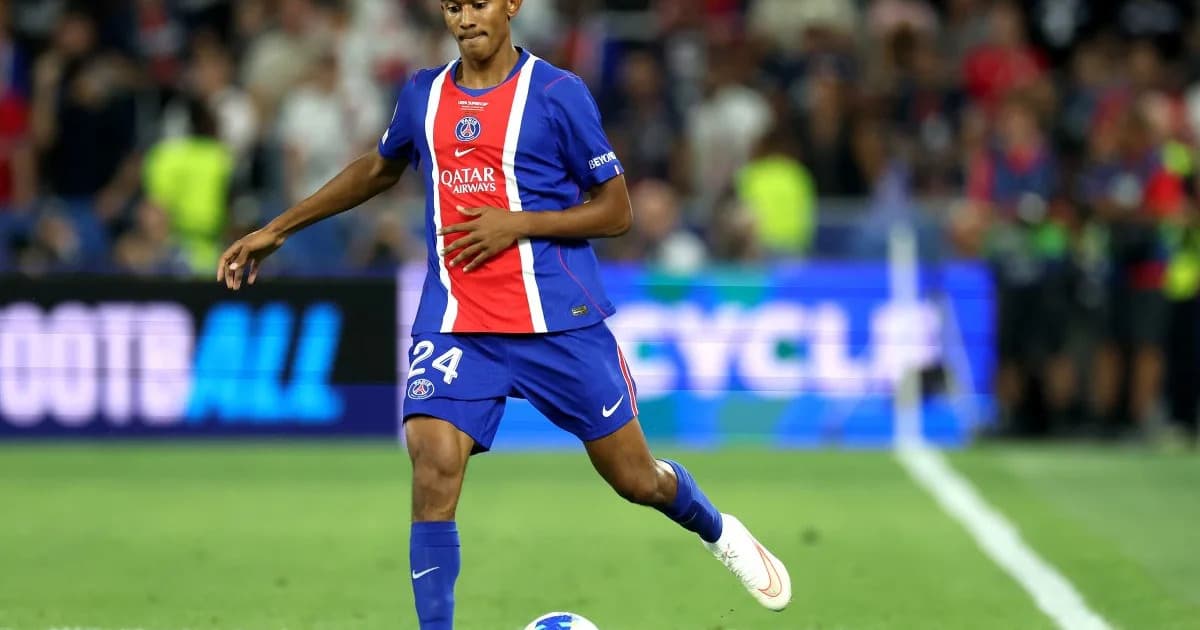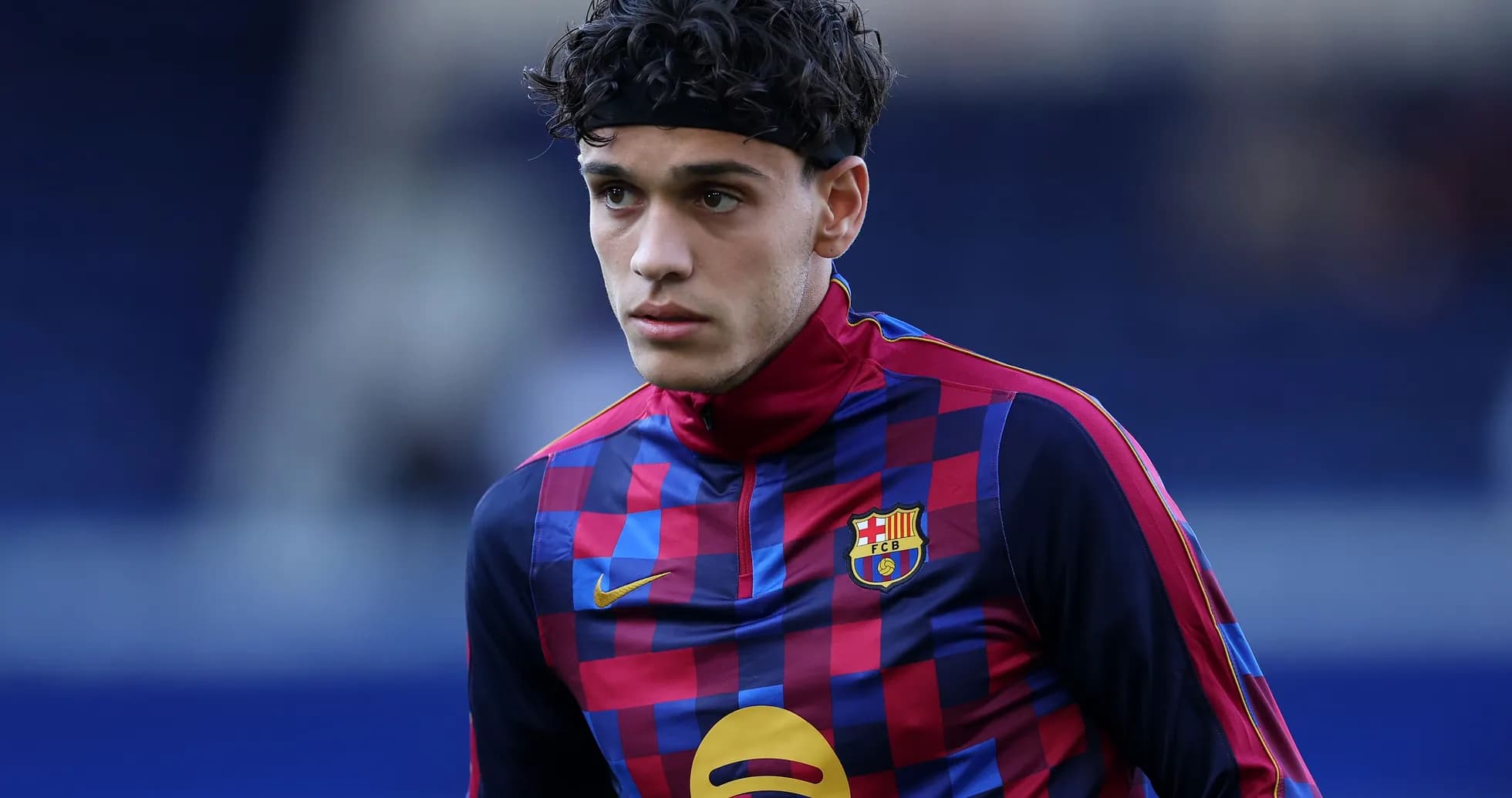
Hector Fort's Move to Real Sociedad: A New Chapter
Hector Fort walks away from Barcelona not with a bang, but with the quiet thud of a door closing on 13 years of his life.
The right-back, who joined La Masia at seven and grew up in the shadow of the Camp Nou, has completed an €8.5 million move to Real Sociedad, three days before the transfer window shuts. For once, he did not have to live through the chaos of deadline day. Last year, his loan to Elche was only rubber-stamped a few hours before the window closed. This time, the clock stopped ticking a little earlier.
Barcelona had already pushed him to the margins in recent days, asking him to stay away from first-team training so as not to jeopardise the deal. For a boy from Les Corts, raised in blaugrana, that will have stung. He leaves with a heavy heart, but also with a simple sporting truth: under Hansi Flick, his path had vanished.
The German coach spoke warmly about him, publicly underlining his potential. Borussia Dortmund had tracked him for a long time and saw him as a solution at right-back. They hesitated, Sociedad acted. “Hector is a talented player. He is very quick and also has great technical quality. I believe the past season at Elche was very valuable for him,” Flick said. The endorsement was genuine. The opportunity at Barça was not.
A La Masia graduate who never quite broke through
Fort’s Barcelona story mirrors that of many La Masia hopefuls: a glimpse of the stage, a taste of the lights, but no permanent place in the cast.
He made his professional debut in December of the 2023/24 season under Xavi Hernández, part of the same wave that carried Lamine Yamal, Pau Cubarsí and Fermín López into the senior side. While those three surged into the spotlight, Fort’s progress was steadier, more fragile.
By the end of that campaign he had 10 appearances, six of them starts. When Flick arrived for the following season, Fort’s role grew in volume rather than status. His appearances doubled, he became a reliable backup, averaging 32 minutes per game and starting five times. Useful, trusted, but not untouchable.
The detail that lingers: his last 90-minute outing came on 3 May 2025, in a 2-1 away win at Valladolid. More than 15 months without completing a full match. Sociedad are buying talent, education and versatility. They are not buying rhythm.
Across 2024/25, Fort logged 638 minutes for Barça. The season before, on loan at Elche, he played 623. Two years, roughly 14 full games. It is a foundation, not a finished product.
Elche: promise, pain and a brutal twist
To understand why Real Sociedad are willing to bet on him, you have to zoom in on his spell at Elche.
The start was chaotic. Fort arrived on deadline day, barely had time to unpack, then three games into his loan he suffered a muscle injury that sidelined him for six weeks. Just as he was trying to prove he belonged, his body said no.
When he returned, Elche had already used his departure from Barcelona to register Roony Bardghji in La Liga. The pressure on Fort to justify that decision was real. He responded with his best football yet.
Eder Sarabia used him as a right wing-back in a back three, and the role suited him. He did not just hug the touchline; he stepped inside, found pockets, linked play. By December he was no longer just a loanee filling a gap. He was a weapon.
That month brought his standout run. A 117th-minute goal in the Copa del Rey sent Elche into the last 32. Four days later, he delivered two assists in a 3-0 win over Girona. When he walked off at the Estadio Manuel Martínez Valero, the crowd rose to applaud him. Sarabia did not hold back either: “We have managed to tease a very high level of performance out of him. We are very satisfied because he is playing exceptionally well.”
Then, in one sickening moment, everything collapsed.
In Elche’s final match of 2025, Fort produced the kind of goal that defines a young player’s season: a stunning solo run, a sharp finish, 1-0 up against Rayo Vallecano after six minutes. During the celebration, he collided with Nobel Mendy, crashed to the turf and dislocated his left shoulder.
Barcelona’s medical team operated on him two days before New Year’s Eve. He did not return for four months. Fifteen games went by without him; Elche, fighting relegation, won just two.
When he finally came back to the starting XI at the end of April, he described the injury as a “cold shower”. “They were long months. In the end, things happen when you least expect them or when you are just feeling in top form. I had to accept the situation as quickly as possible,” he said. A season that had promised lift-off turned into a lesson in patience and resilience.
By the end, Elche stayed up – just. Fort finished with 17 appearances, averaging 36 minutes. From only eight starts, he produced five goal involvements. The numbers do not scream superstar, but they whisper something more important: impact.
Dortmund miss out, La Real pounce
For Borussia Dortmund, Fort would have been more than a project. He was a solution.
Yan Couto’s loan ended with his move to Como 1907, leaving a gap at right-back. Giannis Konstantelias, signed to add creativity and thrust, then suffered a serious injury. The squad suddenly looked thin on that side of the pitch. Fort, with his engine and intelligence, fit the profile: a clear challenger, young enough to grow, good enough to contribute.
He would have needed time to adjust to the Bundesliga’s pace and physicality, to the constant transitions and aggressive pressing. The step is demanding. In Spain, and especially in San Sebastián, the landing should be softer, the adaptation more natural.
Real Sociedad, juggling domestic duties and European commitments, needed a right-back who could offer more than just defensive cover. With Álvaro Odriozola out long-term with a cruciate ligament tear, the position had become a structural problem. Fort turns it into an opportunity.
What kind of player are Real Sociedad getting?
La Real are not signing a specialist with one devastating strength. They are signing a modern full-back built on balance.
Fort is technically polished, a product of La Masia’s obsession with the ball. Under Sarabia at Elche, in a possession-heavy system, he did far more than overlap and cross. He drifted into the half-spaces, helped progress play, connected midfield and attack. His first touch is secure, his passing reliable, his reading of the game sharp.
He can play on either flank, another reason he appeals to a coach who values tactical flexibility. With three competitions to navigate, that versatility matters.
Defensively, he is competent but not yet imposing. This is where his next leap must come. In direct duels he still needs to be nastier, more aggressive, more stubborn against quicker wingers. His crossing, too, can sharpen. At Dortmund, he might have picked up a few tricks from last season’s assist king Julian Ryerson. That particular lesson will now be learned elsewhere.
What he already has is a strong physical base, a willingness to run, and the courage to take responsibility on the ball. The raw materials are there. The ceiling depends on how quickly he can harden the edges of his game.
A new chapter, and a potential regret
For Real Sociedad, this is a smart, targeted signing: a young, tactically intelligent full-back with top-level schooling and something to prove. For Fort, it is a chance to finally move from the periphery to the centre of a project, in his home country, in a team that values the ball as much as he does.
Barcelona close the book on a boy who never quite became their man. Dortmund move on, forced to look elsewhere before the deadline slams shut.
If Fort reproduces in blue and white what he showed in flashes at Elche – the surging runs, the calm in possession, the courage in big moments – one question will hang in the air in Germany and Catalonia alike:
Did they let the right-back of the next decade slip through their fingers?