Assessing the Severity of Jannik Sinner’s Knee Injury
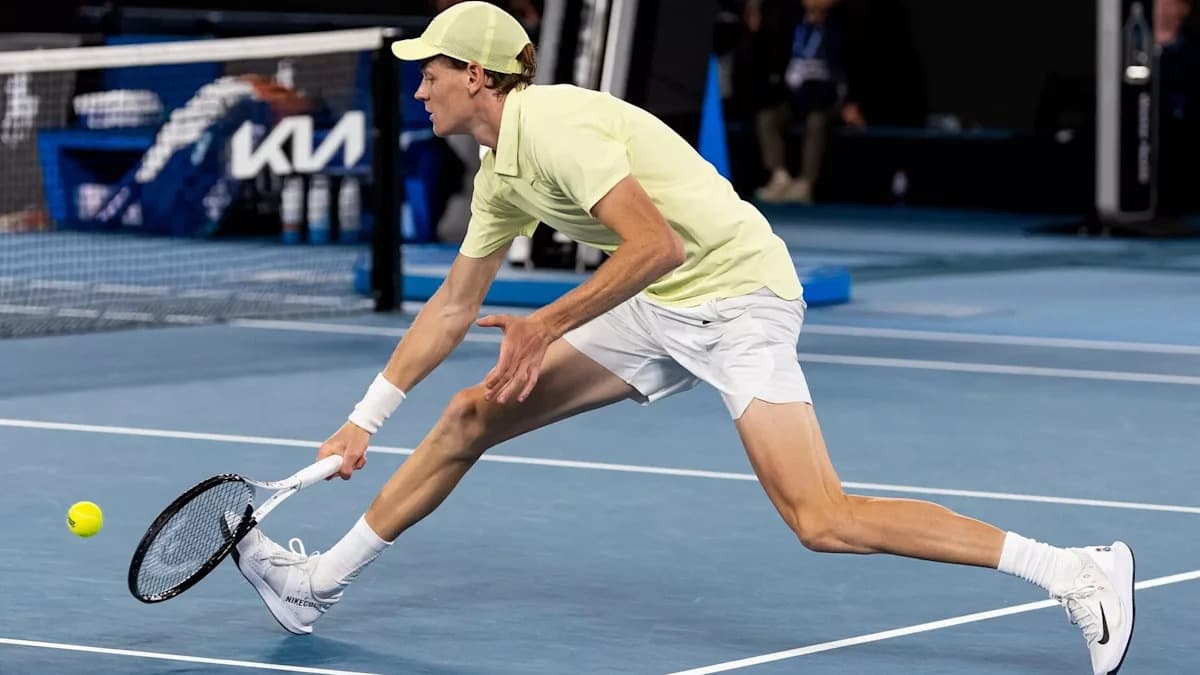
Jannik Sinner has not participated in any competitive tennis matches since his Wimbledon victory in July. There is growing concern that his recovery might be more complicated than first expected. Earlier this month, the Italian player announced he would miss the rest of the 2026 season due to ongoing inflammation in his right knee.
This means he will skip major events like the Paris Masters and ATP Finals, losing the chance to defend his title in Turin. Yet, the bigger question looms over what this injury might mean for the 2027 season.
Insights from Experts
Marco Panichi, Sinner's former fitness coach who also worked with Novak Djokovic, gave a cautious assessment. In an interview with Ubitennis, Panichi suggested Sinner may be dealing with iliotibial band syndrome (ITBS), a condition that could sideline him for a long time.
Understanding ITBS is key: it’s caused by irritation where the iliotibial band—a thick connective tissue running along the outer thigh from hip to shin—rub against the femur. This commonly affects runners but tennis players are vulnerable due to constant bursts of speed, sudden stops, and directional changes.
Why ITBS Fits Sinner’s Situation
Sinner’s style demands quick lateral moves, fast recovery between shots, and balance during aggressive groundstrokes. Each extended rally puts repeated strain on his knees. Unlike a straightforward muscle injury, an overuse injury like ITBS tends to flare up if the affected tissue faces its usual stress too soon.
Surgery is rarely needed for ITBS, but recovery isn't simple. The American Academy of Orthopaedic Surgeons notes most patients return to running around six weeks after conservative treatment, but the timeline varies based on severity.
The Cleveland Clinic reports that 50% to 90% of cases improve within four to eight weeks. Still, these stats don’t directly apply to elite athletes like Sinner, who endure hours of intense, explosive movement daily. His symptoms reportedly began after Wimbledon, worsened despite treatment, and returned before Shanghai. Multiple medical evaluations pointed to ITBS, though his team publicly described it as general knee inflammation.
Outlook for the 2027 Season
There is some hope since ITBS is usually managed without surgery through activity adjustments, strengthening exercises, and carefully planned rehab. The goal is not just pain relief but rebuilding the knee’s capacity to handle repeated high-intensity movements without relapse.
Recovery periods of roughly 12 weeks have been mentioned, although this doesn't mean complete rest. Progressive physical therapy is vital. Sinner’s team plans an initial 4-to-8-week treatment phase followed by gradual increases in training intensity.
Targeting the Australian Open in January is realistic, but practicing, playing ATP matches, and competing in seven grueling best-of-five-set rounds at a Grand Slam are vastly different challenges. Even if he returns for Melbourne, reaching his previous top form immediately is uncertain.
His long break already cost him valuable ranking points, with Alexander Zverev confirmed as world No. 1 for 2026. But health must come first. Rushing back risks worsening the injury, possibly sidelining him longer and affecting much of 2027. This makes his choice to sit out the rest of 2026 understandable.
Final Thoughts
Panichi’s cautionary words should not be seen as doom for Sinner’s career. ITBS generally responds well to treatment, and no surgery recommendation is a positive sign. However, the lengthy absence and recurring symptoms imply that patience will be necessary.
At 25 years old, Sinner has more to gain by preserving his long-term health than by pushing to protect ranking points prematurely. The Australian Open remains a feasible goal, but whether he can arrive fully ready is still unclear. For now, the main concern is when he can compete without worrying about his knee.