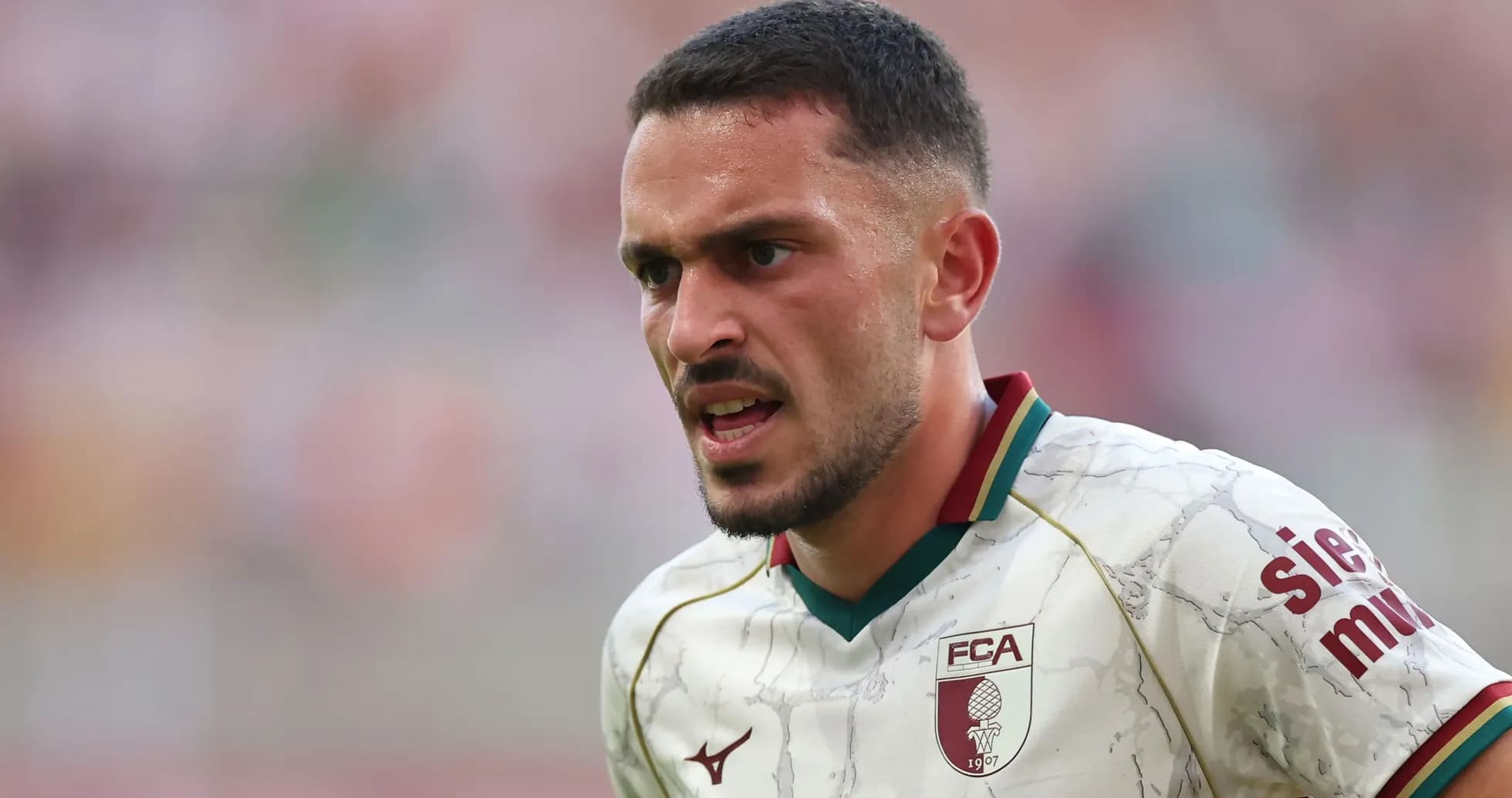
Ibrahimovic’s Loan Move: From Bayern to Augsburg Breakthrough
On 7 July, FC Bayern put it in writing and in lights. “FC Bayern are planning firmly with Arijon Ibrahimovic,” the club declared as the 20-year-old signed his contract extension. Christoph Freund beamed in the official photos and set the tone: this was no longer about an academy hopeful learning the ropes. “Now it is no longer just about learning for him – now it is about making an attack, here at FC Bayern!”
Two months later, Ibrahimovic is attacking all right – just not in Bayern red.
He has a Bundesliga appearance, a Bundesliga goal and a place at the top of the table. Not with the record champions from Munich, but with FC Augsburg.
A U-turn in Munich
The shift was as abrupt as it was confusing.
Ibrahimovic, already familiar with the suitcase life after several loans, had every reason to believe this season would finally anchor him at Säbener Straße. He had spoken openly of his joy at “getting the chance to play for the biggest club in the world.” Internally, he was earmarked as the back-up to the tireless Luis Diaz, a young attacker meant to grow in the slipstream of an established star.
Then the tone changed.
Shortly before deadline day, sporting boss Max Eberl sat in front of the microphones and cracked the door wide open again. “If there is something there that is ready to be announced, that could be interesting for both parties, then we would be open to that again,” he said, signalling that a loan – once seemingly off the table – was suddenly back in play.
How open Ibrahimovic himself really was to another move remains murky. On 1 September, Freund framed it as a joint decision, saying Bayern had “reached an agreement with Arijon that it is best for his development if we loan him out for another season.”
Irritation, Miscommunication and a Door Out
According to Sport1, Ibrahimovic was “extremely irritated” by the development. His agent, Roman Rummenigge, reportedly felt “blindsided” by Eberl’s public change of course. From their perspective, nothing in pre-season or in the club’s internal messaging suggested that his status had shifted so drastically. On the contrary, the signals pointed towards genuine game time in Munich.
Werder Bremen sensed an opportunity and tried to move in. Augsburg, though, won the race.
FCA did not just secure a straight loan until the end of the season. They pushed through an option to buy worth eight million euros, a clause that speaks volumes about how both clubs view his medium-term future. Freund still chose his words carefully, stressing Ibrahimovic remained “a young player with great attributes” who “needs regular match practice at this stage. He will get that at FC Augsburg, and we will continue to support him closely along the way.”
Between the lines, the question lingered: was this Bayern gently admitting he is not yet at their required level?
Criticism at Bayern, Clarity at Augsburg
The backdrop to the U-turn lay partly in a difficult pre-season. Ibrahimovic created chances but also missed some big ones, and the reaction was swift. Sections of the Bayern fanbase turned critical, questioning whether he possessed the class needed for decisive moments in big games. For a young player trying to cement his place, those doubts can stick.
Augsburg offered something different: clarity.
Under coach Manuel Baum, Ibrahimovic did not arrive as a project to be hidden on the bench. He walked straight into the starting XI for his first match. The response was immediate. In a 4-1 win away at Eintracht Frankfurt, he marked his debut with a goal, delivering exactly the kind of statement performance that had eluded him in Munich.
The contrast could hardly be sharper. From feeling expendable at the German giants to becoming a central figure in a side that has started the season perfectly and sits, for now, above Bayern in the table.
A Career Detour That Might Stick
The option to buy means this is more than a simple year of polishing before a guaranteed Bayern return. Augsburg have the chance to turn this into a permanent deal; Bayern have the chance to watch him under pressure, with responsibility, in the Bundesliga every week.
For Ibrahimovic, the narrative has already shifted. What began as a confusing departure from Säbener Straße now looks like a platform. A hasty exit has given him what he was promised but never truly handed in Munich: minutes, trust, and the freedom to make mistakes in his own shirt, not someone else’s shadow.
If he keeps scoring and Augsburg keep winning, the real question will not be why Bayern let him go on loan. It will be whether they ever get him back.