Inaki Williams Retires from Ghana National Team: A Journey Fulfilled
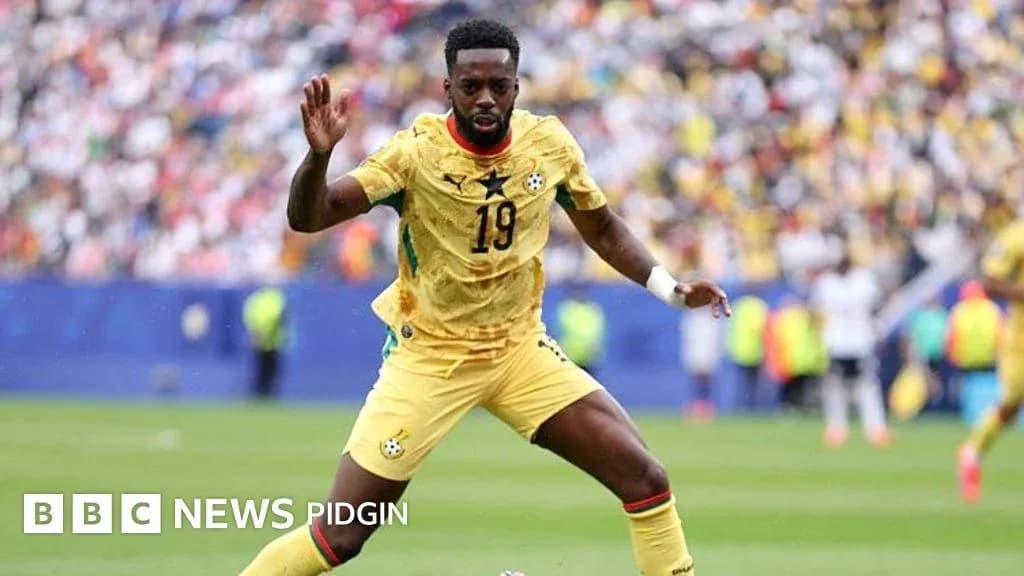
Inaki Williams has drawn a firm line under his international career with Ghana, announcing his retirement from the Black Stars after four years of service and a final appearance at the 2026 Fifa World Cup.
The Athletic Bilbao forward revealed his decision on Friday, posting a heartfelt message on his X account confirming that his “journey with the Ghana national team” has come to an end.
“I feel the time has come to bring my journey with the Ghana national team to an end. I leave happy, proud and with the peace of mind of knowing I gave everything every time I wore this shirt,” he wrote.
He walks away with no regrets, only the sense that his chapter with Ghana has been fully written.
World Cup exit marks the end
Williams’ last act in Ghana colours came at the 2026 World Cup, a tournament that promised more than it delivered for the Black Stars.
Ghana arrived in the knockouts buoyed by a strong group-stage campaign, having shut out both Panama and England with two clean sheets that rekindled belief back home and inside the dressing room. Confidence surged. The team looked compact, disciplined, hard to break.
Then came Colombia.
A 1–0 defeat, narrow on the scoreboard but heavy in consequence, sent Ghana out earlier than they had imagined. For Williams, it proved the final page of his international story, a World Cup exit doubling as a natural full stop to a late-blooming national-team career.
Choosing Ghana over Spain
Williams’ path to the Black Stars was anything but straightforward.
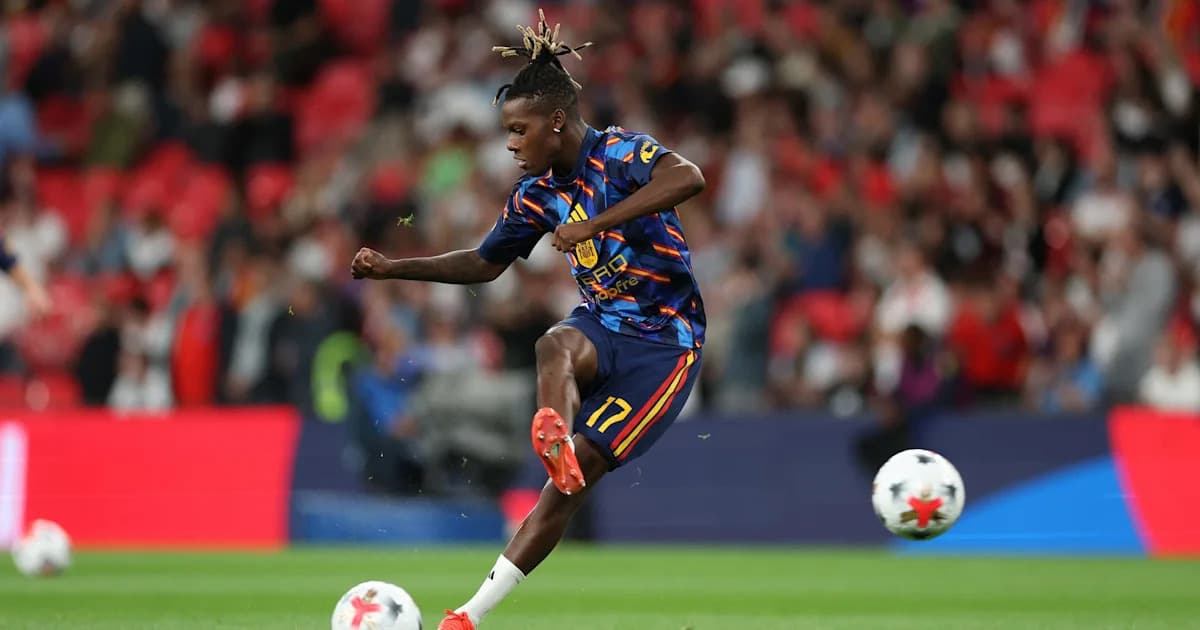
Born in Spain to Ghanaian parents, he initially set his sights on La Roja. Spain called him into their under-21 squad in March 2015, a recognition of his rising status at Athletic Bilbao and his promise as a quick, direct forward. Yet despite those youth appearances, a full competitive cap for Spain never came.
For years, the question lingered: Spain or Ghana?
In 2021, when pressed on the prospect of representing the country of his parents, he was cautious. “My parents come from Accra, they did not give birth to me or raise me there, my culture is here,” he said then, underlining how rooted he felt in Spain.
The tide turned in 2022. On 5 July that year, ahead of the 2022 Fifa World Cup, Williams made his decision public: he would represent Ghana. The Black Stars gained not just a European-bred forward, but a player reconnecting with his origins in the most visible way possible.
“Ghana has given me a lot more than football,” he later reflected. “It has allowed me to come back home, feel even closer to my roots and experience the enormous pride of representing my country and wearing this flag on my chest.”
Roots, risk and a remarkable rise
To understand the weight of that choice, you have to go back to his family story.
Williams was born to Ghanaian parents who reached Spain the hard way. They crossed the Sahara desert on foot, then forced their way over the Melilla border fence in search of a different life. Out of that ordeal came a son who would grow up in Spain, with a ball at his feet and a future that looked nothing like the journey that brought his parents to Europe.
He spent his childhood honing his talent, and at 18, Athletic Bilbao spotted him. The Basque club, famed for its unique identity and youth development, moved quickly and brought him into their academy.
By 2014, Williams had stepped onto a La Liga pitch for the first time with Athletic’s senior side. His first top-flight goal arrived in February the following year, a sign of what was to come rather than an isolated moment. He grew into a permanent fixture in the team, a relentless runner on the flank and a constant outlet in attack.
Over time he became one of the club’s pillars, producing big moments in big games. Among them, a stunning 20-metre strike against Barcelona in the Spanish Super Cup final, a goal that underlined both his technique and his nerve on a major stage.
A long contract, a clear commitment
In 2019, Athletic Bilbao underlined just how central Williams had become to their plans. The striker signed a nine-year contract with the club, one of the longest deals ever handed to a player in modern football.
Only a handful of agreements rival it, such as the famous 10-year contract Real Betis gave Brazilian winger Denilson back in 1998. For Williams, the length of the deal spoke of trust on both sides: the club betting on his consistency, the player binding his peak years to San Mamés.
Legacy with the Black Stars
Williams’ Ghana career did not stretch over decades, but it carried a different sort of significance.
He arrived as a fully formed professional from Europe’s top league, but also as a son returning to his parents’ homeland. His presence in the Black Stars shirt symbolised a bridge between diaspora and home, between a family’s sacrifice and its reward on the world stage.
On the pitch, he offered work rate, pressing and experience from one of Europe’s most demanding competitions. Off it, he embodied a story many Ghanaians recognised: leaving, adapting, then finding a way back.
As he steps away from the national team, Williams has been clear that his bond with Ghana does not end here. He has pledged to continue supporting Ghanaian football and the Black Stars from afar.
The shirt will pass to another forward. The story that led him to it remains his alone.