Ireland vs Israel: A Nations League Fixture Amid Political Tensions
On Sunday, a Nations League fixture will be played in near silence.
No away fans. A neutral stadium. Bare-bones television coverage with no commentary, no pundits, no studio debate. Just 22 players, a ball, and a political storm raging far beyond the touchline.
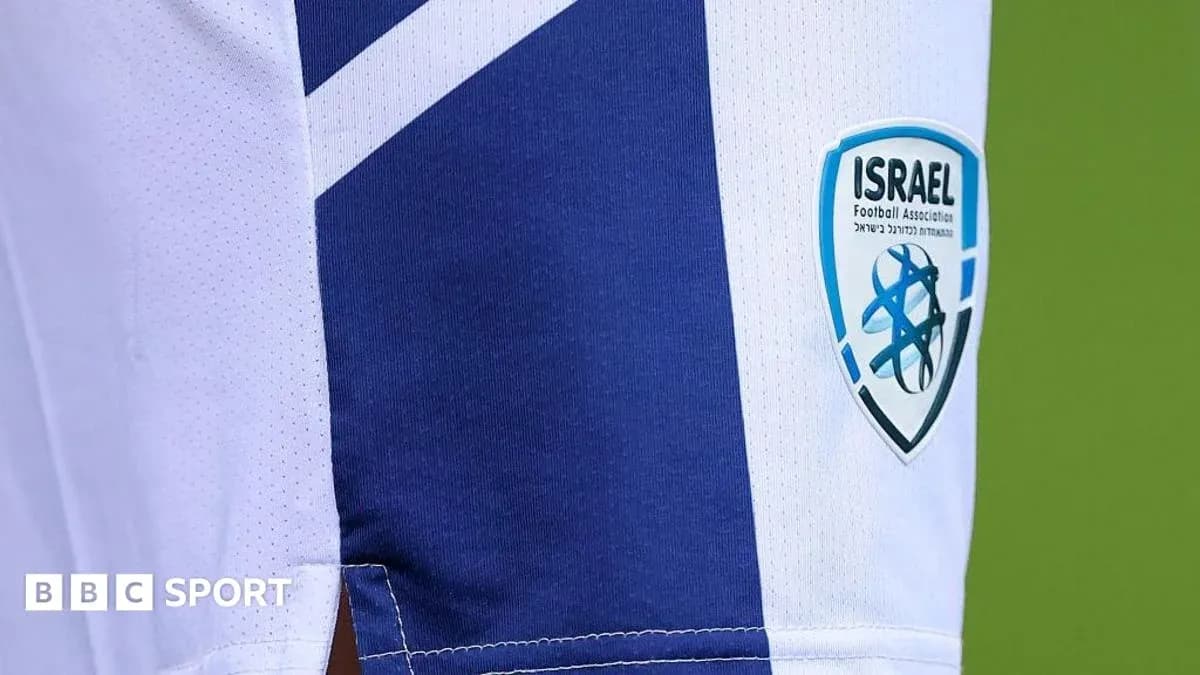
Republic of Ireland’s trip to face Israel in Debrecen, Hungary, is officially an “away” match. In reality, it has become one of the most contentious fixtures European football has seen in years, a game dragged far beyond the usual confines of sport by Israel’s military offensive in Gaza and Ireland’s outspoken political stance on it.
A Vote Just to Play
The match very nearly never happened.
Once Ireland were drawn with Israel, Austria and Kosovo in the Uefa Nations League back in February, the Football Association of Ireland (FAI) came under immediate pressure. Fans, campaign groups, politicians and pundits demanded a boycott of any game involving Israel, arguing that taking the field would cut across Ireland’s strong opposition to the Gaza offensive.
The debate ran for months. It didn’t just simmer; it split opinion right through Irish football.
In July, the FAI put the question to a vote of its delegates. Seventy-five opted to fulfil the fixtures. Thirty-two backed a boycott. That margin kept Ireland in the competition, but it did nothing to cool the argument.
The FAI stressed that refusing to play could carry a heavy price: Uefa sanctions, the risk of suspension from competitions, and the potential loss of millions of euros in revenue. For an association constantly juggling finances and development plans, the cost of a boycott was deemed too high.
So the games would go ahead. But almost nothing about them would be normal.
No Fans, No Noise, No Frills
Irish supporters have been shut out completely. No tickets have been made available to them for either the “away” tie in Debrecen or the “home” match on 4 October, which will be staged not in Dublin but in Backa Topola, a small town in Serbia.
There will be a small allocation for Israeli fans in Hungary, as has been standard for Israel’s recent home fixtures moved to neutral venues. Hungary has become a regular host, its government maintaining close diplomatic ties with Israel and willing to provide the heavy security such matches now require.
The FAI decided in the summer that its home game against Israel could not be played on Irish soil. The official explanation cited “operational challenges that could impact on the delivery of the game on home soil”. Reports suggested the association feared protests in Dublin might disrupt or even prevent the match from taking place.
Backa Topola, then. Remote, neutral, and easier to lock down. The FAI has given no formal reasoning for that specific choice, but the logic is clear enough: distance, control, and a reduced risk of mass demonstration.
Serbia’s relationship with Israel is another factor. In 2025, foreign minister Marko Duric described Israel as one of Serbia’s “closest friends and strategic partners”. Serbia has bought Israeli drones and missiles in recent years. Hosting a politically charged fixture is less likely to cause diplomatic friction there than in many other European capitals.
The broadcast will be just as stripped back as the stadium.
Irish public broadcaster RTE will show the matches, but only in the most minimal form needed to meet its contract. No adverts. No sponsorship. No studio build-up, no half-time breakdown, no post-match panel. Just pictures and sound from the ground, and little else.
A Football Match in the Middle of a Political Rift
The decision to play at neutral venues, to exclude Irish fans, to mute the coverage – none of it has stemmed the backlash.
Supporters’ groups across the League of Ireland have staged protests at domestic games in recent weeks, with banners and walkouts targeting the fixtures against Israel. On Monday, more than 160 Irish athletes signed an open letter organised by the Irish Sport for Palestine group, urging the FAI to reverse course and boycott the matches. Among the signatories: boxer Tyrone McKenna and former European champion middle-distance runner Ciara Mageean.
Inside Abbottstown, the discomfort is obvious.
FAI CEO David Courrell revealed last week that Uefa had rejected a request to keep Ireland and Israel apart in future draws. Director of football John Martin called the situation “very uncomfortable for everyone”, a rare admission from within an association usually keen to keep the focus on football.
Manager Heimir Hallgrimsson went further. He insisted that playing Israel did not legitimise what he called a “genocide”. In a pointed phrase, he said: “We’re not playing with genocide, we’re playing against genocide. We’re playing against Israel, we’re not playing with Israel.”
The response from the Israel Football Association was swift and scathing. It accused Hallgrimsson of “ignorance, hypocrisy and stupidity”, a statement that underlined just how far this fixture has strayed from the usual diplomatic language of international football.
This is not the first time Irish sport has faced the question. The Republic of Ireland’s women’s basketball team played Israel in EuroBasket qualifiers last autumn and earlier this year, also after what officials described as “extensive deliberations”. Those games went ahead amid protests and boycotts from some supporters, but without the scale of political heat that now surrounds the men’s national football team.
Ireland’s Stance on Gaza
To understand why this Nations League tie has become so charged, you have to look beyond football.
Since the start of Israel’s offensive in Gaza in October 2023, the Republic of Ireland has been one of the most vocal European critics of Israel’s actions. According to the Hamas-run health ministry in Gaza, more than 73,000 people have been killed in Israeli attacks; the United Nations has said it considers those figures reliable.
In May 2024, Ireland, alongside Spain and Norway, officially recognised a Palestinian state. Later that year, it joined South Africa’s case at the International Court of Justice accusing Israel of genocide in Gaza.
The stance has not been symbolic alone. Ireland became the first EU country to ban goods from illegal Israeli settlements in the West Bank. It has imposed travel bans on certain Israeli government ministers. It has also boycotted Eurovision since 2025 because of Israel’s continued presence in the song contest.
On Monday, foreign minister Helen McEntee sharpened the tone yet again. “Ireland’s view is clear – international law is being breached,” she said. “We are seeing an attempt to erase a population.”
Israel has rejected those accusations, insisting its actions in Gaza are acts of self-defence after the Hamas attacks of 7 October 2023, when about 1,200 people were killed and 251 hostages taken.
That is the backdrop against which 90 minutes of football will unfold.
A Game That Cannot Be Just a Game
On paper, this is a Nations League group match. Rankings points, future seedings, the usual calculations.
In reality, it is something else entirely: a collision point between sport, politics and morality, with a national team caught in the middle.
Ireland’s players will line up in Debrecen in front of a largely neutral crowd, under a security operation more befitting a summit than a football match. Their own fans will be thousands of miles away, watching a silent broadcast that says as much about the country’s discomfort as any official statement.
And in October, the whole thing will be replayed in Backa Topola, a quiet Serbian town suddenly turned into the stage for one of the most sensitive fixtures in European football.
The whistle will blow, the game will start, and for a while the focus may narrow to tactics, form and results. But when the players walk off, the questions will still be there.
How long can football pretend this is just another date on the calendar?