Jack Grealish: From £100m Treble Winner to Everton's Disciplinary Dilemma
As England shrank deeper into their own penalty area in Atlanta, inviting Lionel Messi to pick his moment and end their World Cup semifinal, the inquest began long before the final whistle.
Everyone had a theory.
Everyone had a solution for Thomas Tuchel.
What England did not have was Jack Grealish.
Not the half-fit, half-present version currently marooned on Merseyside. The other one. The Manchester City treble Jack. The player who could take the ball in a storm, hold it, hide it, and walk his team up the pitch as if he were strolling through a park in Solihull.
Tuchel’s squad list for the November internationals confirmed it again: England still lack that profile. City, without him as a regular, do too. Everton actually have him — on loan, on paper — but have just won back-to-back games with their supposed star man nowhere near the squad.
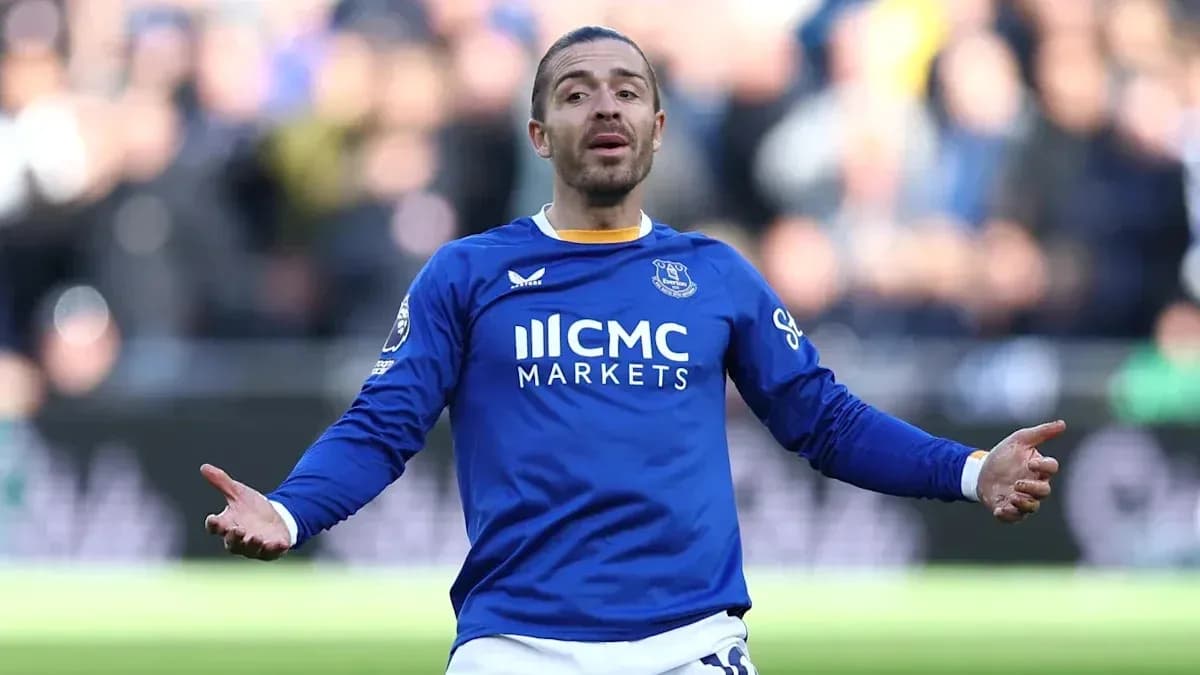
This is the story of how a £100 million champion has become a disciplinary headache, watching from the outside as the games go on without him.
The Everton Freeze-Out
The slide into the shadows at Everton did not start with a crunching tackle or a torn muscle. It started with an absence.
Grealish missed the 2-0 defeat away to Arsenal on October 24, officially through illness. Five days later, he was again unavailable for the 3-1 Carabao Cup win over Newcastle United, this time “due to a breach of club discipline.”
The message hardened from there.
No place in the squad for the 1-0 league win at Newcastle on Monday. No involvement when Coventry City visit the Hill Dickinson Stadium on Friday.
“Jack's not available,” David Moyes said before Coventry. “I wouldn't give you the plan, but we will be working with Jack again soon.”
Pressed on whether Grealish was even at the club, Moyes shut the door. “I would rather not answer your question. Right from the start, hopefully you picked up on my words. I said it was a club issue and it continues to be that.”
This is not simply a manager freezing out a player he does not fancy. Everton have been careful to stress that the hierarchy are heavily involved. They know this is bigger than a tactical call.
The breach? Widely reported as an unauthorised absence from training in the week after the Arsenal game. The sort of detail that fits uncomfortably neatly into a long-running narrative.
Nights Out, Days Off, and a Familiar Pattern
The timeline is depressingly familiar.
On Monday, October 19, Grealish attended the Pride of Britain awards in London. Reports in The Sun and the Daily Mail said he continued the night at Bam Karaoke Box in Victoria. He trained with Everton the following day, then settled in a Cheshire pub to watch Paris Saint-Germain vs. Barcelona in the Champions League with teammates, including Jordan Pickford.
Wednesday was a scheduled day off. Players using their free time is nothing unusual, within reason. The Athletic reported Pickford left the pub early. Grealish stayed.
This is Grealish’s world. The public loves him for it. The £500 he once put behind the bar at a social club in March 2025, while out with Pickford after Manchester City’s FA Cup win over Plymouth Argyle, captured his appeal perfectly. A superstar who still feels like one of the lads, who buys a round for the room and doesn’t vanish behind velvet ropes.
Those qualities have bought him time and indulgence throughout his career. They have also nudged him to this point: more than two years without an England appearance, loaned out for the second season running in the final year of his City contract, and now stuck in limbo at Everton.
At City, by March 2025, his race under Pep Guardiola was effectively run. The manager who had defended him, protected him and invested in him no longer felt he could rely on him. Little injuries, little absences, little doubts — they stacked up. Minutes disappeared. Trust eroded.
The City Years: More Than a Six-Month High
It is easy to caricature Grealish’s time at Manchester City as six golden months in a treble season, surrounded by frustration and noise. Easy, but not accurate.
When fit and focused, City were a better, more balanced team with him on the pitch. He was their pressure valve. Take the ball, draw a foul, win 15 yards. Reset the rhythm.
The problem was getting him on the pitch in that condition often enough.
In the middle of the 2023-24 campaign, as injuries bit into Guardiola’s squad, Grealish helped keep a record fourth consecutive Premier League title within reach and played a key role in winning the Club World Cup. Then the familiar fade. By the time City lost the FA Cup final to Manchester United, he was not even in the matchday squad. Euro 2024 came and went without him in an England shirt.
One night stands out. February 2025, Real Madrid in the Champions League. Guardiola, who had not started Grealish in a league game all calendar year, threw him in from the start on the wing. Grealish responded with a performance that reminded everyone why City had paid £100m: sharp, brave, threading a brilliant pass in the buildup to Erling Haaland’s opening goal.
Then, on 30 minutes, he went off injured. City lost 3-2.
He started one more league game that season, a dead rubber against relegation-bound Leicester City in a heavily rotated side.
“Grealish's problems haven't been technical, tactical, or due to a lack of trust from [Guardiola], who clearly loves the player,” a source told The Sporting News that summer. “I think we all know that Jack's issues have been of a different nature. And yes, it's a shame.”
The word “shame” kept coming back.
Public Image vs Private Frustration
It surfaced again in April, when paparazzi photographed Grealish asleep at a Manchester rooftop bar. At the time, he was recovering from the foot injury that had cut short what looked like a restorative 2025/26 loan season at Everton.
Inside the club, opinion was split. Some senior figures doubted the wisdom of bringing him back to Merseyside for a second year, even after Iliman Ndiaye’s move to City opened a clear space for him. They knew the upside. They also knew the risks.
Back in Manchester, Enzo Maresca replaced Guardiola and spoke warmly at his first City press conference about a player who “has a big heart and is a very good guy.” Maresca gave Grealish minutes in the Community Shield defeat to Arsenal and the Premier League win over Bournemouth in August. Both men talked fondly of each other from their treble-season days.
But everyone around City understood the reality. This was not a relationship being rekindled for the long term. It was a gentle goodbye.
“D’you Know How Good Jack Is?”
Declan Rice posed the question out loud in October 2024, after he and Grealish both scored in England’s 3-1 Nations League win in Finland. Rice, now a Ballon d’Or nominee and the heartbeat of Arsenal’s title charge, was effusive.
“You watch him in training and you watch him in games, he's got something that's really special as a football player,” he said. “The way he takes the ball under pressure and takes touches and relieves you of pressure as a team is just incredible. I'm buzzing for him because when we've got a Jack Grealish who's happy and smiling and playing well, he's a massive boost for England.”
That was the last time Grealish played for his country.
Those words feel distant now. Happy, smiling, playing well — that version of Grealish is a flicker on the horizon, not a weekly reality. Rice’s question lingers in the air: does Jack Grealish truly understand how good he is?
Because the game still does. Coaches, teammates, opponents — they all talk about the same things. The first touch under pressure. The balance. The ability to slow a match down to his own tempo when everyone else is running hot.
Yet the player who once looked awestruck sharing a dressing room with Kevin De Bruyne now appears trapped in a loop of bad luck and self-inflicted damage.
A Career at a Crossroads
Across Aston Villa, Manchester City and Everton, one truth has remained constant: people keep deciding he is worth another chance. Managers, directors, teammates — all of them, at different stages and with different misgivings, have backed the talent and hoped the rest would follow.
Now, at 31, on loan in the final year of his City deal and temporarily frozen out at Everton, the equation is changing.
The indulgence that once came so easily is being replaced by hard questions. Not about his left foot, or his tactical understanding, or his ability to handle big occasions. Those have never really been in doubt.
The questions are about reliability. About professionalism. About whether the late nights, the missed sessions and the recurring absences are worth the flashes of brilliance.
Right now, Grealish needs help — from his club, from those close to him, from the game that has kept faith longer than most careers ever allow. But there is a deeper step that no manager, no sporting director, no friend in a Cheshire pub can take for him.
He has to decide, finally and definitively, whether he is worth the hassle to himself.
Because the talent that once bent a treble-chasing season to his rhythm is still there. The question, as the clock ticks on a career that should have defined an era, is whether Jack Grealish will let it.