Jack Grealish's Everton Return: A Hero's Gamble
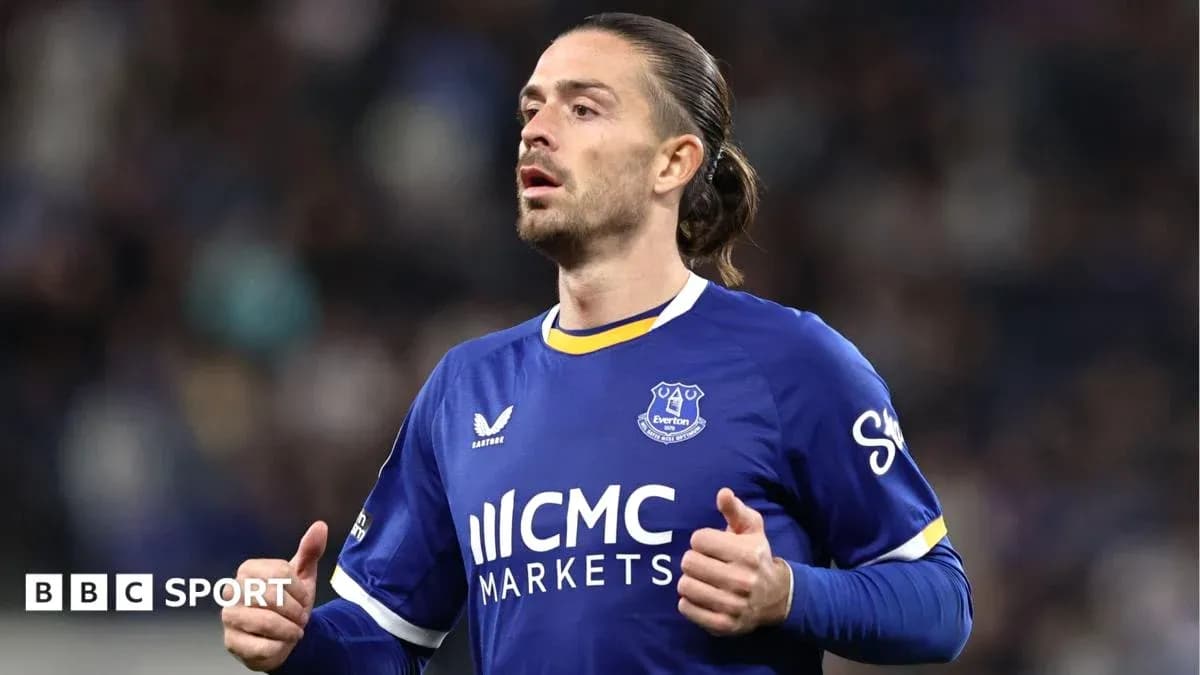
Jack Grealish swept back into Everton on deadline day like a returning hero, white Lamborghini purring through the gates at Finch Farm, hope strapped into the passenger seat.
Supporters flocked to him. So did the cameras. This was the player whose first loan spell from Manchester City had been cut short by a serious foot injury, yet had still left behind a highlight reel and a sense of unfinished business. For a fanbase worn down by a bleak summer window, his comeback felt like a rare win.
By the time Grealish finally left in the early hours, deal signed, selfies taken, shirts inked, it had the feel of a homecoming. An everyman superstar embraced as one of their own.
It was also a gamble. A big one.
David Moyes went into the season with just 18 senior players after a muddled, undercooked recruitment drive. Grealish, frozen out at City in the final year of his contract, needed a stage. Everton needed a spark. Both parties knew this had to work.
Now, that fragile pact is under strain.
A breach, a statement, and a warning
When Everton named their squad for the Carabao Cup tie against Newcastle United, Grealish’s absence jumped off the page. The club did something they rarely do: they went public.
“Breach of club discipline.”
Behind that phrase sat a simple, damning detail: he had failed to report for training on Monday.
For Britain’s first £100m footballer, a 31-year-old trying to reboot a career that had stalled at the champions, it was a self-inflicted wound. Everton’s decision to spell it out before kick-off underlined the seriousness of the offence. No shielding, no vague “knock” or “illness” this time.
This feels like a crossroads. Fail at Everton and the road back to the Premier League’s elite starts to disappear from view.
The club do not see this as a final warning in the melodramatic “Last Chance Saloon” sense. Moyes simply cannot afford to cast aside game-changers in a squad this thin. But the pressure on Grealish has ratcheted up. He now has to win back a fanbase that adores his charisma and his flair, while proving to a hard-line manager that he can be trusted.
Inside Finch Farm, there have been quiet grumbles about his time-keeping before, but nothing on this scale. The wider picture remains that of a player regarded as a committed trainer who looks after himself. That nuance will not soften Moyes’ anger.
Grealish has already held talks with senior figures at the club. The message would have been blunt: this cannot happen again, not under Moyes, not in this situation. The punishment, agreed at the highest level with the manager’s full backing, leaves him staring down a pivotal spell in his career.
Everton thrive without him
If Grealish needed a reminder of his own jeopardy, it came on the pitch.
Everton produced arguably their best performance of the season, beating Newcastle 3-1 to reach the Carabao Cup quarter-finals. Wembley, suddenly, is not just a fantasy.
And they did it with 20-year-old Tyrique George rampaging down the left flank – the very territory Grealish was expected to make his own. George’s energy and directness gave Everton a different dimension, one that chimed with the tempo Moyes demands.
The contrast was stark. While Grealish has yet to score or assist in eight appearances this season – two of those for City before his return – George offered movement and thrust. Grealish’s habit of slowing attacks to a more considered rhythm has jarred with a manager who wants everything done at speed.
After the game, Moyes refused to be drawn into detail.
“You probably know I’m not going to give any details. It’s a club decision and I support it. It’s something I don’t want to speak too much about,” he said.
He quickly pivoted to the collective.
“The one thing about Everton is that they have got real good values. All the players stand behind it and accept the values, on the pitch and off the pitch, and I think the players did a good job.
“It is a small squad, but we are doing our best to keep challenging. We are not accepting any excuses for anything and I think the players are doing a great job. There was a humility about us.”
He never mentioned Grealish by name. He didn’t need to. Every line doubled as a pointed reminder of what is required.
A bond under strain
This is not a cold, distant relationship suddenly cracking. Moyes and Grealish clicked almost immediately when the first loan move was agreed in August 2025. Grealish was open about it: “As soon as I spoke to the manager, I knew there was only one place that I wanted to go and that was Everton.”
On the pitch, he justified the enthusiasm. This was a player who had helped City to a Treble of Premier League, FA Cup and Champions League in 2023, now throwing himself into a different kind of fight. He became a key figure until that foot fracture at Aston Villa in January, suffered in a 1-0 Everton win at his former club.
His affection for Everton showed in the aftermath. Instead of returning to City for his rehabilitation, he chose to stay at Finch Farm. It was a statement of where he felt at home.
When the idea of a second loan came up, Everton did not rush. They weighed the decision carefully: the injury record, the financial strain, and, yes, the question of character. Moyes still pushed for it. Grealish, for his part, was adamant that Merseyside was where he wanted to be.
All this unfolded against a backdrop of ownership uncertainty. With The Friedkin Group edging away from heavy investment and preparing to put the club up for sale, Moyes was operating with limited room to manoeuvre. In that context, backing Grealish again was a calculated risk.
So far this season, the return has been modest. No goals, no assists, and a style that has not quite meshed with Everton’s urgency. Missing the defeat at Arsenal with “illness” and then failing to turn up for training in such a stretched squad will have infuriated a manager who cannot afford passengers or self-inflicted absences.
The man behind the headlines
All of this sits uncomfortably alongside the way people at Everton talk about Grealish.
He is, by almost every internal account, hugely popular. Team-mates like him. Staff across the club enjoy having him around. He is described as a “lad with a heart of gold, kind and charming, who actually loves being here”.
The evidence is not hard to find.
Recently, he quietly donated £10,000 to a GoFundMe page for Everton supporter Leon Skapars, a 36-year-old father of three diagnosed with cancer. Skapars’ wife, Crystal, spoke of what it meant.
“In that moment, Jack gave our whole family something we desperately needed, hope. What he has done for our family is something we will never forget. It makes us feel incredibly emotional.”
Away from club colours, he has leaned into the role of public figure with a conscience. At the Daily Mirror’s ‘Pride Of Britain’ awards, where he helped present honours, he said: “Footballers are classed as heroes – but these are the real heroes.”
In April, he extended his role as principal ambassador for Special Olympics Great Britain for another three years, having first taken it on in 2022. To mark it, he invited five of the 10 Special Olympics GB athletes who had completed the London Marathon to Everton’s Hill Dickinson Stadium, giving them a VIP day, a stadium tour and time with him pitchside.
At Finch Farm, he is often one of the first to put his hand up for community initiatives, including work with the Everton in the Community Down Syndrome team. He regularly talks about the inspiration he draws from his sister Hollie, who has cerebral palsy.
Yet the warm stories have always been accompanied by moments that undermine him.
In April, he was photographed asleep at a Manchester rooftop bar, surrounded by drinks. Nothing illegal, but with phone cameras everywhere and a player still in injury rehabilitation, it was a poor look.
Back in March 2020, he was fined by Aston Villa and forced to apologise after breaking lockdown rules to visit a friend. Later that year, in November, he admitted two counts of careless driving after incidents in which a Citroen van and a Mercedes were damaged.
Ask around football, though – especially at Everton – and the character references remain overwhelmingly positive. That is what makes this latest breach sting. Those who have gone out on a limb for him, personally and professionally, now need him to meet them halfway.
Now or never?
Grealish’s story at Everton is not over. Moyes does not have the numbers to simply cut him adrift, and the player has enough credit in the bank with supporters and staff to be welcomed back if he responds in the right way.
But the context has shifted. Tyrique George has shown there is an alternative on the left. The team have proved they can hit a higher gear without their marquee loanee. A path to Wembley has opened up in the Carabao Cup, sharpening the stakes.
For a 31-year-old who has already scaled the highest peaks with Manchester City, this is not just about minutes or metrics. It is about reputation, trust, and whether he can still be relied upon when a club builds around him.
After this latest misstep, the indulgence is running out. So are the chances to prove that the Everton version of Jack Grealish can be more than a fleeting romance.