
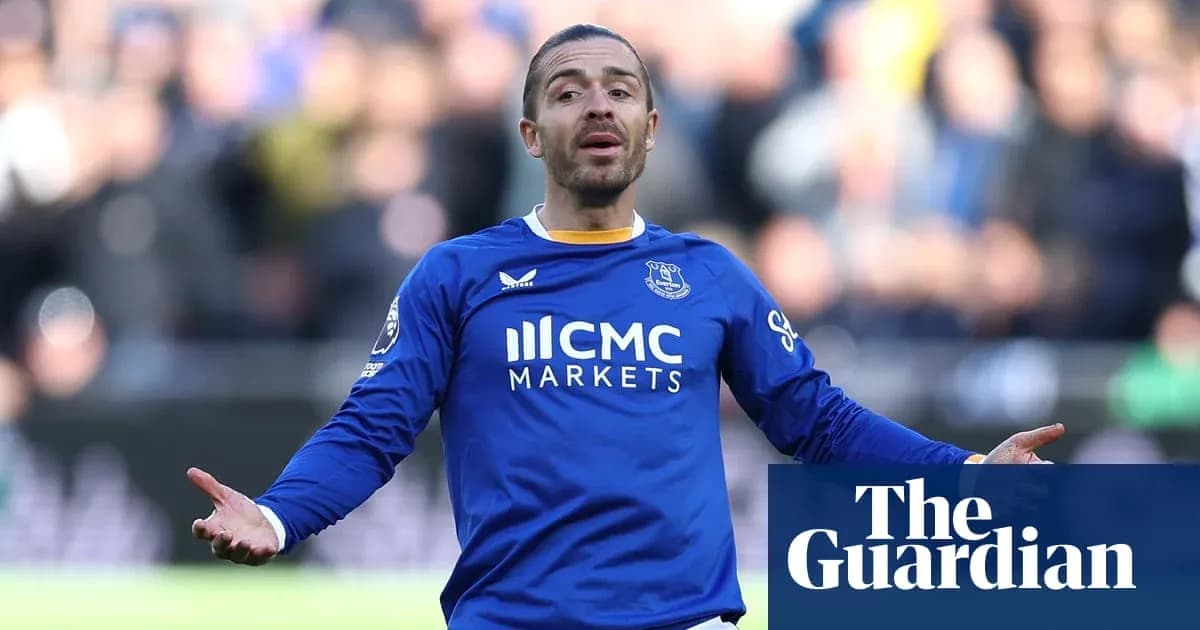
Jack Grealish's Struggles at Everton: A Career in Limbo
On the biggest night in Manchester City’s history, Jack Grealish was trusted above all others. Phil Foden, Julián Álvarez, Riyad Mahrez – all on the bench. Grealish started, stayed on, and finished the Champions League final against Inter. Ninety minutes of Guardiola’s faith made flesh.
Three years on, that faith feels like a relic.
Injuries chipped away at his rhythm, but the trust eroded faster. Across the next two Premier League seasons, Grealish started only 17 league games for City. By the summer of 2025, the club were ready to move him on. Everton became the escape route, first on loan, then again this season, a second spell framed as a chance to relaunch a career that should never have needed rescuing.
Six appearances into this campaign, even that lifeline looks frayed. On Thursday, as Everton beat Newcastle in the Carabao Cup, Grealish was nowhere near the squad. He had missed training on Monday. The club did not bother to cloak it in vague language: there had been “a breach of club discipline”.
This is a 31-year-old with 39 England caps, a player who should be setting standards in the dressing room. Instead, the old story keeps looping. Lockdown breaches. A driving ban. Viral clips of him drunk in the street. Each incident might be survivable in isolation. Together, they form an image he cannot shake.
Guardiola saw it early and acted. In 2021, after Grealish and Foden turned up to training in no fit state to impress anyone, he left them out against Newcastle. The warning was public, pointed and, in the long term, apparently ineffective.
Grealish does not pretend otherwise. He knows his weaknesses. He even spoke about them, candidly, to Sky Sports last year. “People go: ‘He likes to go out, he likes to party,’ and I do,” he said. “I want to be able to live my life and enjoy myself but obviously there’s a time and a place to do that. Sometimes, I’ll be honest with you, I probably haven’t picked the right times.”
Everton thought, briefly, that they might be the club to help him find those right times.
When he arrived last season, he looked like the face of a new phase. He scored winners against Crystal Palace and Bournemouth before December, laid on six assists in 20 league appearances and, at moments, carried attacks with that familiar swagger: socks rolled down, ball glued to his foot, defenders hacking at thin air and then at him. The season ended too soon, cut off in mid-January by a foot injury, and the pattern reasserted itself. Promise. Interruption. Frustration.
The numbers tell their own story. Grealish has not played more than 28 league games in a season since 2019-20 at Aston Villa. For a player of his talent, that should sting.
Everton’s decision to take him back this summer was not unanimous. There were doubts. But the sale of Iliman Ndiaye to City left a hole and Grealish, available and familiar, filled it. At City, Enzo Maresca had given him a proper pre-season, minutes in the Community Shield and a start on the opening day against Bournemouth. There was talk, faint but audible, of an unlikely second act under a new manager.
That idea did not last long. Maresca still speaks warmly about him – “I still think that he’s a good boy, big heart,” he said on Friday – but warmth only goes so far when availability and application come into question.
On the pitch, the best version of Grealish remains intoxicating. He carries the ball like few others, draws fouls, creates chances, scores important goals. He lifts people out of their seats and drags defenders into bad decisions. Those spells, though, have become scattered highlights rather than the backbone of a season.
The next seven months will decide how history remembers him. This should be his prime. Instead, his status is slipping. He is a £100m signing, a treble winner, a Champions League starter – but those lines sit in the past tense now. They are achievements, not guarantees.
His contract at City runs out at the end of the season. Motivation should not be an issue. Shine for Everton, and he can prove he still belongs at the top end of the Premier League, still has the personality and end product to carry a team towards the kind of cup run the club craves. Drift, and the market will judge him without sentiment.
Right now, his career is parked in an awkward middle ground. David Moyes cut a terse figure when asked about him on Thursday and offers no hint that he is pushing for a permanent deal. With a small squad and limited room for error, losing a senior player to a self-inflicted absence is the sort of thing that gnaws at a manager.
Off the pitch, the paradox deepens. In a game that keeps its distance from the public, Grealish leans in. He signs autographs long after others have gone, embraces the charity commitments that come with big clubs, makes time for the small moments that supporters remember. At Hill Dickinson Stadium he is mobbed, and he seems to enjoy it, posing for selfies, cracking jokes, soaking up the adoration.
He has always been good at giving that energy away. The challenge now is to direct some of it inward, to find the discipline and self-respect that his career demands.
“With me, I’m a big confidence player – I want to feel loved,” he once said.
Unless something changes, that feeling will not be coming from Moyes – or from the clubs Grealish still believes he should be playing for.





