Jackie Young's MVP Case Ignites Debate Over FIBA Rankings
FIBA’s latest MVP ladder for the 2026 Women’s Basketball World Cup was meant to spotlight the tournament’s standout performers. Instead, it lit the fuse on a full-blown debate over who really drives Team USA.
Gabby Williams topped the official rankings, with Breanna Stewart slotted in at No. 2. Caitlin Clark landed at No. 5, while Paige Bueckers and Angel Reese appeared at eight and 10. On paper, a star-studded list.
But one name was missing.
Jackie Young.
Through four games, Young has quietly – and now loudly – built the strongest case of any American for MVP consideration. She leads the unbeaten U.S. in scoring at 11 points per game, piling up 44 points in total and serving as the team’s primary offensive outlet during a 4–0 start. She was also the first American to crack the tournament’s overall scoring list.
Yet in FIBA’s rankings, she didn’t appear at all.
The omission detonated on social media almost immediately. One fan cut straight to the point: “How the f*** is CC in top 5 and there is no Jackie Young? Who even makes these lists?” Another called the hierarchy “diabolical,” specifically targeting Clark’s lofty position while Young was nowhere to be seen.
The anger wasn’t just about numbers. It was about recognition.
Young has consistently taken the toughest shots, carried possessions when the offense stalled and, game after game, looked like the most reliable scoring option in a deep U.S. roster. For many supporters, leaving her off an MVP ladder while celebrating her teammates felt like a distortion of what has actually unfolded on the floor.
That frustration only sharpened around Clark.
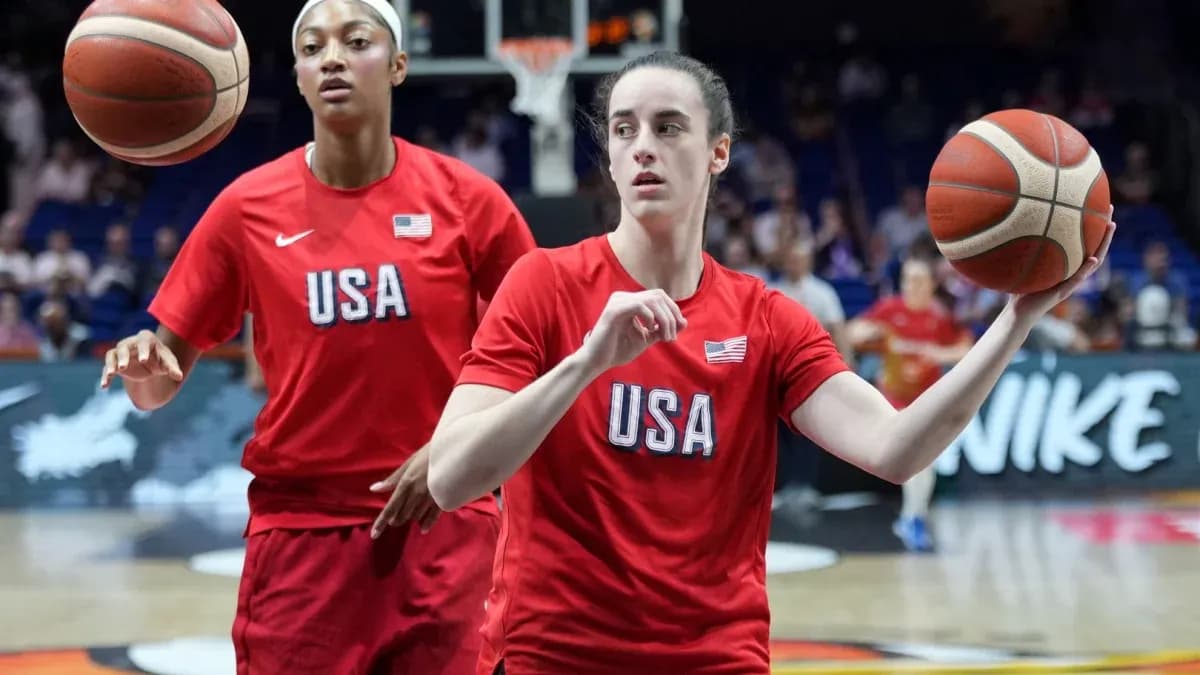
Clark’s playmaking has been undeniable. She leads Team USA with seven assists per game, organizing the offense and stretching defenses with her vision. But her rough night against Italy remains fresh. She finished that game with just one point, missing all six of her field-goal attempts as the United States escaped with a narrow 55–52 win.
That performance became Exhibit A for those questioning her place in the top five.
“Where’s Jackie Young’s name? Where’s Rhyne Howard? This is how you know it’s about biases and politics. #FIBAWWC,” one fan wrote, tapping into a growing belief that reputation, marketability and narrative are shaping the rankings as much as – or more than – production.
The more Young delivered, the louder the chorus grew.
She hasn’t just scored; she has set the tone. In a team loaded with Olympic champions, WNBA All-Stars and college supernovas, Young has emerged as the steady, go-to option. When possessions bog down, the ball often finds her. When the U.S. needs a basket, she rarely shies away.
To many, that is exactly what an MVP looks like.
“Where is Jackie Young??? She has been #1 since voting started,” one fan insisted, pointing to early voting trends. Another didn’t bother with nuance: “The MVP is Jackie Young. Case closed.” A final reaction captured the mood around the discourse with blunt certainty: “Jackie Young is the correct answer.”
The rankings, of course, are just that – rankings. They don’t decide the actual award, and they certainly don’t decide games. Inside the locker room, the focus will remain on gold, not graphics.
But perception matters. In a World Cup that has pushed women’s basketball further into the global spotlight, how stars are valued and discussed carries real weight. Leaving out the leading scorer on the tournament’s most dominant team, while elevating others who have been more up-and-down, was always going to draw fire.
Now, as Team USA turns toward a semifinal showdown with Spain, the stakes rise again. Young’s role will only grow under pressure. Clark’s every possession will be scrutinized. Williams, Stewart and the rest of the names on that MVP ladder will have their cases tested in the only arena that truly counts.
The question is no longer whether fans see Jackie Young as an MVP candidate.
It’s whether the tournament will catch up to them before the trophy is handed out.