
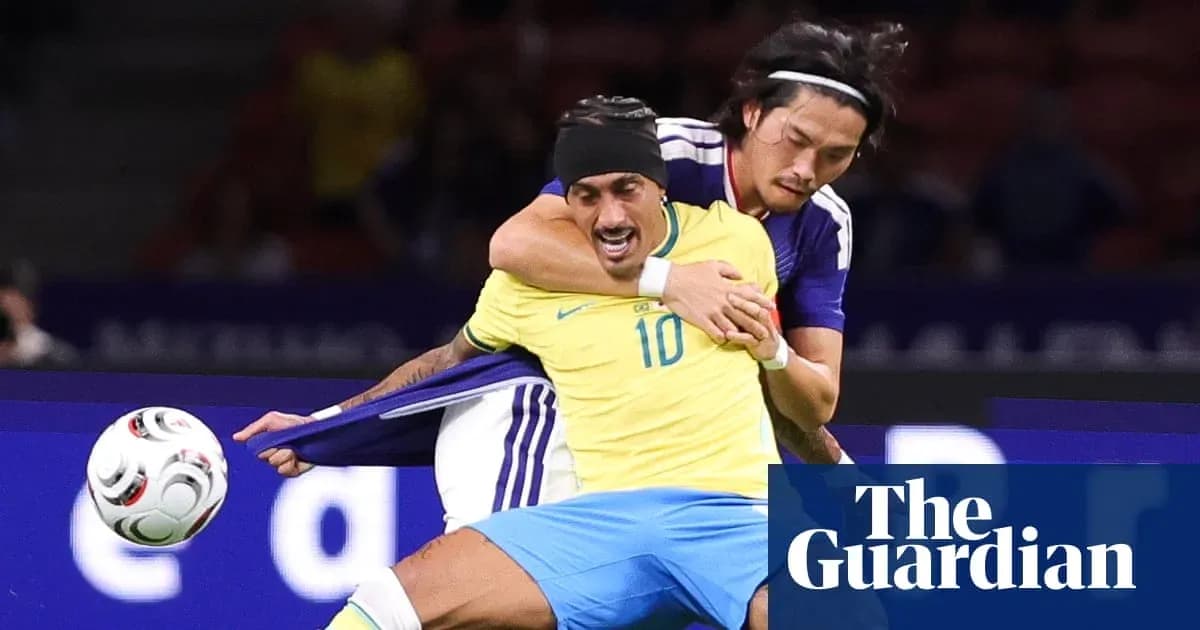
Japan stuns Brazil in chaotic friendly as Raphinha and Ancelotti see red
What began as a gentle friendly in Singapore finished in uproar, with Brazil beaten 3-2 by Japan and reduced to fury on the touchline.
Japan struck twice in the opening 20 minutes, slicing through a distracted Brazil side. Takefusa Kubo lit the game up first, before Keito Nakamura punished more slack defending to make it 2-0 and leave the five-time world champions reeling.
Brazil needed a spark and, as so often, it came from Vinícius Júnior. The forward halved the deficit in the 33rd minute, dragging his team back into the contest and restoring some composure to a rattled side.
Japan refused to fold. They held their shape, absorbed pressure and waited. Brazil pushed, probed and, eventually, broke through again. Vinícius struck once more in the 75th minute, his second goal hauling Brazil level and seemingly setting up a frantic finale.
The frantic part arrived. Just not in the way Brazil wanted.
Deep into stoppage time, Tatsuhiro Sakamoto delivered the decisive twist with a late winner that sparked immediate controversy. The goal, and the circumstances around it, triggered furious protests from the Brazilian bench.
Raphinha, already substituted after 71 minutes, lost his temper on the touchline and was shown a red card for his protests over Sakamoto’s strike. The anger did not stop there. Head coach Carlo Ancelotti also saw red in the closing seconds, dismissed in a chaotic end that laid bare Brazil’s frustration at letting the game slip.
A friendly in name only by the end, it left Japan with an eye-catching win and Brazil with bruised pride and more questions than answers.
Buenos Aires feels the void as Argentina fall to Uruguay
In Buenos Aires, the night was always going to feel different. No Lionel Messi, no No 10 on the pitch, and, for once, no full house at La Bombonera.
Argentina’s first match of the post-Messi era ended in a 2-1 home defeat to Uruguay, a result that underlined just how much has changed since the World Cup final. It was their first game since Messi’s international retirement in early October, and the sense of absence hung over everything.
The clásico rioplatense also opened a new chapter on the bench. Lionel Scaloni, who extended his contract through 2030 this week, led Argentina into a future he now has time to shape. Across the river, Uruguay arrived under their own new coach, Diego Forlán, eager to stamp his identity on a side in transition.
Uruguay struck first, and harshly. Three minutes after the restart, Leonardo Balerdi turned the ball into his own net in the 48th minute, gifting the visitors the lead and silencing a crowd already on edge. Five minutes later, the silence deepened. Maximiliano Araújo doubled Uruguay’s advantage in the 53rd minute, a clinical finish that gave Forlán’s team a commanding grip on the game.
Argentina chased, but without their old conductor they lacked the familiar surge in the final third. The moves were there, the territory was there, but the incision was missing. Neither Nicolás Paz nor Thiago Almada managed to recreate the explosive, decisive moments that Messi used to summon almost on demand.
Julián Álvarez finally gave the hosts a lifeline in the 73rd minute, pulling one back and briefly igniting belief that a comeback might yet mirror so many nights of the past decade. Uruguay, though, held firm, closing the spaces and seeing out a statement win away to their fiercest neighbours.
Off the pitch, the symbolism cut as sharply as the result. La Bombonera, so often overflowing for the national team, did not sell out. Most of those who came still wore Messi’s No 10, clinging to a recent golden age. Scaloni, though, left that number vacant. He explained he has not yet chosen a successor and, with no obligation to assign it, prefers to let the shirt rest for now.
On the grass, the reality matched the gesture. Argentina are searching for a new reference point, a new way to hurt teams without the man who defined an era.
The response must come quickly. Argentina head to Córdoba to face Costa Rica on Tuesday, looking for both a result and an identity. Uruguay, buoyed by Forlán’s winning start, host the Dominican Republic the same day, already building momentum in their own new cycle.





