Jesus Owono Receives 12-Match Suspension After Tragic Incident
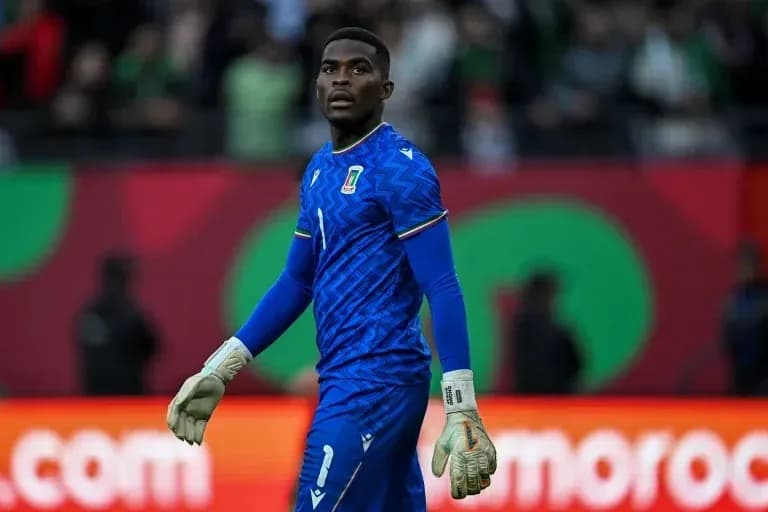
FC Andorra goalkeeper Jesus Owono has been handed a 12‑match suspension by the Spanish football federation’s disciplinary committee after the challenge that led to the death of Tenerife striker Jesus de Miguel.
The ruling, delivered on Friday, comes a week after the second division fixture on November 2, a match that has left Spanish football stunned and grieving.
A routine clearance that turned to tragedy
Midway through the game, Equatorial Guinea international Owono charged out of his area towards midfield to attack an aerial ball. As he leapt to clear, he collided heavily with De Miguel, striking the forward in the chest with his leg.
The referee showed a straight red card.
De Miguel, 30, was taken from the pitch and rushed to hospital, where he was placed in intensive care. He died the following day, November 3, a loss that has reverberated far beyond Tenerife’s dressing room.
Committee reaches for the maximum sanction
In its written decision, the disciplinary committee anchored its judgment in the referee’s report.
That document stated that Owono was dismissed for “violently striking an opponent in the chest with his leg, using excessive force, while the ball was in play”. The committee highlighted that description and then acknowledged what everyone already knew.
“The tragic outcome of the incident, resulting in the death of Jesus de Miguel Alameda, is public knowledge,” the statement read.
From there, the committee moved to its conclusion: “In view of the nature of the conduct described and the accompanying circumstances… the maximum sanction, 12 matches of suspension, is justified.”
Spanish police have opened an investigation into the incident under judicial supervision, according to sources who spoke to AFP last week. The legal process will now run parallel to the sporting punishment.
Owono living “the hardest days” of his life
While the disciplinary machinery has moved quickly, those directly involved remain locked in shock.
Owono, 23, spoke of his devastation in a statement released by FC Andorra last week.
“These are the hardest days of my life. I struggle to find the words and it is very difficult for me to process anything that has happened,” he said.
“I feel immense pain over the loss of Jesus. I think of him, of his family, and of all the people who loved him.
“I know there will be many issues to address, and I will face whatever comes with the utmost respect. But right now, honestly, I cannot think about anything other than Jesus and the pain we are going through. Rest in peace, Jesus.”
On Thursday, FC Andorra coach Carles Manso made it clear that any decision about Owono’s eventual return to the pitch will rest with the player himself, not with the club or the coaching staff. For now, football feels a long way away.
A farewell that united Spanish football
Tenerife, an island club often defined by its distance from the mainland, suddenly became the emotional centre of Spanish football.
On Saturday, supporters and players gathered at the club’s stadium to say goodbye to De Miguel, turning the ground into a place of silence and tribute rather than noise and celebration.
Two days earlier, around 400 mourners had attended his funeral. Among them were Spain coach Luis de la Fuente and Real Madrid president Florentino Perez, figures whose presence underlined the scale of the loss and the shock felt across the game.
A routine league fixture, a split‑second decision from a goalkeeper, and a collision for a loose ball have left a permanent scar. The ban will eventually expire; the questions around risk, responsibility and the limits of aggression in the modern game will not.