John Setka Admits Breaching Workplace Laws Amid AFL Umpiring Controversy
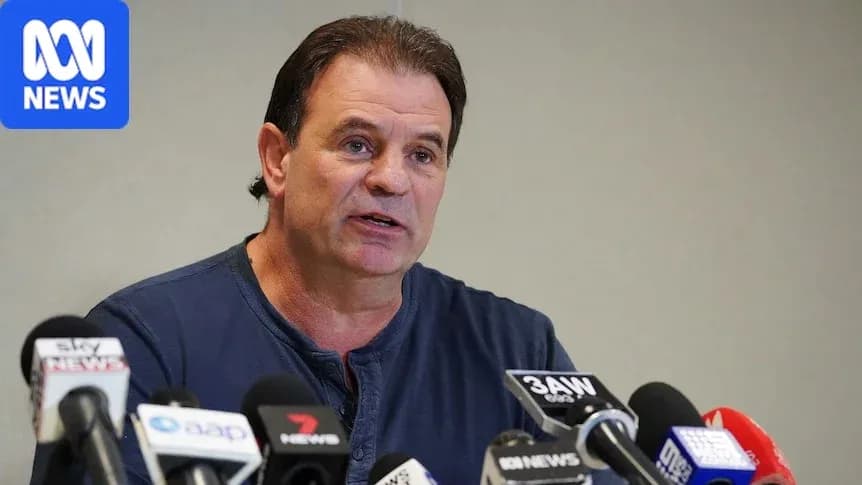
John Setka has admitted he broke workplace laws in a furious campaign to drive AFL umpiring boss Stephen McBurney out of his job – but he’s not backing down from the stance that put him there.
The former Victorian secretary of the CFMEU now faces a fine of up to $18,730, and potentially a much larger personal bill, with the union refusing to cover his legal costs. For a man once seen as one of the most powerful and combative figures in the Australian union movement, it is an unusually exposed position.
A union strongman in the dock
In the Federal Court on Friday, barristers for Setka and the CFMEU admitted they had breached the Fair Work Act. The case centres on a two-week burst of public attacks in mid‑2024, when Setka threatened industrial chaos on AFL construction projects unless the league sacked McBurney, its head of umpiring.
McBurney is not just any football official. As Australian Building and Construction Commissioner between 2018 and 2023, he ran or took part in more than 50 cases against the CFMEU. To Setka, he was the face of a regulator that had relentlessly pursued his union. To the court, that history is exactly what turns a spray into a serious legal breach.
The Fair Work Ombudsman argued that Setka’s demands were unlawful because they targeted McBurney for his previous, lawful work as ABCC commissioner. On Friday, the legal argument was over. The only question now is how steep the penalty will be.
Setka did not appear in court. His barrister, Margo Harris, painted the picture of a man whose era has passed: retired, in the middle of a divorce, and spending most of his time caring for his elderly mother. She urged the court not to impose a heavy penalty.
“This is going to cost the AFL a lot of f**king money”
The language that brought him here was anything but restrained.
During the 2024 flare‑up, Setka used social media, press conferences and broadcast interviews to warn the AFL it would pay dearly for employing McBurney.
“This is going to cost the AFL a lot of f**king money. I hope it’s worth it,” he said in one of the comments read to the court.
“Projects without our full co-operation are going to be a f**king misery for them. They will regret the day they ever employed him.”
He described McBurney as “a zealot” who “hates unions” and “hates workers in general”. He also authorised a social media post depicting McBurney on a mock “(Not) Wanted Dead or Alive” poster.
Harris tried to blunt the impact of those outbursts. She told Justice John Snaden there was no evidence Setka had “actively sought” media attention, even though he gave multiple interviews and held a press conference.
She also argued he did not “deliberately” wage a media campaign against McBurney. The judge pressed her on that choice of words.
“When I say deliberate, there’s a range of deliberateness. It’s not a question of being pregnant or not pregnant,” she replied. “It comes in the stream of the interview. There’s a question asked of him, he answers it.”
The Ombudsman’s barrister, Marc Felman, was having none of it.
“There can be no question that this is a media campaign,” he told the court, calling the breaches “very, very serious”.
He accepted that calls for AFL sackings are hardly rare. What made this one unlawful, he said, was the link to McBurney’s former role enforcing building laws against the CFMEU.
The AFL stood by McBurney at the time. A four‑time grand final umpire, he remains the league’s head of officiating.
A union trying to shed its old skin
The case lands at a sensitive moment for Victoria’s construction world. In three days, a Royal Commission will open hearings into the state government’s “Big Build” projects, already shadowed by allegations of corruption and criminal infiltration. The CFMEU’s culture and conduct are expected to loom large.
Setka left the union weeks after his verbal barrage against McBurney. He still faces separate criminal charges over alleged harassment of the CFMEU’s administrators.
The union itself, now under external administration, also stands to be punished. It could be fined up to $93,900 for its role in the unlawful coercion.
Barrister Andrew White, representing the CFMEU, urged the court to recognise what he described as a sharp break from the Setka years. He said hundreds of officials from that era had either been removed or departed, clearing the way for a different approach.
“A new culture of lawful but robust unionism is taking hold,” he said, arguing that penalties should reflect a union trying to rebuild rather than one treating fines as “the cost of doing business”.
That phrase – long associated with the CFMEU’s willingness to absorb legal hits in pursuit of industrial muscle – now hangs over the case. If the court believes the culture has truly shifted, the sanction could ease. If not, the numbers could bite hard.
Justice Snaden reserved his decision on penalties for both Setka and the CFMEU.
For a man who once relished being the immovable object on Australia’s building sites, the next judgment won’t be about who blinks first on a picket line. It will be about how much the law is prepared to make him, and his old union, pay for the way they chose their enemies.