
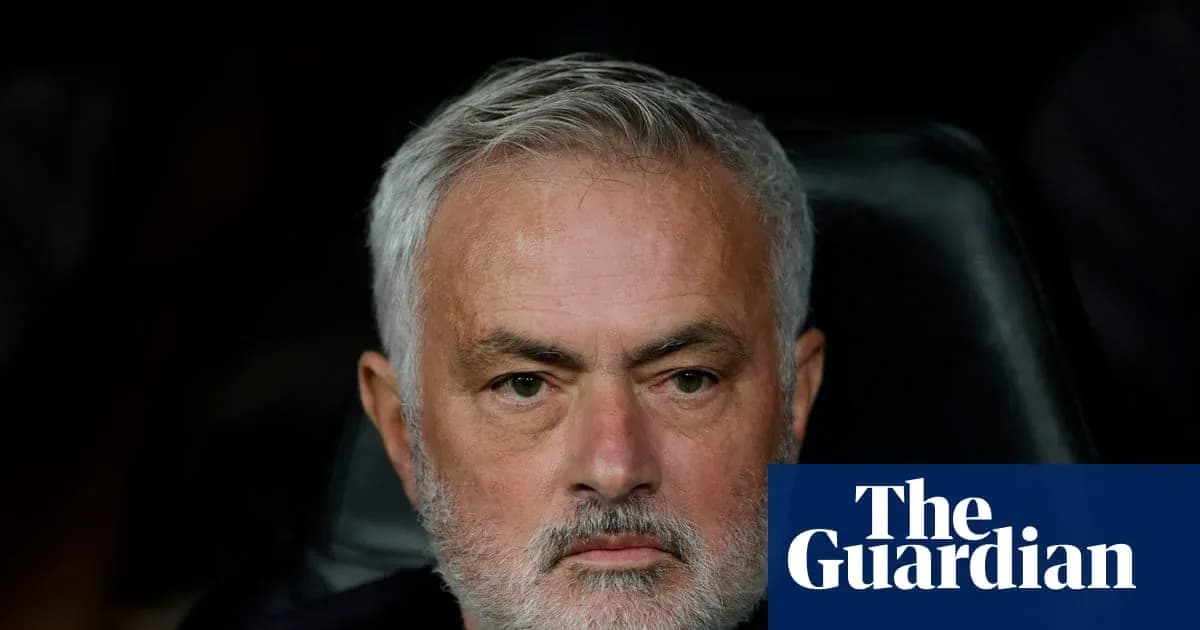
José Mourinho Returns to the Clásico: A New Era Against Barcelona
José Mourinho has already hit the greatest hits. The por que? routine. The printed sheet waved in fury. The press conference no‑show. Three months into his second life at Real Madrid and he has played all the old chords without yet stepping into the one arena that defines him here.
That changes on Sunday night.
He walks back into the stadium that first met him 30 years ago as Bobby Robson’s bright young translator and last saw him in 2013 as the most polarising manager in football. Back then, he left as a villain to many, a standard-bearer to others. Now he returns as the man charged with doing the one thing he once swore he would only ever do from the outside: bring about the destruction of Barcelona.
The man who once said “today, tomorrow and always, Barcelona in my heart” now stands on the opposite touchline, hired to rip out that very heart. The symmetry is brutal, the irony obvious, the stakes familiar.
Old wounds, new clásico
“The clásico is just another game in the championship but to say it’s a game like any other would be to lie, totally unreal,” Mourinho said on Wednesday. He has lived it. He has bled for it. He has weaponised it.
Across the divide, Barcelona’s new idol can barely hide his excitement. Lamine Yamal, 17 and already the face of a new era, wants the chaos as much as the football. “I love the needle,” he says. “The Mourinho-Guardiola era, I loved all that. That’s football. Sport is serious but I want a show and we have more fun.”
He might get his wish. Because this is not just another meeting of Spain’s two superclubs. It is Mourinho’s rivalry, rebooted. A feud that once helped define a generation of European football is being dragged back into the light.
Since he left Spain, Madrid have built a dynasty without Barcelona anywhere near their European throne room. The long‑obsessed decima, the 10th European Cup that eluded them for 12 years, opened the floodgates: the 11th, 12th, 13th, 14th and 15th have followed in just a decade. No European clásico since that poisonous 2011 semi-final, when Pep Guardiola labelled him the “puto amo” and Mourinho answered with his infamous por que speech, accusing Uefa of tilting the field towards Barcelona.
Yet this week, everything in Europe has felt like a prelude. PSG, Leipzig, Roma, Sevilla – all reduced to supporting roles around the one game that still bends Spain’s footballing calendar out of shape.
Pérez’s chosen warrior, again
The roots of this reunion stretch back to 2010. Mourinho’s appointment in Madrid was sealed the night he won the Champions League with Inter, but the true moment came earlier, in that Camp Nou semi-final. He sprinted across the pitch, finger raised, as the final whistle confirmed Barcelona’s elimination. Madrid, watching from home, were spared the nightmare of their great rival lifting the European Cup in their own stadium. They were also given a blueprint for stopping a team that seemed untouchable.
Florentino Pérez did not miss the message. He had returned to the presidency in 2009 after the first galáctico project had collapsed, and he had nothing to show for it. Barcelona ruled Spain and Europe, powered by the core of Spain’s 2010 World Cup winners. Six of Vicente del Bosque’s starters in Johannesburg came from the Camp Nou. Madrid needed more than a manager; they needed a combatant.
“This year’s galáctico is José Mourinho,” Pérez declared.
What followed were three years Mourinho would later describe as “intense, almost violent”. The fights were not only with Barcelona or the media. They were inside his own dressing room. Yet Pérez never stopped believing. Of all the coaches he has hired, Mourinho remains the one he truly liked, the one he understood, the one whose belligerence he admired rather than feared.
Mourinho’s first clásico ended in a 5-0 humiliation. Barcelona went on to win the league and the Champions League. His final season in Madrid brought no trophies. Guardiola’s Barcelona still finished with twice as many titles as Mourinho’s Madrid. But of the four competitions Guardiola failed to win at Barcelona, Mourinho took three from him. Pérez clung to that detail.
Every time Madrid lifted another European Cup in the years that followed, Pérez called Mourinho to tell him: you started this.
Crisis, or the closest thing to it
Time has moved on. The names have changed. The fault lines have not.
Madrid arrive at this clásico without a trophy in two seasons. In the first of those, Barcelona wrapped up the league with two games to spare and completed a domestic treble. They beat Madrid four times, scoring 16 goals. Last season, they clinched the title with three weeks to go, crowning it with a clásico victory that underlined their superiority during a year when Madrid’s internal fractures played out in public.
Then Spain won the World Cup, and the balance of power in the national team shifted too. Eight Barcelona players were in the squad. Madrid’s only representative, Marc Cucurella, signed after the tournament had already begun.
If Madrid have anything resembling a crisis, this is it. So Pérez reached again for his old solution. The flaws, the meltdowns, the scorched-earth endings had faded in the rear-view mirror. What remained was nostalgia and the memory of a man who could walk into a dressing room and own it, who would gladly drag a club into war.
And there was plenty of ammunition waiting.
Negreira, paranoia and the old conspiracies
The Negreira case has become the drumbeat beneath this clásico. Barcelona paid José María Enríquez Negreira, then vice-president of the referees’ committee, more than €7m between 2001 and 2018. Barcelona insist there was no corruption, describing Negreira as an adviser. The investigation rumbles on, unresolved.
For Madrid, it has become the centrepiece of a broader narrative. Once, the two clubs stood shoulder to shoulder in the Super League project. Now the Negreira affair dominates Madrid’s discourse. Every contentious decision, every debatable call, gets dragged into the same orbit. Mistakes – and even decisions that are not mistakes at all – are dressed up as evidence of a darker plot.
Pérez’s extraordinary rant in May, thick with campaigning, conspiracy and political grievance, felt like an invitation. It was Mourinho’s kind of landscape. The league president comparing Madrid’s TV channel to Joseph Goebbels’ propaganda machine only hardened the lines.
Whether the complaints are justified in each specific case is one question. Whether the constant drumbeat of conspiracy has any grounding is another. Mourinho does not always care for the nuance. He understands the power of the siege mentality. He built one here before. He is building another now.
Same Mourinho, new cast
When he walked back through the doors at Valdebebas, Mourinho insisted he was older, calmer, different. Maybe. But defeat has a way of stripping away the varnish.
After losing to Betis, he went straight back to por que?, questioning decisions that were, by the letter of the law, correct. After losing to Atlético, he arrived with a printout, armed with numbers and outrage. Then came Villarreal: he ran on to the pitch to embrace Vinícius Júnior after the Brazilian scored, only for the goal to be disallowed and Vinícius sent off for pulling Nathan Saliba’s hair. Four games on the sidelines for Madrid’s star forward. No clásico.
Mourinho did not appear at the press conference that followed. Officially, he stayed away to avoid saying something that would earn him a suspension for the one game he could not miss. It also fit the old pattern. The performance from the touchline, the silence at the microphone, the message still delivered.
Yet as the clásico approaches, the mood around Madrid has lightened. A week ago, Barcelona had 11 wins from 11 in the league, scoring at will, averaging more than four goals a game. They looked untouchable. Madrid had already lost twice, their football stodgy, their problems familiar. The title, many said, could be effectively decided this weekend. And not in Madrid’s favour.
Then something shifted.
A team, almost by accident
In Rome, Madrid produced another of those comebacks that defy logic and yet keep happening. From 3-1 down to 4-3 up in the final seven minutes. It looked like another of those wild European nights that stand alone, a one-off burst of adrenaline.
But there was a pattern hiding in plain sight. In those closing minutes at the Olimpico, Arda Güler played. Yan Diomande played. Fede Valverde moved to right-back. Vinícius was not on the pitch.
It felt obvious to anyone watching. It felt obvious to Mourinho too. So he did it again.
Against Sevilla on Sunday, Madrid scored four. Three of them were stunning. Güler sparkled, Diomande drove the game from midfield, Valverde gave balance on the flank. On Wednesday, Leipzig came to the Bernabéu and left with four in their net as well. Once Vinícius went off, Diomande smashed in a superb volley. The night before, Barcelona had conceded four at the Parc des Princes.
Suddenly, the gap did not feel so vast.
Hansi Flick had already shown his hand. The Barcelona coach rested Rodri and withdrew Pedri and Raphinha early in Paris, clearly saving legs for Madrid. He called the clásico decisive, the kind of fixture that can bend a season’s trajectory in a single evening. Then he looked at his defence, at a side that has already conceded 15 league goals, and warned his players that this is a number that cannot keep climbing.
Mourinho, true to type, pointed to the calendar. Madrid have one day fewer to prepare than Barcelona. He framed it as another slight, another sign of how “they” are against his team, even if Barcelona had to travel to Paris while Madrid stayed at home to face Leipzig. The excuses are logged before a ball is kicked. The pressure is shared outwards.
A clásico with something real at stake
For Thibaut Courtois, the equation is simple. “We need to cut the gap and we can only do that by winning,” the goalkeeper said of Madrid’s six-point deficit. “We’re going with confidence.”
He is right on both counts. Lose, and Madrid are staring at a nine-point chasm against a Barcelona side that has barely put a foot wrong domestically. Win, and the title race reopens. Draw, and the sense of inevitability returns to Barcelona’s march.
This is where Mourinho thrives. On the edge. With something to chase and someone to fight.
He insists he is still learning his squad. “I had to get to know them,” he said on Wednesday night. “I’ve only been here 105 days; it’s not long.” Yet in those 105 days, the familiar contours of a Mourinho team have begun to appear: the grievances, the tactical jolts, the calculated storms.
On Sunday, he walks back into the clásico, the stage that once consumed him and, in many ways, defined him. Barcelona arrive with the form, the goals and the boy wonder who craves the drama. Madrid arrive with scars, a plan that might finally make sense, and a coach who has never been more dangerous than when someone tells him he cannot win.
The question now is not whether Mourinho has changed.
It is whether Barcelona are ready for the version of him they helped create.





