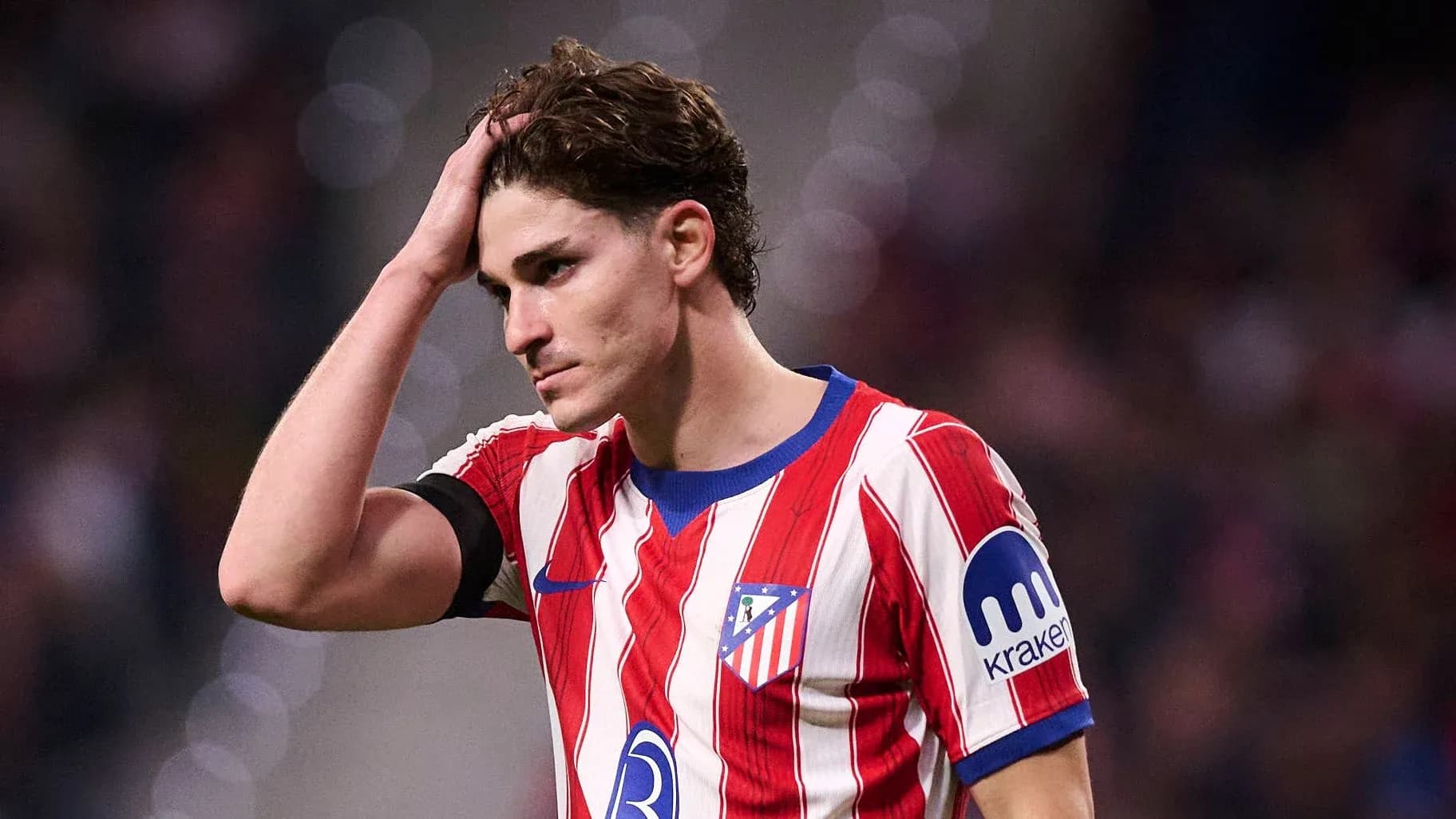
Julian Alvarez's Missed Chances and Redemption Attempt
Julian Alvarez had the script in his hands and let it burn.
Barcelona at the Metropolitano, under the lights, with a restless crowd waiting for a hero and a villain all at once. No backdrop could have been better for the Argentine to close a turbulent chapter: the summer of his public flirtation with Barça, the clashes with his own supporters, the apologies, the slow rebuilding of trust.
One game. One chance. And when it arrived, he froze.
A perfect chance, a brutal miss
Six minutes had gone when the ball broke his way and the pitch opened up in front of him. Green grass, space, and only Joan Garcia between him and redemption. This was the moment every forward dreams of and every controversial figure needs: a one-on-one to silence the noise, bury the anger, and turn jeers into applause.
Alvarez ran. The stadium rose with him. Then came the hesitation.
He delayed the shot, took one touch too many, then another. The doubt gave Garcia all the time he needed. The Barcelona goalkeeper surged out, closed the angle, and cleanly took the ball off Alvarez’s feet. A huge chance gone, swallowed by a mix of nerves and overthinking, with a big assist from a keeper who read it perfectly.
The Metropolitano groaned. Forgiveness, so close, slipped away with that touch.
From error to inspiration
To his credit, Alvarez did not disappear.
Four minutes later he dropped into a pocket of space, lifted his head, and threaded a superb pass into the run of Giuliano Simeone. One touch, one finish, 1-0. A wonderful assist, sharp and incisive, as if to remind everyone that his game is more than just the final shot.
For a moment, the mood shifted. The same fans who had just cursed his miss now saw a player still involved, still creating, still trying to make amends with his football.
The door to reconciliation creaked open again.
The lob that broke the patience
Fate handed him another look. Not as clear as the first, but big enough.
Garcia was off his line, defenders closing in, the angle awkward. Alvarez spotted the opportunity and went for the bold option: a lob from distance, the kind of finish that, if it drops under the bar, turns a complicated night into a redemption story.
The idea was clever. The execution was nowhere near.
The ball flew high, well over the crossbar, killing the move and, with it, what remained of the crowd’s patience. The whistles came back, sharper now, angrier. Two big chances against Barcelona, two failures. For a fanbase already wounded by his summer comments about wanting to join Barça, it was too much.
What had looked like a fragile truce dissolved in a few seconds of poor finishing.
Both key moments carried the same marks: hesitation when clarity was needed, imprecision where once there had been ruthlessness, and a striking lack of that fearless edge that used to define him.
Simeone stands firm
On the touchline, Diego Simeone never blinked.
He could have hooked his striker when the atmosphere turned. He did not. When Alexander Sorloth came on, Alvarez was shifted out to the left, but he stayed on the pitch, still part of the plan, still trusted.
Atlético, though, were second best. Barcelona took control, and the home side closed a difficult week with two painful defeats, the optimism of recent weeks suddenly dented.
Simeone refused to join the chorus of frustration. He backed his No 9 in public as well as in private. From the sideline he kept urging him on; in the press room he doubled down.
“We love him very much, and we need him,” he said. “We need the best version of Julian Alvarez, and we will work with him.”
The coach’s message was clear: the Spider is still his man.
Old wounds reopened
Not long ago, it seemed the worst was behind them.
Alvarez had stood in front of the microphones after scoring his first goals at the Metropolitano, against Deportivo La Coruna, and offered a public apology for his World Cup comments.
“I wanted to apologise to our fans for my words during the World Cup,” he said then. “It was a mistake, both in the way I expressed it and in the timing. More importantly, I understand the fans’ anger. If I were a supporter, I would be angry too, especially given the way they backed me. They were extremely generous towards me, and I appreciate that a great deal. I also want to thank the team, because my teammates supported me throughout this period.”
He had ended his drought against Stuttgart. He had scored the decisive goal against Deportivo La Coruna. The Metropolitano had responded with applause and warmth, as if ready to move on. The relationship, bruised and battered, looked to be healing.
But football is unforgiving. So are memories.
Against Barcelona, all that progress felt fragile again. Two missed chances were enough to drag the old resentment back to the surface. The boos that followed his second miss were not just about a wayward lob; they carried the weight of a summer’s anger and a trust that still hasn’t fully returned.
For Julian Alvarez, the path to reconciliation has not been closed. It has simply become steeper, with far less margin for error the next time the goal opens up and the stadium holds its breath.