Julio César Chávez Jr. Dominates with First-Round Knockout
PUEBLA — The clock had not yet completed its first full lap when the old name roared back to life.
On Saturday night, September 12, 2026, at the Miguel Hidalgo Gymnasium in Puebla, Mexico, Julio César Chávez Jr. walked into the ring carrying the familiar weight of his surname and the lingering doubts of a career that has veered too often off course. He walked out with a statement.
Two minutes and 59 seconds. That’s all he needed to flatten Colombian veteran Jeison Troncoso in a heavyweight/super middleweight contest that was less about the opponent and more about the message.
The “Son of the Legend” wasn’t there to box rounds. He was there to send a warning.
A First-Round Beating
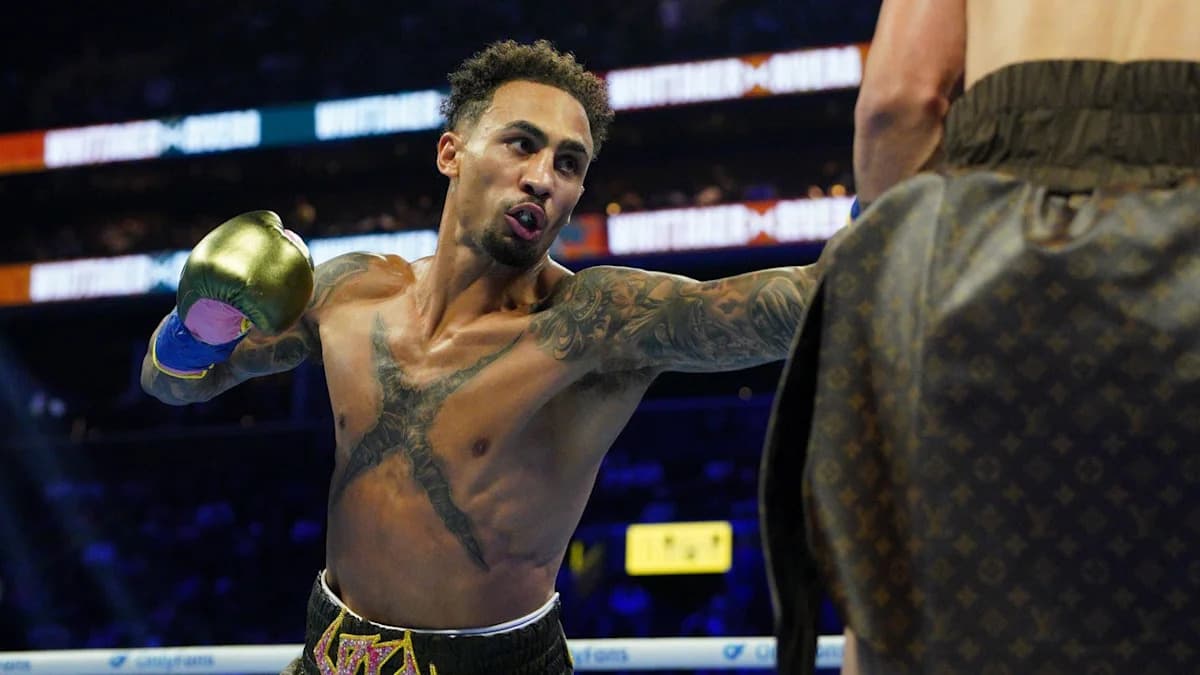
From the opening command, Chávez Jr. went straight to work. No study round, no cautious jab-and-move. He marched Troncoso backward, pinning him toward a corner and digging hard to the body. The Mexican mixed in sharp combinations upstairs, forcing the Colombian to turtle up behind a high guard that never looked entirely comfortable.
Troncoso tried to create space, tried to buy himself time with distance and a tight shell. The pressure didn’t allow it. Each second under fire stripped away a bit more of his resistance.
Then came the turning point.
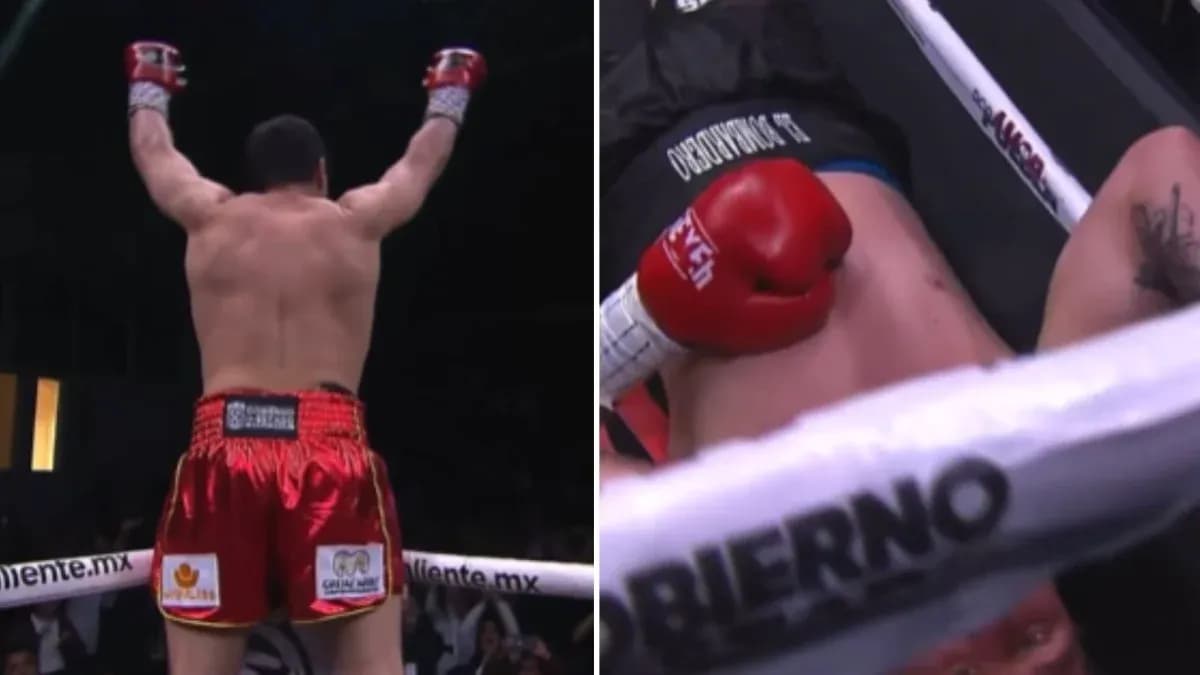
Chávez Jr. uncorked a brutal left hook that sent Troncoso stumbling against the ropes, legs betraying him, eyes suddenly glassy. Sensing the finish, the Sinaloa native stepped harder on the accelerator, pouring on a heavy combination that crashed through what was left of Troncoso’s defense and dumped him onto the canvas.
He didn’t beat the moment.
The referee watched closely, took the count and the fighter’s condition into account, and with a single second left in the opening round, waved it off. Officially, a technical knockout. In reality, a one-round demolition.
Specialized outlets such as Récord, Mediotiempo and Tribuna Noticias all converged on the same conclusion: from the first bell, Chávez Jr. had only one plan — end it early and loudly.
A Streak He Hadn’t Touched in a Decade
Behind the violence of the finish sits a quieter, more revealing number.
This was Chávez Jr.’s third consecutive victory as a professional. That kind of run had not belonged to him since the years between 2010 and 2012, before Sergio “Maravilla” Martínez took his undefeated record and his world title, and with them a large piece of his aura.
Now, in Puebla, the numbers shifted again.
The win pushes his professional record to 56 victories, 36 of those before the limit. It’s not just a tally. It’s a reminder that, even at this stage, his power and experience still travel with him.
In the days leading up to the fight, Récord highlighted a phrase that summed up his mood. Asked about his age and whether his best days were behind him, Chávez Jr. leaned on an old saying: “old are the hills.” It was a clear message — he refuses to be filed away as a relic.
The Opponent Question
Not everyone left convinced.
While the home crowd in Puebla celebrated the thunderous finish, analysts quickly turned to the level of opposition. Coverage from outlets such as Mediotiempo underlined the obvious: Troncoso did not offer the kind of resistance expected of a serious test. His defensive resources looked limited, his response under pressure almost nonexistent. That made Chávez Jr.’s job simpler, the knockout more inevitable.
The debate is familiar in boxing. Was this a real measure of where he stands, or just a carefully chosen stepping stone?
Inside Chávez Jr.’s camp, the noise doesn’t seem to bother anyone. Satisfaction comes from something more basic: staying active, feeling sharp, and landing with authority. According to sources close to the team, each outing is part of a calculated rebuild — a sequence of fights designed to restore rhythm, reinforce confidence, and slowly climb toward opponents with higher rankings and bigger spotlights.
Eyes Back on a Belt
Strip away the nostalgia, the name, the criticism, and the story narrows to a simple goal.
The emphatic knockout in Puebla fits neatly into the roadmap his corner has drawn for the second half of his career. After years spent drifting away from the major international stage, he is stitching together something he has lacked for a long time: consistency.
Three wins in a row. A quick, ruthless finish in front of a Mexican crowd. A record that still looks imposing on paper.
The path from here is clear enough. If the momentum holds, the recent performances give his team leverage to negotiate with world-ranked contenders and drag his name back into conversations that once seemed closed to him.
The surname has always carried weight. The question now is whether this version of Julio César Chávez Jr. can turn that weight back into another shot at a world title — and what happens when the man across from him is no longer a tune-up, but a genuine threat.