Katie Taylor: A Champion's Journey in Women's Boxing
Katie Taylor’s story has never been a straight line. It’s been a climb – steep, unforgiving, and lit by the kind of moments that change not just a career, but a sport.
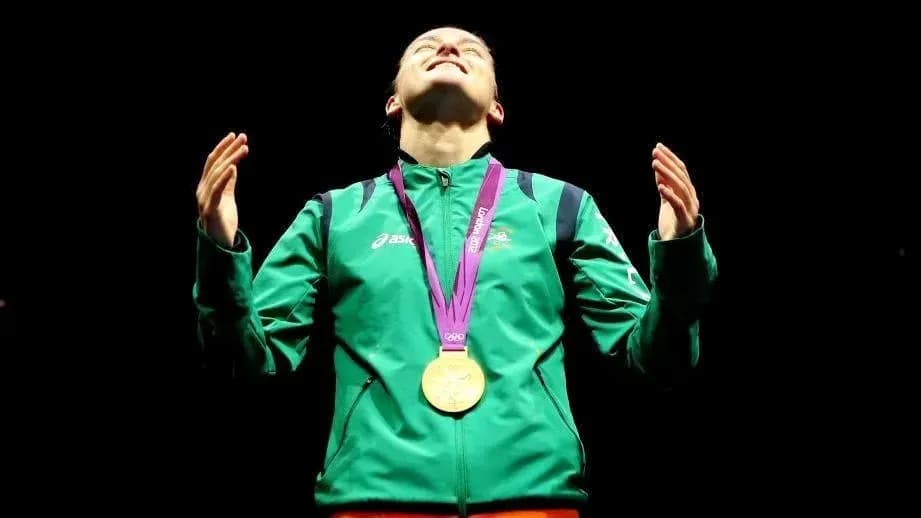
Long before the bright lights of Madison Square Garden or the roar of 60,000 in Texas, Taylor was already a serial winner. Five world titles as an amateur, a relentless conveyor belt of medals, and then the one that altered everything: Olympic gold in London in 2012. On a summer’s day when women’s boxing finally walked into the Olympic spotlight, Taylor didn’t just win; she carried a nation with her.
She was Ireland’s only gold medallist at those Games, one of just 15 Irish athletes ever to stand on the top step of an Olympic podium in any sport. The sound of “Amhrán na bhFiann” in London belonged to her.
Her father, Peter, the man who had guided her from childhood into the unforgiving world of elite boxing, was there to celebrate. Their partnership had been the backbone of her rise, a tight-knit operation built on trust, repetition and a shared belief that she could break through barriers that had stood for generations.
Olympic success might have been a natural end point for some. Taylor treated it as a launchpad. She moved quickly, pushing her way into the plans of Matchroom’s Eddie Hearn and persuading one of boxing’s most influential promoters to take a chance on something the sport had long ignored: a woman as a headline professional attraction. She became the first female fighter Hearn signed. A quiet revolution, sealed with a pen.
The professional debut came at Wembley Arena in November 2016. It wasn’t a gentle introduction. The venue was packed with Irish fans who had followed her from Olympic rings to professional ropes, turning a standard undercard bout into something that felt like a homecoming. Taylor delivered, winning and setting the tone for what would follow: pressure, expectation, and a refusal to blink.
The climb through the pro ranks was rapid, but the higher she went, the narrower the margins became. At Madison Square Garden in 2019, chasing the status of Ireland’s first four-belt world champion, she ran into Delfine Persoon and very nearly saw the dream ripped away. It was brutal, chaotic, and uncomfortably close. Taylor survived, edged the decision, and left New York with all the belts – but also with the marks of a night that could easily have gone the other way.
She went back to MSG in 2022, this time for a fight that had been talked about for years. Amanda Serrano. Two of the best of their era, finally signing on the line, finally walking to the ring at a sold-out Garden. History framed the occasion: never before had two women headlined a boxing event at that iconic New York arena.
The fight matched the stage. Ten rounds of intensity, momentum swings, and raw will. There were moments when Taylor looked ready to topple, when the weight of Serrano’s punches and the scale of the occasion threatened to swallow her. She stayed on her feet. She found enough in the final rounds to claw back ground and edge a split decision that will be argued over for years. It could have been very different. It wasn’t. That, in essence, is Taylor.
Backstage at the Garden, away from the noise and the scorecards, she shared a quieter moment with her mother, Bridget. A constant presence, often just out of the camera’s frame, Bridget had walked every step of this journey too. In those private spaces, the fighter and the family merge again, the belts and accolades briefly secondary to the people who carried her through the grind.
For nine long years, there was no fight in Ireland. Politics, promotion, logistics – the reasons stacked up, and the wait dragged on. All the while, Taylor’s legend grew everywhere but home. Then, in November 2024, the dam finally broke. She walked out in front of her own people again, an Irish superstar returning to the ring on Irish soil. It wasn’t just a bout; it was a homecoming that had been postponed far too long.
Her road did not end there. She went back on the move, chasing closure and clarity against a familiar rival. In 2024, Taylor and Serrano met again, this time under the vast Texas sky, in front of 60,000 fans and broadcast live on Netflix. Women’s boxing, once an afterthought, now sat centre stage in a modern sporting spectacle – and Taylor was still the face of it.
By then she stood as the undisputed light-welterweight champion, on top of the world, her résumé complete enough for any fighter in any era. She looked, from the outside at least, like a champion ready to sail off into retirement with every box ticked and every question answered.
Yet even in the final fight week, she kept finding ways to make the story bigger than herself. She soaked up each moment, each handshake, each cheer, with the air of someone who understood that these days do not last forever. At a public workout, she pulled a 10-year-old girl, Clodagh Keating, into the ring and ran through drills with her, turning a routine media event into a lifelong memory for a young fan who saw her hero up close.
It was a small gesture in the middle of a long career. But it captured the essence of what Katie Taylor had become: not just a champion collecting belts, but a standard-bearer reshaping what was possible – and who might follow her into the ring next.