Katie Taylor's Final Fight: A Historic Night at Croke Park
On Saturday night in Dublin, Katie Taylor will do something no Irish fighter has done in more than half a century. She will walk out under the lights at Croke Park, 80,000 voices behind her, for the final fight of a career that changed the sport. Then she will say goodbye.
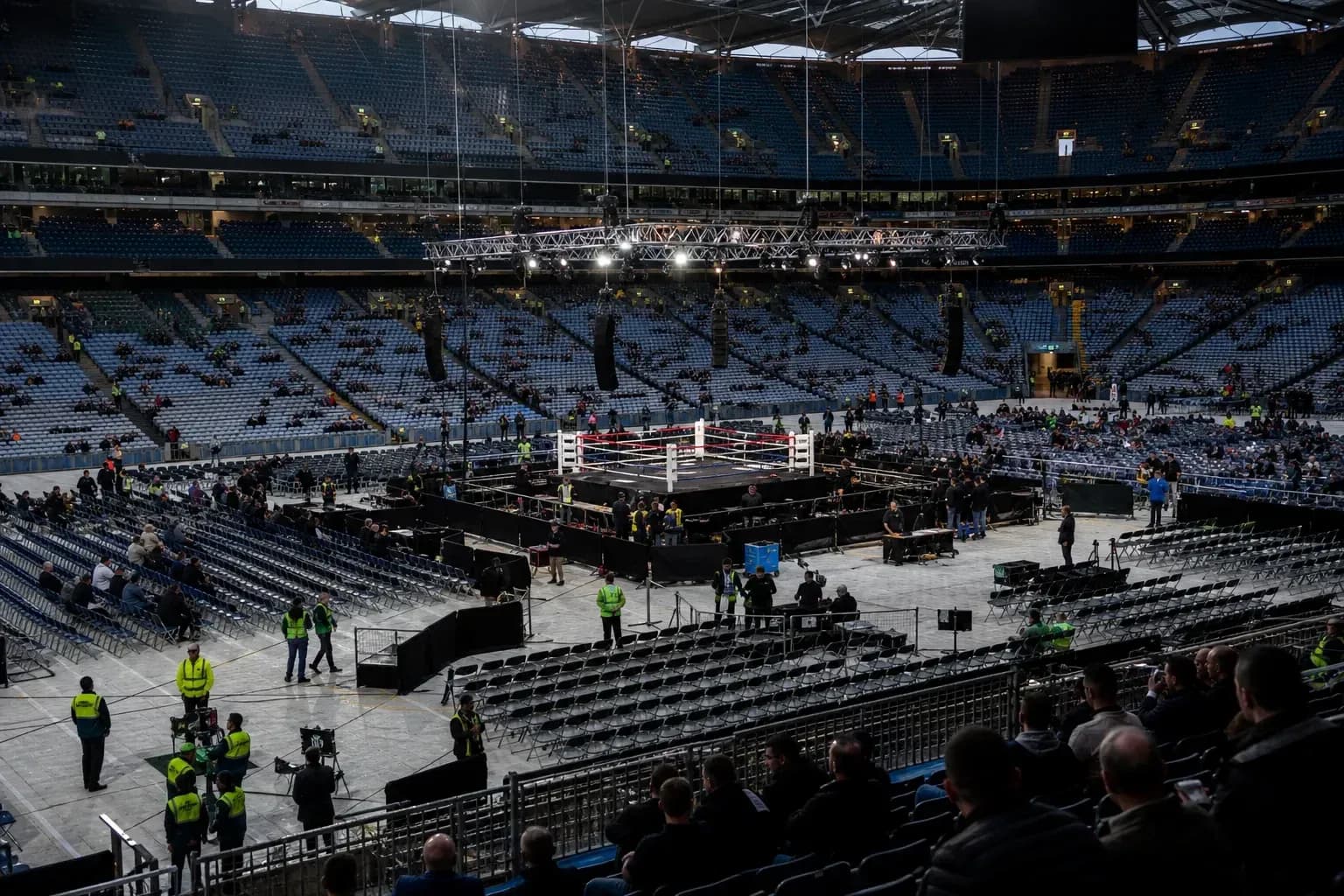
The 40-year-old Olympic champion and undisputed standard-bearer for women’s boxing will defend her light welterweight titles in a sold‑out stadium that sold its tickets in a blur. According to The Guardian, every seat went within 17 minutes of going on sale in June. Seventeen minutes for a lifetime’s work.
RTÉ will show the card free-to-air across Ireland, turning the occasion into a national event rather than just another night on the boxing calendar. It will not be only about punches and scorecards. The programme folds in musical performances, including a set from Westlife, to frame Taylor’s farewell as something closer to a state celebration than a standard fight bill.
A Stadium, a Legend, and a Long Wait
Croke Park has not staged a major boxing event since 1972, when Muhammad Ali fought Alvin Lewis. That was the last time the stadium ropes framed a global figure in the ring. On Saturday, Taylor steps into that same space, the latest in a very short line.
Her brother‑in‑law, Trevor McMahon, founder of Liberty Boxing Gym, knows what the night represents. He has called it the end of an era, a special evening that will carry a trace of sadness because of what it closes. For those who have followed her from small halls to Olympic podiums to Madison Square Garden, the sense of finality will be hard to ignore.
In Bray, County Wicklow, they are not ignoring anything. They are turning the town into a mural. Hats, flags and posters with Taylor’s image fill shopfronts and stalls. For locals, this is not just a sporting farewell; it is their neighbour’s last ring walk on the biggest stage she has ever commanded.
Catherine Hill, one of those Bray residents, summed up what Taylor has come to represent. To young girls looking at boxing, or any sport at all, Taylor is no longer just a champion. She is the proof that the path exists.
From “K Taylor” to Croke Park
That path was never laid out for her. It had to be carved.
Taylor started boxing as a child at a gym known simply as Tin Can. At the time, women and girls were banned from entering the ring in Ireland and the United Kingdom. If she wanted to fight, she had to disguise herself on paper. She registered as “K Taylor,” letting the initial do the work of pretending she was a boy.
Those early bouts were not just about experience. Together with her father, Pete, she pushed at the rules that kept girls outside the ropes. Their efforts fed into the decision to lift the ban on women’s boxing in Ireland in 2001, when she was just 15. The sport she leaves behind on Saturday barely resembles the one she had to sneak into as a teenager.
The years that followed are etched into modern boxing history. Taylor claimed Olympic gold at London 2012, one of the defining images of those Games and a turning point for women’s boxing on the global stage. She went on to headline cards at Madison Square Garden, a venue that once seemed off-limits to female fighters, and engaged in a trilogy of high‑profile bouts with Amanda Serrano that pushed the women’s game to new commercial and competitive heights.
Now the story circles back to Dublin, to Croke Park, to one last defence.
A Dangerous Final Assignment
This is not a farewell exhibition. It is a live title fight against a dangerous, undefeated opponent.
Across the ring will stand Flora Pili, a 29‑year‑old French fighter with a perfect professional record: 12 wins from 12 bouts. She arrives in Dublin as the IBO light welterweight champion, carrying her own belt into a night dominated by Taylor’s legacy.
Pili represents the generation Taylor helped create. A younger champion, fully formed in a world where women headline cards and fill arenas, now trying to seize the spotlight from the pioneer who opened those doors. It is a compelling, unforgiving final assignment.
When Taylor climbs the steps to the ring on Saturday, she will do so knowing there are no more comebacks planned, no next opponent to weigh up. Just one more walk, one more anthem, one more bell.
For the girl who once had to hide behind an initial just to be allowed to fight, there may be no more fitting stage than a packed Croke Park, a nation watching for free, and a world champion in the opposite corner trying to take everything she has built.
The era her family say is ending will not be measured only by what happens on the scorecards. It will be measured by how many young fighters, in Bray and far beyond, now step through the ropes without ever needing to pretend to be someone else.