Katie Taylor's Final Night at Croke Park: A Memorable Undercard
Croke Park under the lights, Katie Taylor waiting in the wings for one last walk, and an undercard full of Irish fighters trying to seize their own moment before the main event. This was their night too, at least for a while, and several of them refused to let it pass quietly.
The crowd filtered in to the sound of early stoppages, rising noise and the promise of Westlife later on. The sense of occasion never really dipped.
Brennan’s bravery, Bevan’s ruthlessness
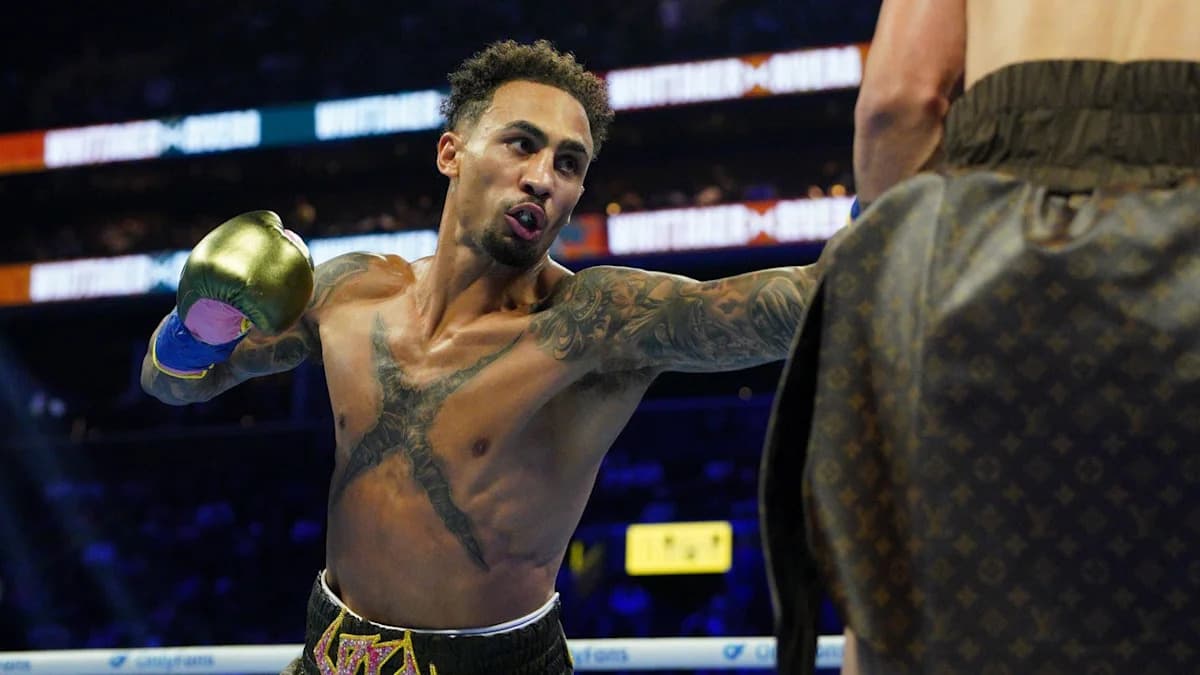
Emmet Brennan, the local lad who grew up just around the corner from Croke Park, opened the main card with the kind of courage that gets remembered in this city. The 6-0 super-middleweight and former Olympian walked out to face the heavily fancied Taylor Bevan, unbeaten at 9-0 and fighting like a man intent on silencing the home support.
Two rounds in, the pattern was clear. Bevan worked the body with cold efficiency, the red bloom around Brennan’s ribs telling its own story. Brennan still found flashes upstairs with his left hook, but he was already being pushed onto the back foot.
The third round nearly broke him. A thudding left hook dumped Brennan heavily to the canvas, and when he tried to smother the follow-up, Bevan picked the gaps again and sent him down once more. Only the bell stopped the fight from ending right there. It felt like a stay of execution, not a reprieve.
Brennan refused to fold. He somehow rode out the fourth, even enjoyed a couple of bright moments that drew a roar from the stands. He still needed a knockout of his own – only the second of his career – to flip the script, and that always looked like a fantasy against a puncher as sharp as Bevan.
The punishment kept coming. At the end of the fifth, another vicious left hook to the body put Brennan down for a third time. He rose, stubborn as ever, and sat on his stool preparing for a sixth round that seemed to worry everyone but him.
Doctors took a long look at him before that sixth began. They let it go, and Bevan went straight back to the ribs. Another body shot dragged Brennan to the floor again. Somehow, the referee allowed the contest to continue, and Bevan closed the show with a huge left hook that flattened the Dubliner.
It was a brutal finish to a fight that should have been stopped earlier. Bevan claimed a sixth-round stoppage; Brennan earned something less tangible but no less real – the respect of an 80,000-strong crowd and an opponent who kept his celebrations muted while medics checked the fallen man.
Donovan cuts loose, McKenna cut short
If Brennan’s defeat was about heart, Paddy Donovan’s win was about cold, clinical quality.
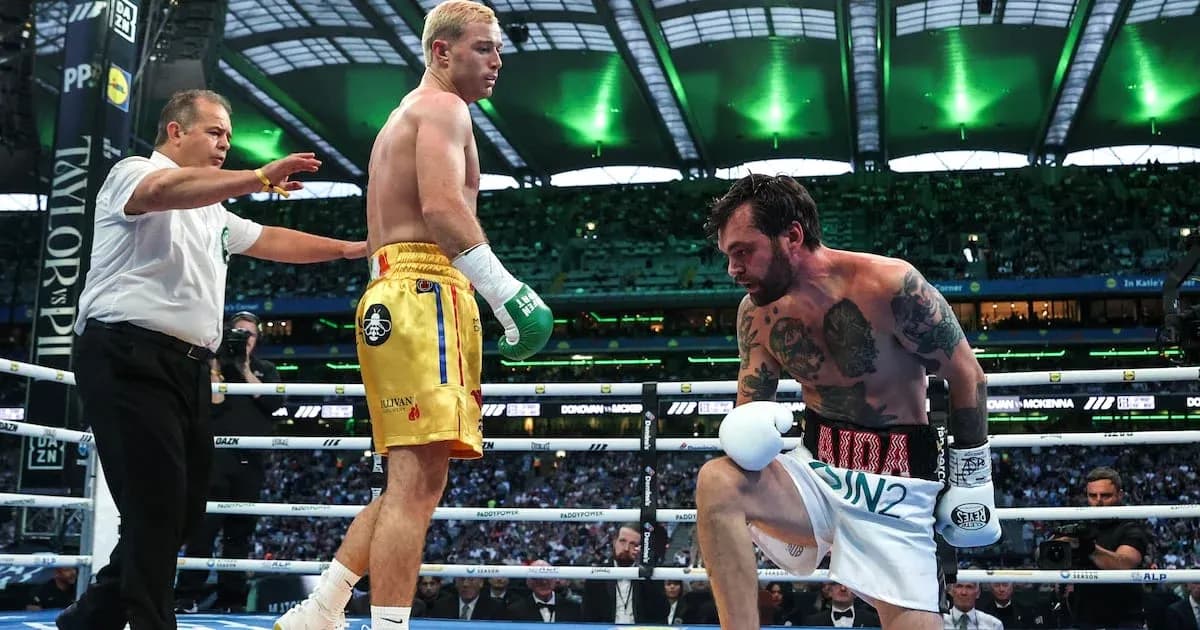
The Limerick southpaw, a former world title challenger, faced Belfast’s Tyrone McKenna, a fighter a few years beyond his prime but still dangerous enough to demand respect. Donovan gave him none in the second round, dropping him and instantly seizing control of the contest.
From there, he boxed like a man in complete command. In the third, his head movement stood out – slipping shot after shot, making McKenna miss by inches and then punishing him with that crisp lead right hand. He barely needed anything else. In the corner, Andy Lee, the former middleweight champion and Donovan’s trainer, told him he looked “sensational”. He was right.
McKenna, game as ever, tried to hang in, but the gap in sharpness was glaring. The pressure, the precision, the timing – all with Donovan. The fight ended in grisly fashion when a doctor waved it off in the fourth because of a horrendous cut over McKenna’s eye, blood spraying over the ringside tables.
It was an unsatisfying way for any fighter to lose, but by then the argument was already settled. Donovan walked away with a fifth-round stoppage on the card and, more importantly, what may stand as the most complete performance of his career so far: patient, controlled, razor-sharp.
Prospects make their mark
Earlier, the undercard had quietly done its job of setting the tone for the night. Irish prospects stepped into the biggest stadium in the country and treated it like any other ring.
Paul Ryan banked rounds and composure, taking a unanimous decision over Paddy Gallagher. Bobbi Flood outboxed Jack Swallow for another unanimous verdict, while Adam Olaniyan didn’t bother hanging around, blasting out Matej Hudak with a first-round stoppage.
Liverpool’s Joe McGrail imposed himself on Coleraine’s Matthew Boreland, forcing a fifth-round stoppage that underlined his growing reputation. And there was a family touch to the evening too: Katie Taylor’s cousin, Molly McCann, edged another step forward in her own career with a unanimous decision win over Sylwia Doligala in her fifth professional fight.
No belts changed hands in those bouts. No careers were defined. But on a night like this, with the sport’s greatest Irish trailblazer preparing to walk for the final time, every undercard fighter knew the cameras were rolling and the stakes were higher than usual. Most of them rose to it.
The stage clears for Taylor
Between fights, talk kept circling back to the same subject. Katie Taylor. Her legacy. What comes after.
Pieces by Malachy Clerkin, Donald McRae and James Cox had already framed the occasion: the improbable arc of a career that built an entire women’s boxing scene almost from scratch, the quiet defiance that carried her from small halls to Olympic gold to undisputed status, and the kids in the shadow of Croke Park who now say, without hesitation, “I want to be like Katie.”
By the time the preliminary action wrapped up, the picture was clear. The prospects had won, the veterans had bled, the crowd had warmed its voice. Emmet Brennan had left everything on the canvas. Paddy Donovan had underlined his credentials. Taylor Bevan had shown the ruthless side of the sport.
And somewhere beneath the stands, Katie Taylor waited for her final ring walk, Flora Pili in her path, the undisputed light-welterweight championship on the line, and 80,000 people ready to watch the fighter who made the impossible look routine try to do it one last time.