Katie Taylor's Journey from Doubt to Olympic Champion
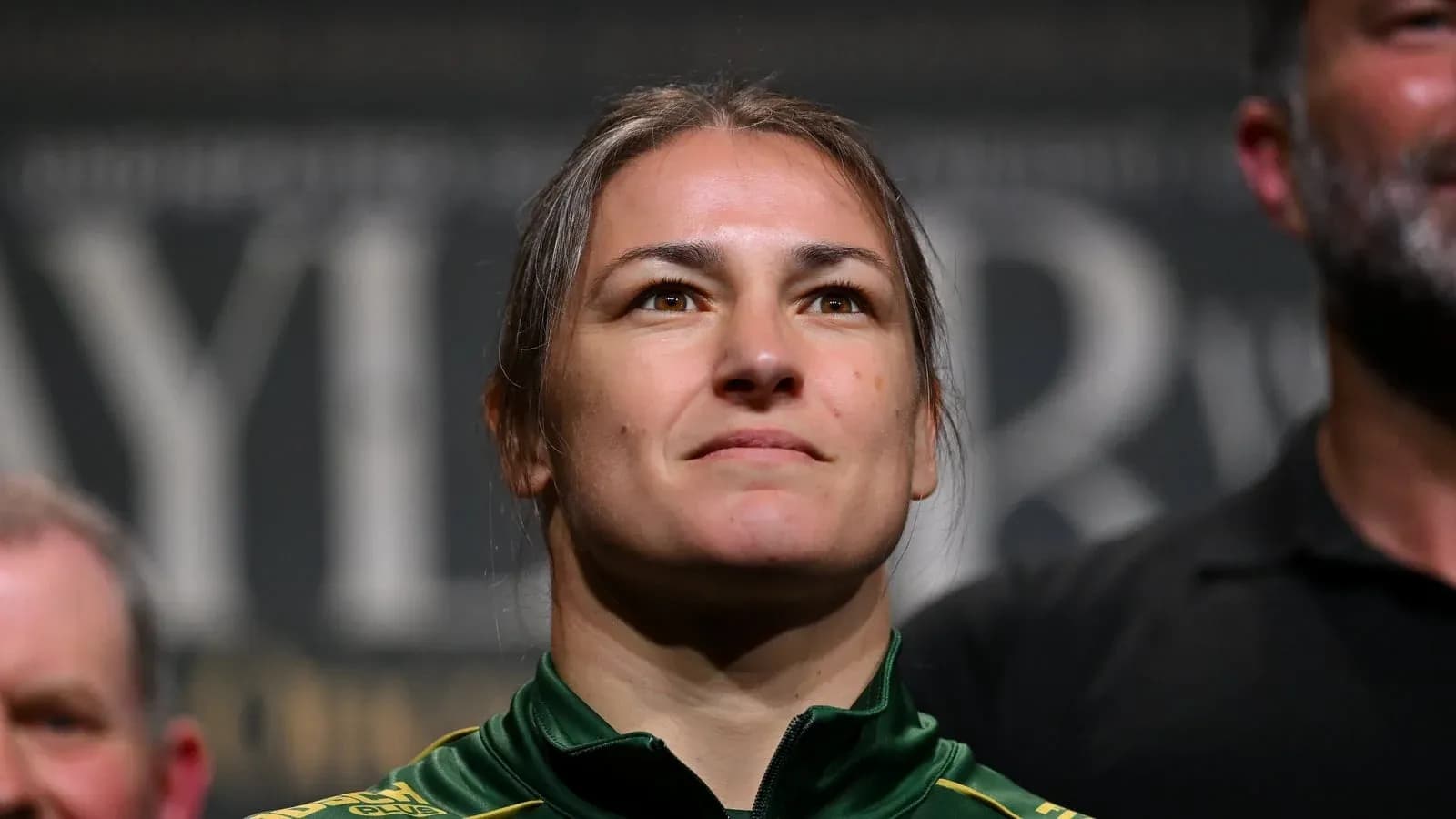
Katie Taylor once thought about walking away before the world even knew her name.
Long before sold-out arenas and world-title nights in New York, the Bray fighter stood at a crossroads in 2006, staring at an Olympic dream that kept moving out of reach. Speaking to RTÉ Radio 1's Inside Sport, she admitted that the closest she ever came to quitting the sport came not after a defeat, but after an announcement in a boardroom.
The International Olympic Committee had just revealed the new events for the Beijing 2008 Games. Women’s sport was edging forward – the women’s 3000m steeplechase, women’s BMX, extra fencing events, marathon swimming – but women’s boxing was left outside the door again, its global appeal questioned, its lobbyists ignored.
For Taylor, then rising fast through the amateur ranks, it felt like a punch to the gut.
She had already spent her childhood fighting for the right just to get in the ring. As a nine or ten-year-old, women’s boxing in Ireland wasn’t even sanctioned. She had to disguise herself as a boy just to get bouts. Now, with the Olympic ring still closed to women, she faced another barrier – time.
The prospect was brutal: wait another four years, at least, before even attempting to chase the dream, never mind realise it. For an athlete, four years is an eternity. She admitted she wondered if it would ever happen, if women’s boxing would ever be welcomed into the Games at all. When Beijing was ruled out, she said that was the moment she came closest to walking away, instead ending up analysing the boxing from China for RTÉ rather than competing in it.
The doubts were real. The response was pure Taylor.
She pushed on.
From the beginning, she had decided not to talk her way into the spotlight. No bombast, no manufactured persona. She chose to let her fists and her footwork do the convincing, while her family fought battles on her behalf outside the ropes. Doors started to open once people actually watched her fight. Excellence did the talking.
A year after the Beijing Games, the breakthrough finally came. Women’s boxing was added to the Olympic programme. Even then, the path was narrow. London 2012 would feature just three women’s weight classes, not the six seen in Paris 2024. Taylor had one window: lightweight, 60kg.
She climbed through it.
That summer in London, the sport changed. Taylor’s run to gold ignited something beyond medals and records. Her quarter-final against GB’s Natasha Jonas produced a noise that felt like it shook the walls – 113.7 decibels in the arena, a roar not far off a jet engine. It was more than support; it was a statement.
From there, the sound followed her around the world. Through the heartbreak of Rio. Into Wembley. Into Madison Square Garden. Across Boston, Brooklyn, Dallas, Manchester, Leeds, New York. Every time, Irish voices travelled, carrying the same song, the same belief.
Now they will pour into Croke Park.
The stadium that once hosted Muhammad Ali’s 1972 bout with Alvin Lewis – a night that drew 18,000 – will be packed with 80,000 for Taylor’s sold-out clash with Flora Pili. Tickets vanished in minutes. Estimates were shredded. Any lingering doubts about the drawing power of a female fighter in Ireland were dismissed with the click of a mouse and the swipe of a card.
Taylor never doubted them. Not this crowd. Not this country.
She spoke of being blown away by the scale and speed of the response, by 80,000 people committing to one last night with her under the lights. She called it something the nation could be proud of, questioned whether any other country would turn out like that for a female athlete. The gratitude was clear, but so was the responsibility she feels. She wants a performance worthy of that faith. A career-best, for a final bow.
The loyalty of those fans has been relentless. They were there before London, when she was still the amateur prodigy. They were in the ExCeL Arena when Amhrán na bhFiann rang out and history was made. They stuck with her through the Rio disappointment, then followed her into the professional ranks, flight after flight, city after city.
They will be there again at Croke Park, completing a journey that began in small, anonymous gyms where she had to pretend to be someone else just to fight.
Taylor believes this support has done more than fuel her own career. She sees it as a driving force in the rise of women’s professional boxing itself. A pro career cannot exist in a vacuum; you need arenas filled, stadiums sold out, a fanbase willing to follow you across borders and time zones. Ireland has given her that – and, in doing so, helped push the sport into new territory.
She looks now at the next generation – teenagers already five or six-time Irish champions – and sees a landscape unrecognisable from her childhood. No disguises. No pretending. Just opportunity and expectation.
On Saturday night, as 80,000 voices rise over Croke Park, the girl who once wondered if women’s boxing would ever make it to the Olympics will walk out as the fighter who helped drag it there – and then carried it far beyond.