Katie Taylor's Last Fight at Croke Park: A Legacy of Breaking Barriers
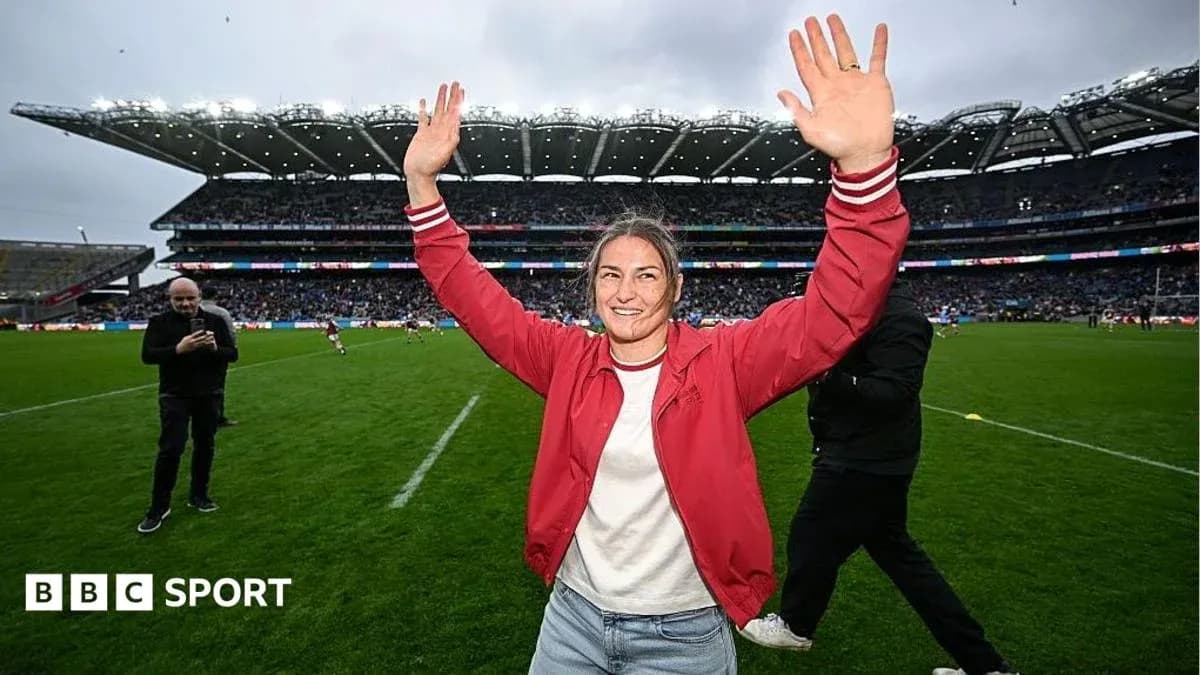
On Saturday night, under the lights of an 82,000-seat Croke Park, Katie Taylor will walk to the ring for the last time.
One more fight. One more title on the line. One last chance to leave as the undisputed light-welterweight champion on the most sacred patch of grass in Irish sport. If careers can have perfect endings, this is as close as it gets.
Taylor’s farewell against France’s Flora Pili is the culmination of a life spent forcing doors open that were never meant for her. Her story is not just about belts and medals. It is about the moments when the whole thing could easily have stopped before it ever really started.
A letter from Bray
Long before Olympic gold, sold-out arenas and Netflix headliners, there was a 10-year-old girl in Bray who simply wanted to box.
There was nowhere for her to go. Women’s boxing was unsanctioned in Ireland. It wasn’t in the Olympics. There was no obvious route to a professional career. The sport, officially, did not want her.
But there was Deirdre Gogarty.
Gogarty had left Ireland for the United States and, in 1997, beat Bonnie Canino in Louisiana to become Ireland’s first female professional world champion, winning the WIBF featherweight title. From a small town on the Irish Sea, Taylor watched and recognised something of herself.
She picked up a pen.
“How did you do it when everyone tried to stop you?” the 10-year-old asked in a letter to her hero.
Gogarty wrote back. If Taylor kept working, kept showing her skills, “somebody's going to say 'we've got to let this girl box'.” Years later, Gogarty would recall how the young girl had added a line that felt fanciful at the time: “maybe one day they'll let us box in the Olympics”.
It sounded like wishful thinking. It turned out to be a roadmap.
Without that exchange, Taylor might still have found her way. But at a time when hope was in short supply, Gogarty’s reply gave her something priceless: proof that the impossible could be done.
Forcing open the Olympic door
The next turning point came not in a ring packed with fans, but in front of sceptical officials.
When the International Olympic Committee wrestled with the idea of adding women’s boxing to the Games, Taylor was summoned to showcase events in Chicago. The brief was simple: demonstrate that women’s boxing belonged on the biggest stage in sport.
She did far more than that.
Her performances shredded the arguments against inclusion. Speed, timing, ferocity, skill – the old prejudices looked absurd when set against what Taylor was doing between the ropes.
“Katie won't say this, and I've been holding back from saying this, but single-handedly, Katie Taylor got women's boxing into the Olympics,” says her manager Brian Peters.
By London 2012, women’s boxing had its place. Taylor seized it, winning lightweight gold and becoming the face of a movement that had been told, for decades, to wait its turn.
Four years later in Rio, the script turned on her. A split-decision defeat in the quarter-finals ended her title defence and, with it, her amateur journey. No gold. No fairytale repeat. Just a brutal, empty feeling.
“It was probably the worst year of my career,” she admitted later. “I needed a change. I needed a new mindset.”
Had she stood on that podium again with a second Olympic gold around her neck, the urgency to rip up her life and enter a neglected professional scene might have faded. Instead, the sting of that loss pushed her towards reinvention. The amateur queen would gamble everything on the pros.
A DM that changed everything
Turning professional was only the first leap. The next was finding the right people.
Peters, who had already guided her through much of her career, stepped in out of concern. “I only took her on not to see her end up with people who didn't know what they were doing,” he says. It was protection first, business second.
But protection alone doesn’t build a global star. On 4 October 2016, Taylor opened Twitter and took another risk. She sent a direct message to Matchroom promoter Eddie Hearn, asking if he would consider promoting her.
No entourage. No big agency pitch. Just a DM.
Hearn replied a day later. He invited Taylor, Peters and Taylor’s mother, Bridget, to a London restaurant. Wanting to make the right impression, he even borrowed his father’s car.
The charm offensive worked. Within weeks, Taylor was making her professional debut at Wembley Arena.
In a sport riddled with broken partnerships and public fallouts, something unusual happened next: nothing broke. Her inner circle – Peters, Hearn and trainer Ross Enamait – stayed intact. No dramatic splits. No messy disputes.
“In a business full of egos, she's stayed loyal to everyone around her and remained the most humble person you could ever meet,” Peters says.
Had Hearn ignored that message, or had Taylor drifted between promoters and trainers, the promotional machine that helped drag women’s boxing into the mainstream might never have kicked into gear. Instead, a single DM lit the fuse.
The Garden, the risk, the rivalry
By April 2022, Taylor stood as undisputed lightweight champion. She had already survived a razor-thin majority decision against Delfine Persoon at Madison Square Garden three years earlier, a night when her aura seemed to flicker but not quite go out.
Now she was going back to the Garden, and the stakes were even higher.
Across from her stood Amanda Serrano, a seven-division world champion and one of the most destructive punchers in the sport. Two women, one historic venue, a main event that would test not just their chins but the entire idea of women’s boxing as a box-office force.
For the first time, two women headlined at Madison Square Garden. The place sold out: 19,187 fans, noise ricocheting off the rafters.
The fight delivered everything it promised. Chaos, drama, momentum swings. Taylor, hurt and on the brink at times, found a way to claw herself back and edge a split-decision victory. Many called it the fight of the year.
One different scorecard and the story changes. One flat performance and the narrative of women’s mega-fights loses its oxygen.
Instead, that night became a launchpad.
The rivalry with Serrano exploded beyond the usual boxing bubble. Their 2024 rematch, on the undercard of Jake Paul v Mike Tyson, drew global viewing figures on Netflix. Taylor then returned to Madison Square Garden in 2025 and sealed the trilogy.
From Chicago showcases to Garden headliners, the line was clear: every risk she took widened the path for those coming behind.
Croke Park or nothing
And now, Croke Park.
This isn’t another sliding door. It is the destination all those doors have led to.
After beating Serrano in last year’s trilogy decider, Taylor made a decision that never reached the microphones.
“She actually retired that night,” Peters reveals. “She said, 'We convincingly beat Serrano - where do we go from there?' I said I'll agree on one condition.”
That condition was simple and ruthless: Croke Park or nothing.
“Croke Park – no disrespect to Wembley – is the greatest stadium in the world,” Peters says. “You cut an Irish person and they'll bleed Croke Park.”
The deal was struck. One last fight, in the stadium that sits at the heart of Irish sporting identity. No Cameron trilogy. No late-career tours. No comebacks.
“When Katie gives her word, that is it,” Peters says.
So on Saturday, when Taylor steps through the ropes against Flora Pili, it will not just be another defence, another main event, another night at the office. It will be the closing scene of a career that has shifted the landscape beneath it.
Whatever happens on the scorecards, the verdict on her legacy is already in. She did not just walk through doors. She kicked them off the hinges and left them open for everyone else.