Kawhi Leonard Returns to Raptors: A Blockbuster Trade
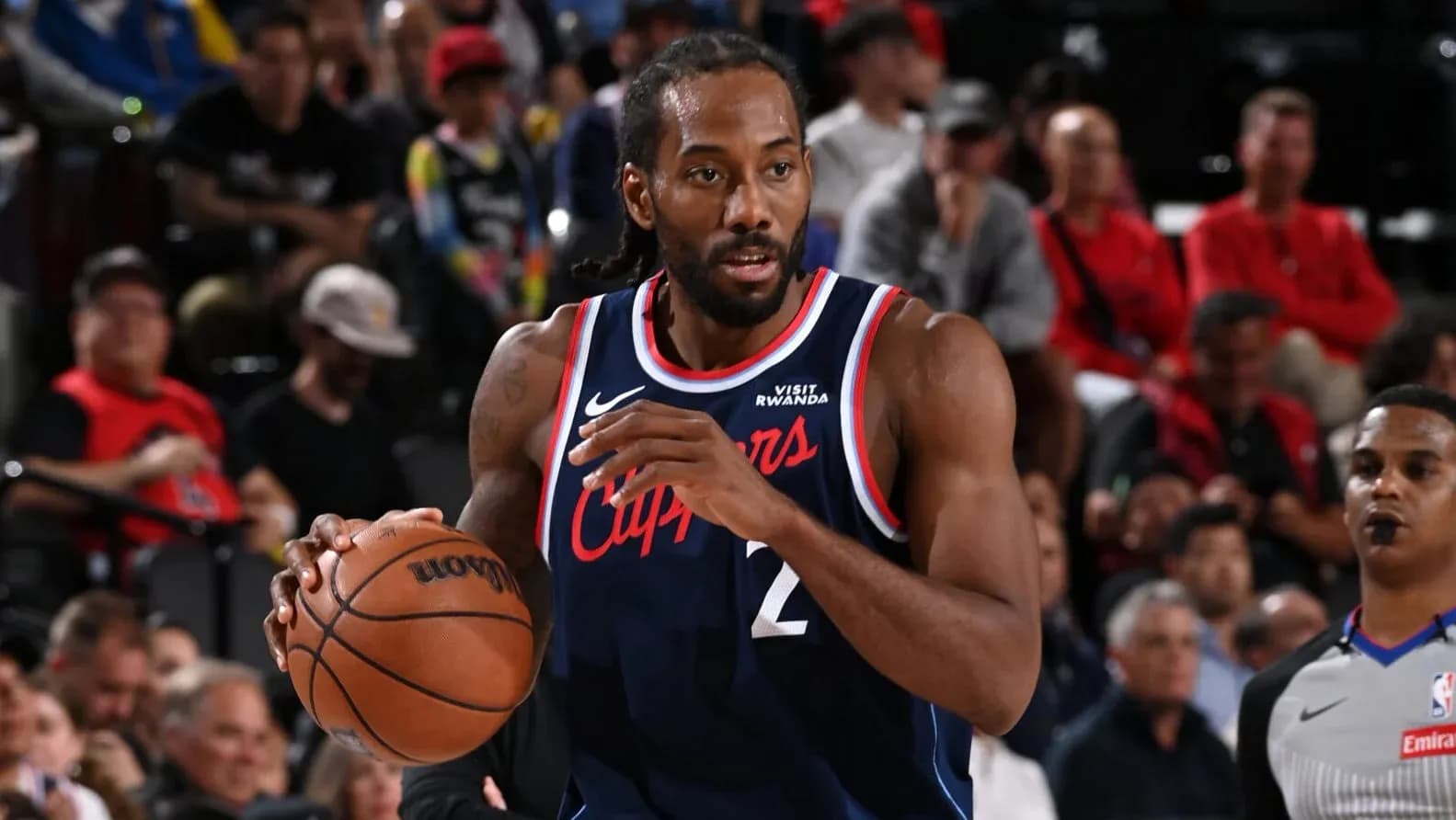
Kawhi Leonard is coming back to Toronto. Seven years after delivering the Raptors’ first championship and walking out the front door in free agency, the franchise has kicked that door off its hinges to bring him home.
On Monday, the Raptors and LA Clippers completed a blockbuster that sends Leonard north in exchange for Gradey Dick, Brandon Ingram, two unprotected first-round picks, a first-round pick swap and two second-rounders. It’s an all‑in move from a team that already made a major leap and now wants to rejoin the Eastern Conference elite.
For the Clippers, it’s something else entirely: the final, decisive swing of a wrecking ball through the roster that once promised parades and ended up delivering regret.
Raptors double down on defense
Toronto didn’t make this trade from a position of desperation. They made it from strength.
Last season, the Raptors finished with 16 more wins than in 2024-25 and posted their best net rating in six years, outscoring opponents by 2.9 points per 100 possessions. They carved out a top-five defense, allowing just 112.1 points per 100, built on length, aggression and a steady diet of forced turnovers.
But when they faced the league’s best, the armor cracked. Against the top 10 offenses, that defensive rating slipped to 117.3, only 12th in the league. In the first round of the playoffs, the defense again ranked just 12th. The physicality that fuels their chaos also carried a cost: they finished 23rd in opponent free throw rate, and that whistle got even louder in the postseason.
This is where Leonard still changes the geometry of a game.
He’s no longer the terror who swallowed entire wingspans in his prime years, but he remains a plus defender with elite discipline. Last season, Leonard piled up 122 steals and 27 blocks while committing only 78 fouls. Among 378 players who logged at least 500 minutes, no one came close to his ratio of steals plus blocks per foul. He disrupts without bailing opponents out.
The front line around him tells the rest of the story. Jakob Poeltl, once a reliable back-line anchor, struggled badly at the rim, allowing opponents to shoot 63.9% when he was the primary protector — the worst mark of his career. In the playoffs, rookie Collin Murray-Boyles ended up playing far more minutes than Poeltl despite the veteran starting all seven games.
A frontcourt of Leonard, Scottie Barnes and Murray-Boyles won’t intimidate anyone with size, but it can smother teams with switches, length on the perimeter and relentless ball pressure. Swapping Ingram for Leonard turns a good defense into one with a realistic shot at staying in the top five and holding up better against the league’s best attacks, where seasons are truly decided.
The closer they never really replaced
Defense got Toronto back into relevance. Late-clock offense kept them from going further.
The Raptors were lethal in the open floor, ranking third with 28.6 transition points per game. Turnovers turned into runway dunks and corner threes. But when the game slowed down and the shot clock bled out, their flaws screamed.
Only the Indiana Pacers posted a worse effective field goal percentage than Toronto’s 43.3% in the final six seconds of the shot clock. That’s where playoff series are won — and where the Raptors repeatedly stalled.
Leonard has lived in that space for years.
Over the last three seasons, he’s posted a 53.0% effective field goal percentage in those same late-clock situations, ninth among 131 players with at least 250 attempts. When everything breaks down, he doesn’t.
The comparison with Ingram is stark. Both rank among the 28 players to log at least 1,000 isolation possessions over the last three seasons. On Leonard’s isolations, the Clippers scored 1.07 points per chance, sixth best in that group. On Ingram’s, the Pelicans and Raptors managed just 0.99 points per chance, 24th.
Toronto has owned the league’s sixth-worst offense over the past three years. That’s the drag on everything. If they can keep punishing teams in transition while handing Leonard the ball when the clock hits six, this group has a real chance to produce its best offense since his first, unforgettable tour.
One of the playoffs’ true giants
The nostalgia around Leonard’s 2019 run in Toronto is deserved. It’s also incomplete.
Across his career, Leonard has been one of the most efficient high-volume scorers in postseason history. Among 89 players who’ve averaged at least 20 points over 10 or more playoff games, Leonard’s 21.5 points per game in 146 contests come with a true shooting percentage of 62.1%. Only Anthony Davis edges him, and Davis has played in less than half as many playoff games.
Since 2017, Leonard has turned the playoffs into his own curated showcase: 28.6 points per game on 63.2% true shooting over 71 games. He’s one of just five players ever to produce at least three postseasons with 25-plus points per game and at least 60% true shooting across 10 or more games (2017, 2019 and 2021).
Toronto’s recent playoff exit underlined the gap. They actually scored slightly more efficiently than the first-round average at 111.9 points per 100 possessions in their seven-game loss to the Cleveland Cavaliers. That wasn’t enough. In the tightest moments, they lacked a primary scorer who could both carry volume and maintain elite efficiency.
Leonard has done that for a decade. The Raptors are betting he can still do it long enough to justify the price.
Clippers hit reset, hard
For the Clippers, this isn’t just a trade. It’s a clean break from an era that promised everything and delivered nothing in June.
A year ago, they looked loaded. Bradley Beal, John Collins, Brook Lopez and Chris Paul arrived to flank Leonard, James Harden and Ivica Zubac. On paper, it was a veteran core built to contend immediately.
Today, Lopez is the last man standing from that seven-player group.
Paul’s return to LA barely lasted a heartbeat. Harden and Zubac left at the deadline. Leonard is now back in Toronto. Beal and Collins, both unrestricted free agents, are unlikely to return. The teardown has been rapid and ruthless.
As of Tuesday night, with Kobe Sanders set to come back, the players under contract or verbally committed for 2026-27 account for just 42% of the Clippers’ minutes from last season — by far the lowest continuity mark in the league. Even if they re-sign restricted free agents Bennedict Mathurin and Jordan Miller, that number would only rise to 52%, still second lowest, just ahead of the Lakers.
Five months ago, this was one of the NBA’s most veteran-heavy outfits, ranking 24th in the share of minutes given to rookies and second-year players at just 12%. That identity is gone. Since Feb. 1, the Clippers have stripped down the roster and started over.
The future now revolves around Darius Garland and rookie guard Keaton Wagler, not aging stars chasing a final run.
Toronto is gambling that the second Kawhi era can unlock another title window. LA is gambling that walking away from it all, finally, is the only way to build something that lasts.
Both franchises have lived in the middle ground between success and satisfaction for years. Leonard’s return to Canada, and exit from California, ensures they won’t stay there much longer.