Kendry Paez's Journey: From Record-Breaker to Chelsea's Academy
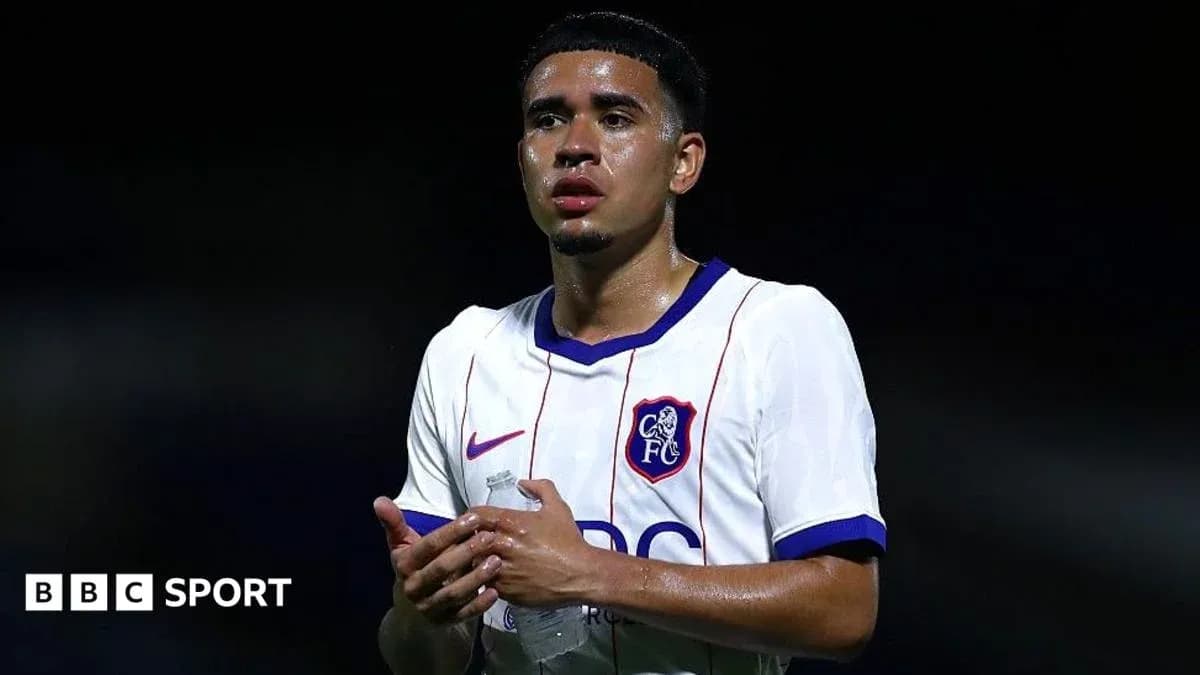
Kendry Paez finally pulled on a Chelsea shirt at the weekend. Not under the lights at Stamford Bridge, not to a roar from the Matthew Harding Stand, but as a 12th-minute substitute for Cobham Next Gen in front of a smattering of spectators at Arsenal’s training ground.
Three years after Chelsea agreed a £17.27m deal for one of South America’s great teenage hopes, the Ecuadorian playmaker’s first steps in blue came in the club’s newly rebranded Under-21 side. A quiet entrance for a player once tipped to arrive with fireworks.
From record-breaker to reality check
Paez’s story was supposed to run differently.
At 15, he became the youngest debutant and goalscorer in Ecuador’s top flight with Independiente del Valle. He then stepped into the Copa Libertadores in the same season, a teenager thrown into the continent’s most unforgiving club competition and looking as if he belonged.
By 16 years and 131 days, he had already made his second appearance for Ecuador. That made him the second-youngest South American to play in a World Cup qualifier, behind only Diego Maradona. A month later, he went one better, becoming the youngest South American ever to score in a World Cup qualifier with a goal in a 2-1 win away to Bolivia.
No wonder Chelsea moved. When they struck the deal in 2023, Paez already had 18 caps and two international goals. The club believed they were buying not just potential, but a future star who had already tasted the pressure of elite football.
They integrated him early. Before he could officially join after his 18th birthday, Paez trained regularly with the first team. Chelsea also stepped in off the pitch, arranging security for him, his family and the family of Moises Caicedo when violence gripped Ecuador in early 2024. The investment was financial, footballing and personal.
Then came the bumps.
A few months later, footage emerged of Paez in a New York strip club while on international duty. On the pitch, the trajectory that once felt inevitable began to flatten.
Loans that raised more questions than answers
Chelsea used their multi-club model to find Paez a stepping stone in Europe. He joined Strasbourg on loan and started brightly, winning Ligue 1’s Young Player of the Month award in September. It looked like the script was back on track.
The praise didn’t last. His then-manager, Liam Rosenior, publicly demanded more.
“We expect more, clearly,” Rosenior said later in the season. “I’m tired of using the excuse of the player's youth.”
The numbers told their own story: one goal in 21 appearances. Despite the close ties between Strasbourg and Chelsea, the loan ended early.
The next move was River Plate, a heavyweight of South American football and a club accustomed to nurturing elite talent. On paper, it made sense. In reality, the same doubts followed him across the Atlantic.
Sources in Argentina questioned his attitude, highlighting a subdued display in the Superclasico, a 1-0 defeat to Boca Juniors at the Monumental in April. Shortly afterwards, club president Stefano Di Carlo named Paez among 15 players training away from the first team. Some around the club felt he deserved more chances; the outcome was the same. The loan was terminated by mutual consent after just one goal in 14 appearances and 461 minutes.
The player Ecuador had anointed as their next great attacking leader suddenly looked adrift.
Ecuador’s prodigy at a crossroads
Back home, the concern has been growing.
Michel Deller, owner of Independiente del Valle and one of the key figures in Paez’s rise, spoke with a mixture of affection and warning.
“He's like a son to us. We care about him deeply,” he told Hincha Amarillo. “He's a good kid who's had a tough time and has made decisions that have complicated his life. We are always hopeful he'll show his exceptional talent one again but right now, it's up to him to decide what to do with his life.”
Those close to Paez at Chelsea and in his own camp do not dismiss the criticism outright, but they insist the narrative has run ahead of reality. In their view, a teenager who has already played at a World Cup and for some of the continent’s biggest clubs is being judged as if he were a finished product, not a 19-year-old still learning how to be a professional.
What he cannot escape is the volume of football already behind him. Paez has more than 100 senior appearances, including 70 for Independiente. That experience is unusual for someone his age. It is also a foundation, if he chooses to use it.
A different kind of debut in blue
For now, the stage is smaller.
Against Arsenal’s Under-21s on Saturday, Paez came off the bench in a 4-1 win for Cobham Next Gen. No TV cameras, no grand unveiling, just a first competitive appearance in Chelsea colours that passed largely without fuss.
The scene at Wycombe a few days earlier captured where he is in his career with even more clarity. In the EFL Trophy, in front of just 778 fans, Paez looked on the fringes of things. Spanish-speaking, he appeared slightly apart from the rest of the academy group before kick-off. He joined the warm-up, but mostly kept to himself, then entered on 62 minutes as a right-sided No 10 in a system mirroring Xabi Alonso’s back-three shape.
For most of the night, he was peripheral. Then, in stoppage time, the old spark flickered.
From a short corner, he whipped in an outswinging cross that Harrison Bettoni tapped in. Moments later, another delivery from the right caused chaos as Chelsea chased an equaliser they never found. The match ended in defeat, but those few minutes were a reminder of why the club once pushed so hard to bring him to London.
Inside Cobham, they have noticed something else: his attitude since returning. After a turbulent spell of loans, Chelsea have him back in a controlled, elite environment, surrounded by staff who know the demands of the Premier League and by family, who attended his recent outing at Wycombe. The club can now monitor his progress closely rather than at a distance.
What comes next?
The situation is far from beyond repair. Chelsea view this stretch as a reset rather than a verdict.
With Alonso having made it clear that Paez is “not in my plans” for the first team right now and the club listing him as an academy player on their website, the path back to the top runs through these quieter games. The club had explored an immediate loan in English football, but Fifa rules blocked any overseas move after Chelsea had already used their six international loan slots.
That could change in January. There is optimism within his camp that a first loan in England might open up, or that one of those six international slots will free up for another move abroad. Scouts from across the English Football League and beyond regularly attend academy fixtures; Paez now has a direct shop window.
For a player once introduced to the world as a record-breaker, this is a different kind of challenge. No headlines, no historic firsts, just the grind of training sessions at Cobham and the chance to prove, all over again, that the early hype was not misplaced.
Chelsea have seen the talent. Ecuador has seen it. River Plate, Strasbourg, Independiente del Valle – they have all seen flashes of it.
The question now is not whether Kendry Paez has the ability. It is whether, in the relative anonymity of youth fixtures and EFL Trophy nights, he can find the discipline and consistency to turn a scattered career into the one everyone once assumed he would own.