Kristaps Porzingis: The Warriors' High-Stakes Gamble
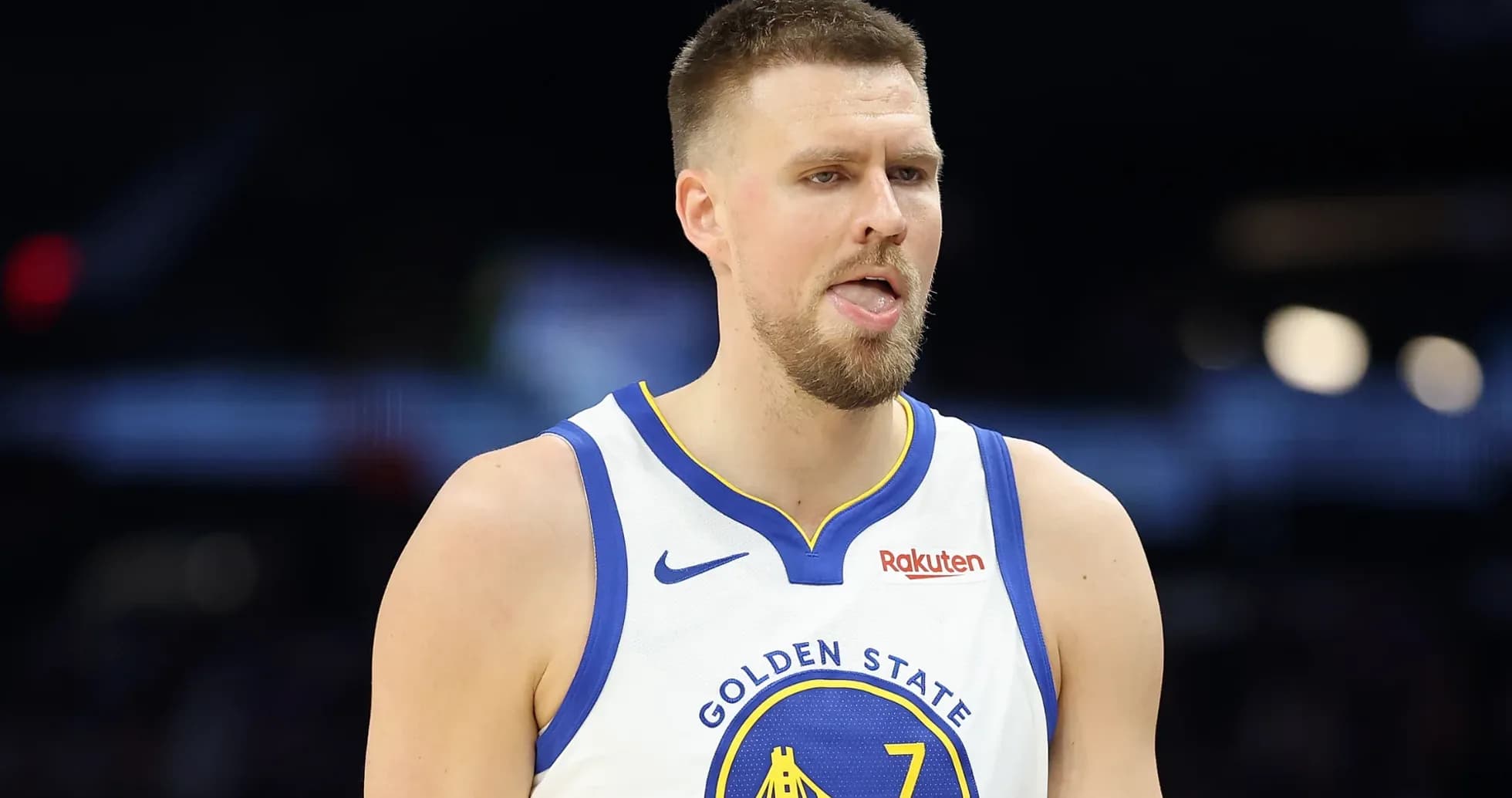
Kristaps Porzingis has become the Warriors’ biggest gamble and their clearest statement of intent all at once.
Golden State doubled down on the 7-foot-3 Latvian this offseason, re-signing him to a two-year, $40 million deal despite a season that barely got started. He played just 15 games after arriving from the Atlanta Hawks at the trade deadline in the deal that shipped out Jonathan Kuminga and Buddy Hield. Fifteen games, then shutdown. On paper, that’s a risk. On film, it’s a temptation.
Because when Porzingis did play, the numbers teased what could still be: 16.1 points, 5.3 rebounds, 2.3 assists and 1.1 blocks per game. Not gaudy, but efficient, and crucially, scalable in a system that has always thrived with a skilled big who can stretch the floor and anchor the back line.
Now the Warriors are betting that next season, they finally get the full version.
Vogel’s Vision: A New Anchor for an Old Formula
Frank Vogel did not come to the Bay to watch games from the background. The longtime defensive specialist, hired as an assistant after the departures of Terry Stotts, Jerry Stackhouse and Chris DeMarco, walked in with a clear template and a long memory.
From Roy Hibbert in Indiana to Anthony Davis in Los Angeles, Vogel’s best teams have been built around a rim-protecting center who turns the paint into a no-go zone. In Porzingis, he sees the next iteration of that model.
“We feel like Kristaps can fill that role,” Vogel told Luca Evans of the San Francisco Chronicle. He didn’t talk about easing Porzingis in or seeing how it goes. He talked about putting him straight into the heart of his defensive system.
That’s where this becomes more than just another mid-career chapter for Porzingis. Vogel spoke about “details” and how he uses shot-blocking bigs to “get a lot out of ’em on that side.” For a coach who has built top-tier defenses out of structure, timing and positioning, Porzingis’ length and timing become weapons, not just traits.
The Warriors haven’t had that kind of rim deterrent in years. They’ve survived with versatility, switching, and a system that asked wings and forwards to do the heavy lifting. Now they’re leaning into something more traditional: a true backline anchor, with the ball skills to stay on the floor in any matchup.
A Roster Racing the Clock
Vogel’s arrival should lift Golden State’s defensive ceiling. But the clock is ticking loudly over this roster.
Porzingis’ importance is amplified by the Warriors’ thin depth at center. Al Horford, still clever, still reliable, is also the second-oldest player in the league. Charles Bassey, athletic and willing, has never carried a major role over an entire season. If Porzingis misses time, the Warriors don’t just lose a starter; they lose the centerpiece of Vogel’s defensive blueprint.
That’s why this summer mattered so much.
Porzingis skipped Latvia’s FIBA World Cup qualifying windows, choosing rehab over national team duty. It was a clear signal: his priority is making sure Golden State doesn’t regret that $40 million commitment. For a franchise that has already paid heavily in salary and luxury tax to chase one more run, that decision lands well.
The Warriors are not building for five years from now. They are trying to squeeze everything they can out of the present.
The Health Question That Won’t Go Away
One number hovers over all of this: 70.
Kristaps Porzingis has not played 70 games in a season since his rookie year with the New York Knicks in 2015-16. Since then, his career has been a pattern of promise and interruption. When healthy, he produces. When he’s not, he becomes a what-if.
Golden State knows this history. They leaned into it anyway.
General manager Mike Dunleavy Jr. didn’t dodge the concern when he spoke to the San Francisco Chronicle’s Luca Stevens last month. He talked about digging into Porzingis’ situation, studying what has gone wrong and what can be adjusted.
“We looked at it extensively, what’s going on, how we can help him, how we can be better,” Dunleavy said. His conclusion was not cautious. “The things we’ve discussed and look at and worked through lean in the direction of him having a healthier year.”
That’s not a guarantee. It’s a calculated belief. But it tells you how central Porzingis is to everything the Warriors want to be next season.
All-In on a Fragile Edge
Strip away the optimism, the quotes, the diagrams on Vogel’s whiteboard, and the equation is brutally simple.
If Porzingis is healthy, the Warriors gain a stretch big who can protect the rim, unlock new looks on both ends and give their aging core a margin for error they didn’t have last year. If he isn’t, they are old, thin in the middle, and asking too much of a rotation already carrying heavy miles.
Golden State has chosen its path. They didn’t just trade for Porzingis; they doubled down with years and money, then handed him to a coach who has built his reputation around exactly this type of player.
Now the question is no longer what Kristaps Porzingis can be. We’ve seen that. The question is whether his body will finally let him be that player long enough to change the Warriors’ season.