Kylian Mbappé's Chosen One Comments Ignite Controversy
Kylian Mbappé’s latest interview was supposed to be a coronation. Instead, it lit a fire.
His decision to describe himself as “the chosen one” has gone down badly in parts of the France camp, particularly around Ousmane Dembélé, according to reports in L’Équipe. For a player long installed among the favourites for the Ballon d’Or, the self-image is hardly new. The reaction this time is.
Paris Saint-Germain’s winger and those close to him were, the paper claims, unimpressed by the tone of Mbappé’s comments. Not the idea that he might be football’s next great standard-bearer – that has followed him for years – but the way he framed it, the insistence on himself, the spotlight fixed squarely on Kylian.
The fallout has split opinion across French media.
On RMC Sport, Jérôme Rothen went straight for the jugular. He spoke of “betrayal” and hinted at a dressing-room fracture inside the national team, a France squad supposedly cleaved into camps around its biggest stars. It was the kind of claim that lands with a thud in a country already hypersensitive to tensions in its flagship team.
Christophe Dugarry, sitting opposite him, was having none of it.
“Jérôme, regarding what you are saying, I want names,” he snapped. If there are “two groups within the team”, he demanded to know who exactly is in this supposed bloc. For Dugarry, the idea of entrenched factions sounded like fiction.
“I don’t believe this nonsense!” he fired back, before turning his attention to Dembélé. “What is bothering you, Ousmane? He has won the Champions League twice and won the Ballon d’Or.” The line was clumsy – Dembélé has not lifted those trophies – but the point was clear: why feel threatened by a friend talking himself up?
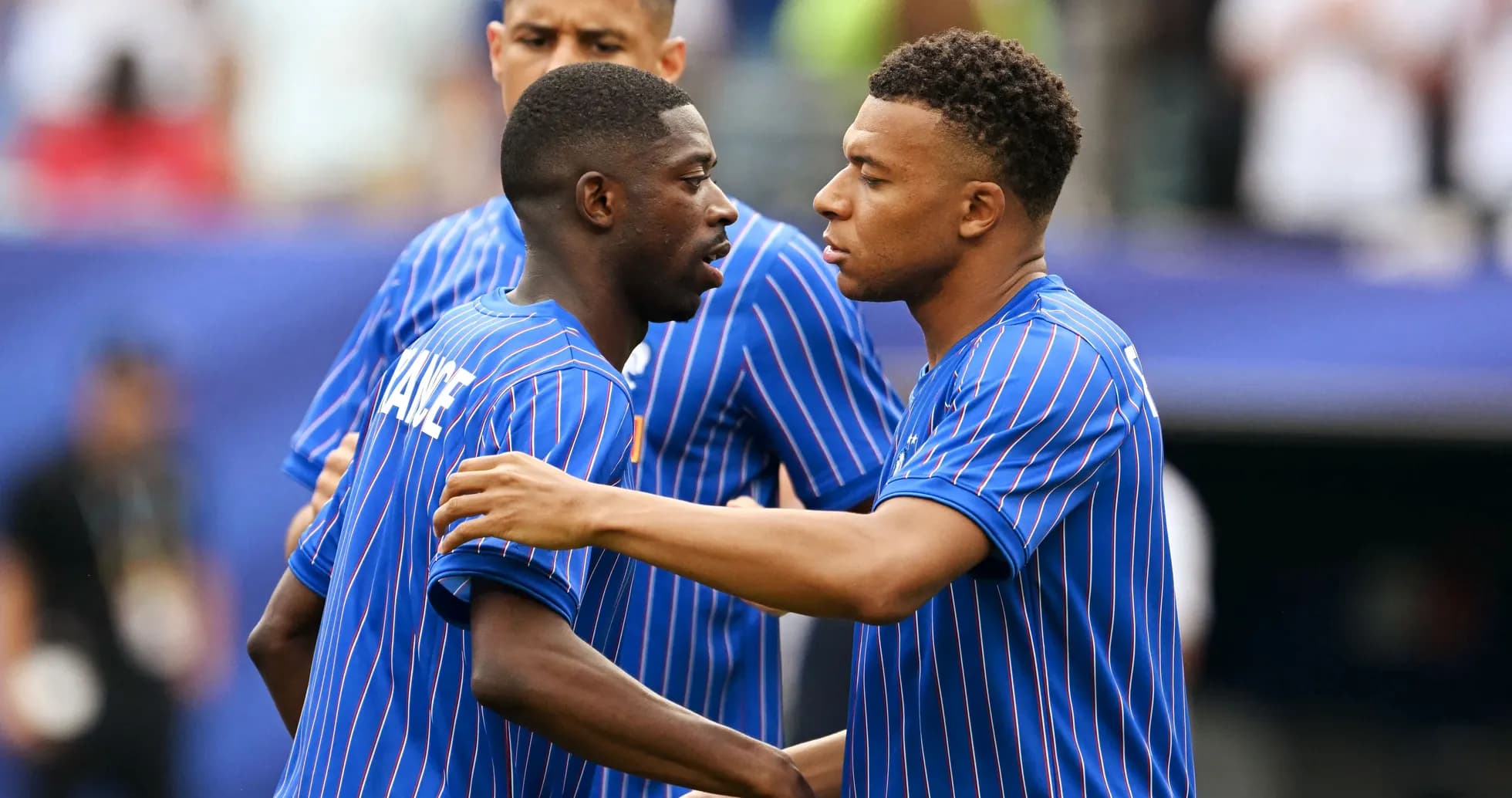
Dugarry reminded Rothen that Mbappé and Dembélé go way back, to their teenage years. Two prodigies who grew together in the France setup, who have shared dressing rooms, trophies, and the unique pressure that comes with carrying a nation’s hopes.
“You two have known each other since you were 15 years old,” Dugarry said. “Are you going to be upset by an interview in which Kylian spends all his time talking about himself? He didn’t say anything bad about Dembélé.”
For the 1998 World Cup winner, this is not a story of betrayal. It is a clash of personalities.
Dugarry doubled down on his defence of Mbappé. To him, the France captain did not insult Dembélé; he simply revealed, perhaps more bluntly than usual, the gulf between two ways of living the game.
“What Kylian said is the truth,” Dugarry insisted. Then he went back in time, to Dembélé’s turbulent spell at Barcelona. “I remember when Dembélé was at Barcelona, he couldn’t get up in the morning to go to training because he was playing PlayStation. Come on! Dembélé is the anti-star, and he shines because of that. He has the mentality of the anti-star. These are two visions of football. Two different footballing styles clashing. Two different personalities.”
In Dugarry’s eyes, that contrast is not a crisis. It is just life inside a modern dressing room: one man embracing the spotlight, another actively dodging it. One obsessed with legacy, the other happiest in the shadows, letting his football speak when it must and disappearing when it doesn’t.
So why, he asked, would Dembélé feel offended now?
“I don’t understand what shocks Ousmane Dembélé,” Dugarry continued. “He has always presented himself as a reserved, shy person, somewhat introverted, with a high team spirit. He built his career this way, and won this way. He understands this footballing philosophy. Mbappé is the complete opposite of that.”
Then came the sharpest line of all, aimed not at Mbappé, but at the idea that a single interview could rupture a friendship.
“Excuse me, but if their friendship cannot get past this matter, then it means it was never strong in the first place.”
Dugarry did not give Mbappé a free pass. The former striker admitted that some aspects of the captain’s rhetoric grate on him. Above all, the relentless self-reference, the almost relentless certainty.
“There are things that bother me, such as Kylian’s excessive confidence in his comments,” he said. “I find it strange that he speaks at length in the first person, and presents himself in this way... in a team sport, where he hasn’t achieved a great deal despite having a lot to win.”
There lies the tension at the heart of the debate. Mbappé is already a World Cup winner, a Champions League finalist, a global icon. Yet for a player who talks openly about destiny, the sense persists that his greatest nights are still to come – and that his words are racing ahead of his medal collection.
Dugarry’s conclusion was blunt. Mbappé, he argued, now operates on a different plane, with the status and leverage to shape his own narrative, however uncomfortable that might feel to some.
“Right now,” he said, “Mbappé is his own source of strength today!”
France will discover soon enough whether that strength binds a squad together around its captain’s aura, or stretches the seams of a group still chasing the trophies that would finally justify the language of “the chosen one.”