
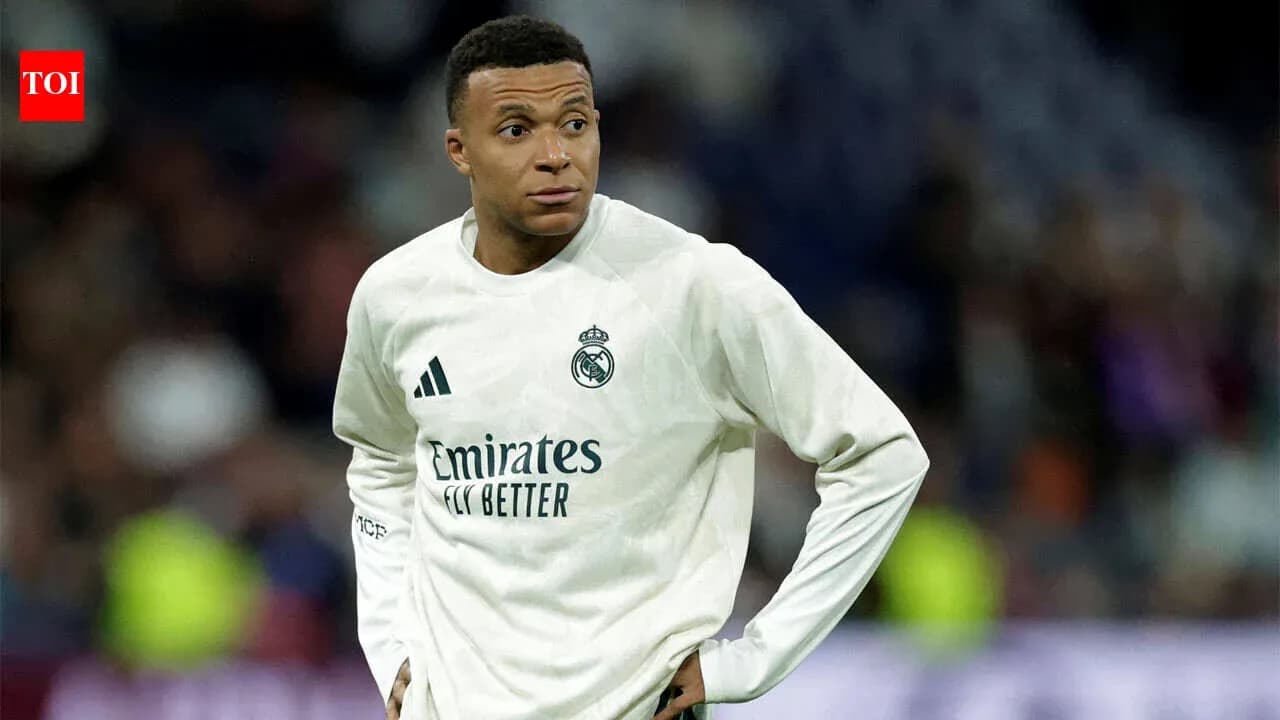
Kylian Mbappé's Controversial Comment Sparks Crisis in China
Kylian Mbappé has spent his career dancing on the edge of footballing superstardom. This time, the step over the line came off the pitch.
What began as a flippant attempt to explain a meme has spiralled into a diplomatic and commercial storm in China, dragging Real Madrid and LaLiga into the fallout and putting one of football’s most valuable markets on edge.
A meme, a remark, and a flashpoint
The spark came on The Bridge, a French football podcast. Mbappé was shown a meme that has circulated for months among fans: his face superimposed on historic strongmen, a running joke about his perceived power in dressing rooms and boardrooms.
In one clip, his face had been edited onto an image of Mao Zedong.
Mbappé, reacting in real time, referred to the figure as “some guy, I think he’s a Chinese dictator.” He did not say Mao’s name. He did not linger on the point. But the implication was obvious, and in China, it landed with force.
Reuters noted it could not independently verify the video, but by then it hardly mattered. The clip raced across Chinese social media, igniting anger in a country where Mao remains a deeply sensitive, heavily protected symbol of national history and political identity.
What Mbappé saw as a joke about his supposed “dictator” status in football collided with a red line in Chinese public life. The reaction was swift, emotional and, crucially, official.
Apologies in three languages, but no quick fix
Under mounting pressure, Mbappé responded on October 27. His statement, published in French, Mandarin and English, acknowledged that the throwaway remark had crossed a line.
“During a recent interview, I reacted to an image of myself. My comment was ill-judged, and I now understand that it hurt many people in China and in Chinese communities around the world,” he wrote. “I apologise to everyone my words have upset. This was absolutely not my intention. I have deep respect for the Chinese people and their history, and I am sincerely sorry.”
Real Madrid followed, issuing their own apology to the Chinese people for any discomfort caused by their player. LaLiga did the same, stressing that Mbappé had spoken in a personal capacity and did not represent the league’s views.
Beijing acknowledged the contrition, but did not close the file.
China’s Foreign Ministry spokesman Guo Jiakun said the authorities “take seriously the apology the individual concerned has made.” The wording left the door open, but it did not signal forgiveness. The sense was clear: the wound had been noted, not healed.
Brands walk away, screens go dark
If the political response was measured, the commercial one was brutal.
Chinese companies moved first. Dongpeng Beverage Group, Mengniu Dairy and Shanghai Milkground Food Tech all cut ties with Mbappé. Their message was unmistakable: the French star, until recently a prized face for Chinese consumers, had become a liability.
Then came the move that rattled Spanish football.
CCTV, the state broadcaster and gatekeeper to millions of Chinese viewers, suspended its coverage of LaLiga. Adverts featuring Mbappé vanished. His presence on Chinese social platforms Weibo and Xiaohongshu was restricted.
Streaming platform Migu, which holds LaLiga rights under a deal running to the end of the 2029–30 season, also took a step back. It chose not to show Real Madrid’s match against Racing Santander last weekend, while still broadcasting other league fixtures. One club, one player, singled out.
For LaLiga, the numbers tell their own story. President Javier Tebas has said the current combined value of its broadcasting contracts with CCTV and Migu sits at around €10 million per year, a fraction of the roughly €100 million a year the league once drew from China at its peak. Any further erosion would hurt a competition already fighting to keep pace with the Premier League’s global reach.
The Mbappé episode has become a case study in how quickly a superstar’s global image can turn from asset to risk in a market as politically sensitive and commercially vital as China.
Beijing calls Madrid: “time to digest”
The latest twist came on November 6 in Salamanca, far from the Bernabéu but very much in its orbit.
China’s ambassador to Spain, Yao Jing, confirmed that Beijing is now in direct contact with Real Madrid and LaLiga. Not at the level of formal negotiations, he stressed, but in a sustained effort to cool the situation and “reach a mutual understanding.”
“There are no negotiations, but there is communication, based on mutual understanding,” Yao told Spanish news agency EFE before attending a forum at the University of Salamanca. “This unfortunate incident hurt the feelings of many people in China, who now have to come to terms with the current situation.”
Behind the diplomatic language lies a blunt reality: the apologies have not been enough.
Tebas met Yao the previous week as Spanish football scrambled to limit the damage. The LaLiga president has since insisted that dialogue with Chinese authorities is ongoing and that the league is “working to resolve it.” For now, the screens remain dark on CCTV.
An attaché at the Chinese embassy, Xie Tianyu, underlined the mood. Speaking to EFE, he made it clear that contrition alone will not reset the relationship overnight.
“There is not enough time, the Chinese people need time to digest this, it is not an easy issue for the Chinese people, and it is a club that has had many followers and much love in China,” Xie said.
China Media Group, which oversees CCTV, has signalled that it would listen to Mbappé’s apology but is just as interested in what comes next – “more importantly,” in its words, how he behaves from here.
As of November 6, there is still no date for LaLiga’s return to CCTV’s schedule. The league’s apology has been received. The response is pending.
A warning shot to global football
In the space of a few days, a meme from a podcast has turned into a stress test of football’s relationship with one of its biggest audiences.
For Mbappé, the consequences reach beyond lost endorsements. He is the new face of Real Madrid, the player LaLiga wants at the centre of its global marketing push. Yet in China, where Madrid and LaLiga have spent years building a following, his image is now under restriction and review.
For clubs and leagues watching from afar, the message is stark. In a world where every remark is clipped, shared and translated at speed, there are markets where political and historical sensitivities sit far above star power.
Spain’s biggest club and its top division are now waiting on a decision from Beijing that will shape their visibility in a key territory for years to come. The ball, for once, is not at their feet.





