Kyrie Irving's Impact on Mavericks' Clutch Games
There’s one number that cuts through all the noise of the Mavericks’ 26-win season.
Forty-five.
Dallas played 45 clutch games in 2025-26 — tied for the most in the league — defined as contests within five points in the final five minutes. They went 17-28 in those situations. That’s not just a stat; that’s a season lived on a knife’s edge, night after night, and usually falling on the wrong side.
For a 56-loss team, that profile is unusual. The Mavericks were not routinely blown off the floor or outclassed by superior rosters. They were there, repeatedly, with a chance to steal something in the final minutes. They just didn’t know how to finish.
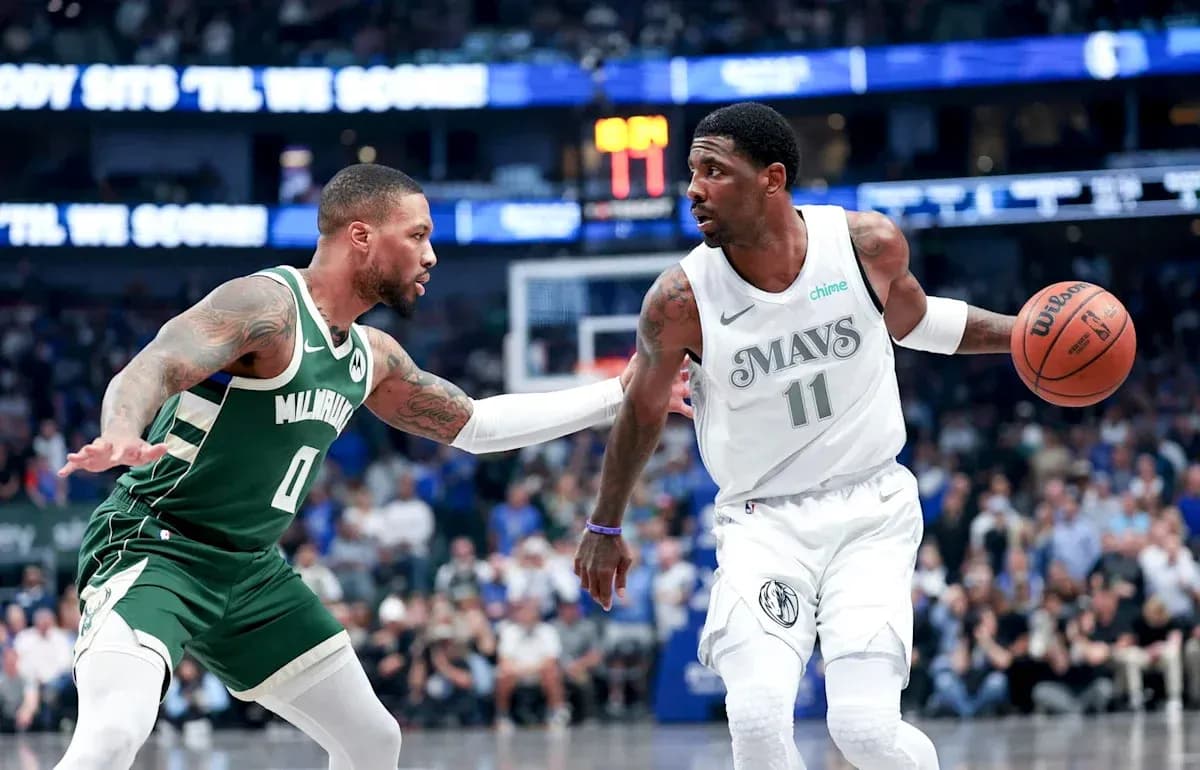
That, more than any draft pick or schematic tweak, is where Kyrie Irving walks through the door and immediately changes the temperature of the room.
A young team, an old problem
Dallas spent last season asking a group of kids to close out grown-man games.
Cooper Flagg, still a teenager, was thrown straight into the fire, learning late-game decision-making in real time. The players around him were in similar territory. Talented, yes. Fearless at times. But untested when the game slowed down, the whistles tightened, and every possession carried weight.
Those final five minutes are a different sport. Sets shrink. Rotations shorten. Experience, more than athleticism or potential, dictates who survives.
The Mavericks barely had any of it.
They had a young roster, a rookie centerpiece, and a year-long crash course in how cruel the last five minutes of an NBA game can be. The result: 45 tense finishes, 28 of them ending in regret.
Enter one of the game’s great closers
Kyrie Irving doesn’t need an introduction in this context. His career has been defined by exactly the moments Dallas kept fumbling away.
He’s the guard who rose over Stephen Curry in Game 7 of the 2016 Finals and buried a shot that will live as long as the league does. He’s the guy who beat Denver in 2024 with a left-handed floater from the free-throw line that looked improvised and inevitable at the same time. He owns a 15-1 record in playoff closeout games, averaging 23.5 points when a series hangs in the balance.
This is not a player learning how to operate in pressure. This is a player who treats it like his office.
Dallas has already seen what that looks like up close. In 2023-24, with Irving on the floor, the Mavericks went 16-4 in clutch games, one of the best marks in the league. He ranked among the NBA’s top 10 in clutch scoring at 4.2 points per game, while shooting 60% from the field and 42% from three in those moments.
Same franchise. Same logo. Completely different closing profile.
That’s what happens when you have a closer instead of searching for one. Late in games, offenses often strip down to isolation sets against a set defense. The playbook narrows, and the league shrinks to a short list of players who can still manufacture a clean look when everyone in the building knows where the ball is going.
Irving lives on that list.
Space, simplicity, and a safety valve
His presence doesn’t just change who takes the shot. It changes what everyone else sees.
Defenses shade, load up, and contort themselves to deal with Irving in the final minutes. That gravitational pull opens seams for the rest of the roster, especially for young players who benefit from the game becoming simpler instead of more complex when the pressure spikes.
Flagg and the young core no longer have to create the perfect answer in the tightest moments. They have a release valve. They can play off a star who demands attention and has seen every coverage, every trap, every attempt to take the ball out of his hands.
For a team that spent last season improvising under stress, that kind of structure is gold.
Painful reps that might finally pay off
Those 28 clutch losses weren’t entirely wasted.
Flagg and his teammates logged an entire season of high-stress possessions. They felt what it’s like to misread a rotation, to force a shot, to rush a pass, and then sit with that mistake for 24 hours until the next tipoff. Players grow from that, even if the standings don’t show it right away.
Now, that experience gets paired with a veteran who has built his reputation on turning those same moments into wins.
Dallas doesn’t have to transform overnight into a juggernaut. The path to relevance is far more straightforward. This roster already proved it can hang around. The Mavericks just need to convert a fair share of the close games they were already playing.
Turn a chunk of those 28 late losses into wins, and the record swings dramatically. In a league where a handful of possessions can redraw the playoff picture, the question for Dallas is no longer whether they can stay close.
With Kyrie Irving back in command of the final five minutes, the question is how many of those nights will finally end their way.