Lakers Rethink Roster After LeBron: Building Around Doncic and Reaves
The Los Angeles Lakers did not just tweak around the edges this summer. They tore at the core of their identity.
LeBron James is gone. Luka Doncic and Austin Reaves are now the axis around which everything spins. The front office flooded the roster with role players and specialists, betting that depth and versatility can cover for the loss of one of the greatest engines the league has ever seen.
It’s bold. It might also be brittle.
A Busy Summer, an Unclear Ceiling
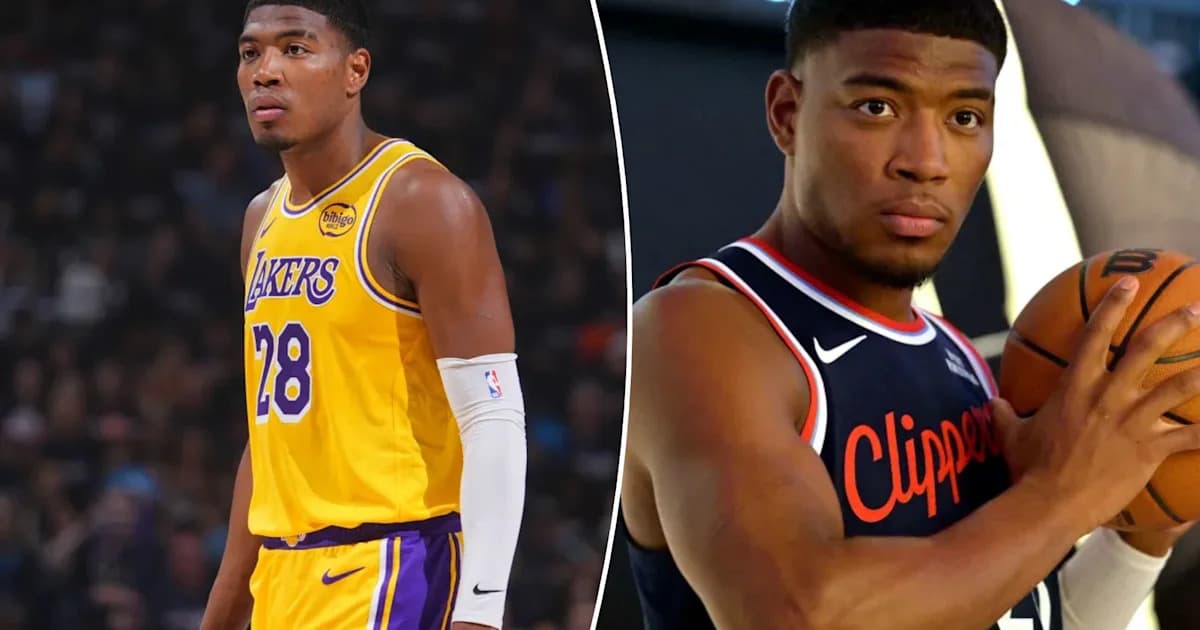
ESPN’s Zach Kram summed up the offseason bluntly: the Lakers were “perhaps the busiest team of the summer.” Walker Kessler, Sandro Mamukelashvili, Quentin Grimes, Collin Sexton, Kevon Looney, Jaden Hardy, Matisse Thybulle and Ziaire Williams came through the door. James, Rui Hachimura, Marcus Smart, Luke Kennard, Deandre Ayton and Jaxson Hayes walked out.
On paper, the Lakers did well in certain lanes. Thybulle and Williams add length, energy and defensive activity on the wings. Kessler and Looney bring size, rebounding and a measure of rim protection. There’s a clear attempt to build a more functional, modern group around Doncic’s heliocentric brilliance and Reaves’ secondary playmaking.
But there is no replacing James’ production, even at 40. The shot creation, the gravity, the late-game control of tempo — all of it leaves with him. The Lakers have also tightened their flexibility, locking in money and minutes on a roster that still doesn’t scream “title favorite.”
So the question now is simple and unforgiving: have they actually built a team that maximizes Luka Doncic?
The Sexton Dilemma
Collin Sexton is at the heart of that debate.
On the surface, the signing makes sense. The Lakers needed a true backup point guard behind Doncic, someone who can initiate offense, keep the ball moving and attack gaps when Luka sits. Sexton, 27, has already shown he can put up numbers. He averaged more than 24 points and over four assists for the Cleveland Cavaliers in 2020-21. Last season, he put up 14.2 points and 3.7 assists with the Charlotte Hornets.
He’s a proven scorer, an aggressive guard who can get downhill and create his own shot. For a regular season grind, that has real value.
But the playoffs are a different sport, and that’s where the doubts grow louder.
Lakers insider Jovan Buha didn’t dance around it. He sees a structural problem when you start imagining closing lineups with Doncic, Reaves and Sexton all on the floor.
“I think this has been my biggest gripe with the Lakers roster construction,” Buha said. He acknowledged the importance of having a strong backup point guard and credited the team for addressing that need. Then he cut to the concern: Sexton’s defensive limitations in a three-guard lineup.
With Doncic and Reaves already on the floor, both of whom can be targeted defensively in certain matchups, adding Sexton into that mix late in games against elite wings and big guards could be a recipe for trouble. Buha doesn’t see Sexton as a closer “at the highest level” and questions how much he can realistically play against top-tier playoff opponents like Oklahoma City, San Antonio or New York.
The message is clear: Sexton might help you get to April. He may not help you win in May.
Minutes, Roles and Missed Opportunities
Buha’s solution is not to banish Sexton from the rotation, but to shrink his role.
“Maybe he’s more of a 16 to 18 minute-a-night guy instead of being a 24 to 26 minute-a-night guy like he is in the regular season,” he said. From that perspective, Sexton becomes a stabilizer for bench units, an insurance policy when Doncic or Reaves sit, rather than a fixture in crunch time.
That’s where the criticism of the front office sharpens. If Sexton is ultimately capped as a sub-20-minute guard who can’t reliably close playoff games alongside your two best players, was this really the best way to spend that roster spot and salary slot?
Buha would have preferred a different route: a starting-caliber power forward on a multiyear deal, someone who could soak up frontcourt minutes, defend multiple positions and close games next to Doncic and Reaves. A player who not only fills a need, but actually amplifies the strengths of the stars.
Instead, the Lakers invested in a guard who, in Buha’s eyes, “fills a need” but doesn’t truly complement their top two. Sexton offers “great insurance” for the 10 to 15 games you can almost pencil in as absences for Doncic and Reaves. But insurance isn’t the same as elevation.
And that’s the crux: does this move raise the team’s ceiling, or just protect its floor?
A Roster Built on a Fine Line
Strip it down, and the Lakers’ fate still rests on the availability and dominance of Luka Doncic and Austin Reaves. Buha put it bluntly: the team’s ceiling “caves” if those two aren’t healthy and at their peak. Everything else is window dressing.
Sexton remains a potentially high-impact piece. His versatility as a scorer and ball-handler gives the coaching staff options, particularly in the regular season when rotations are looser and matchups less punishing. There will be nights when he swings games with a scoring burst, when his aggression jolts a stagnant offense.
But if the Lakers are exposed at other spots — especially defensively and in the frontcourt — his strengths could be overshadowed by structural flaws the postseason ruthlessly exploits.
The Lakers chose depth, variety and insurance over a cleaner, more obvious fit around their stars. They bet that they can patch together lineups that survive defensively while keeping enough playmaking and shooting on the floor.
If that bet fails, no one will be pointing at Sexton’s scoring average. They’ll be asking why a team with Luka Doncic in his prime still feels one piece short when the lights are brightest.