Lakers Trade Proposal: Nicolas Claxton Joins Los Angeles
The Los Angeles Lakers have spent the summer stockpiling guards and wings. Now comes the inevitable question: who’s going to anchor all of that on the back line?
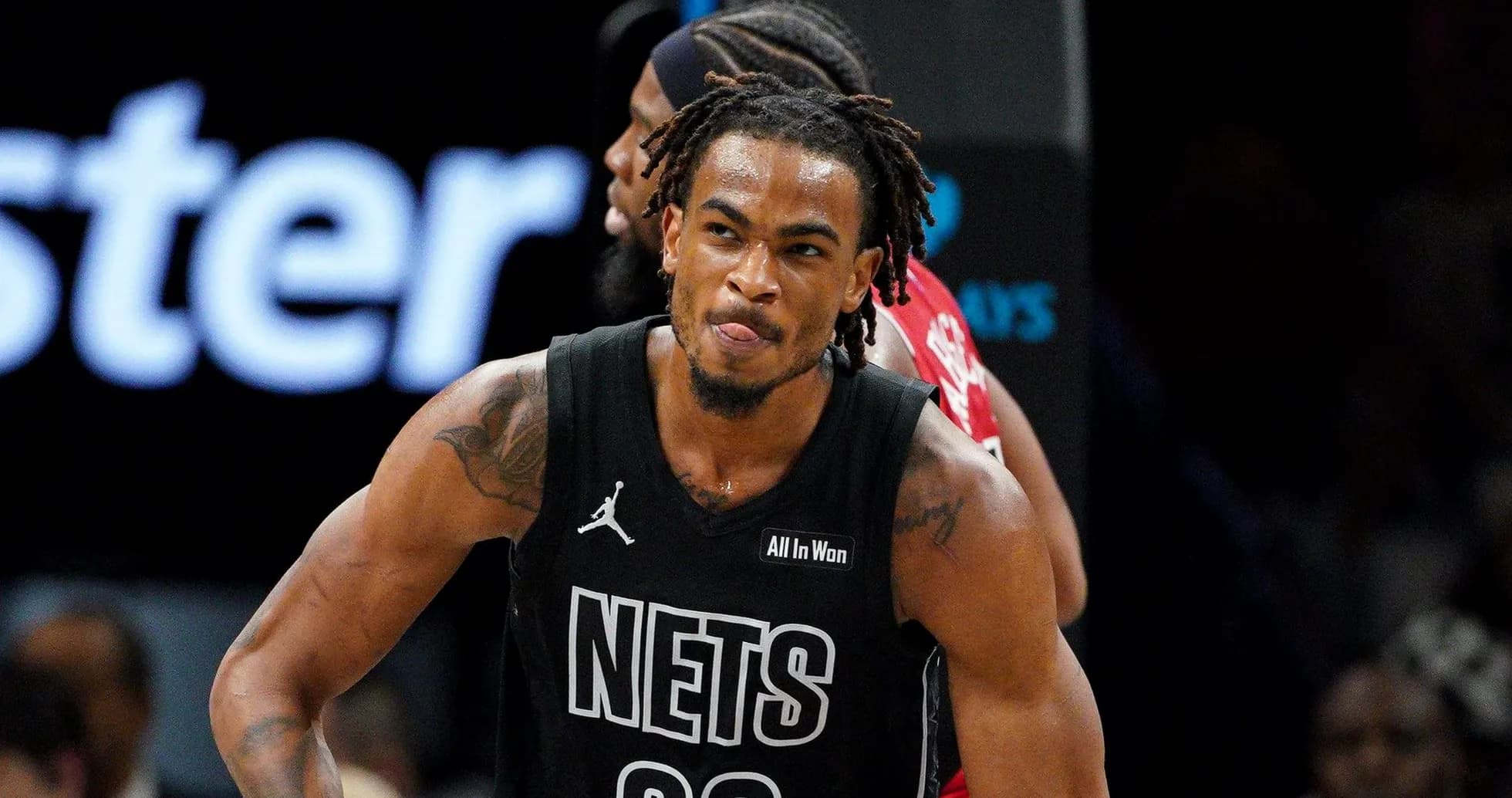
One trade concept making the rounds offers a sharp answer — Nicolas Claxton in purple and gold, with the Chicago Bulls and Milwaukee Bucks roped in as co-stars in a three-team shuffle.
Under the proposal, the Lakers land Claxton, the Bulls pivot to Myles Turner as their new starting center, and the Bucks cash out on Turner’s contract for a cleaner cap sheet and younger role players.
Framework:
- Lakers receive: Nicolas Claxton
- Bulls receive: Myles Turner, Jericho Sims, Jaden Hardy
- Bucks receive: Isaac Okoro, Jarred Vanderbilt, Dalton Knecht
On paper, it’s tidy. In reality, it would reshape the frontcourts of three franchises headed in very different directions.
Lakers: A Real Rim Runner for a Guard-Heavy Core
The Lakers’ logic is blunt. Walker Kessler and Kevon Looney can’t be trusted to stay on the floor. Last season, the two big men combined for just 26 games. That’s not a depth chart; that’s a gamble.
Behind them, there’s no real size to throw at Nikola Jokic, Victor Wembanyama, or Chet Holmgren. For a team built around Luka Doncic and Austin Reaves, that’s a problem that only grows in May.
Claxton answers that in one stroke.
He’s the archetype of the modern rim-running center — long, mobile, explosive. Put him in high pick-and-roll with Doncic or Reaves and the reads become brutally simple: lob, kick, or finish. Claxton sprints to the rim, sucks in help, and lets the guards orchestrate.
Defensively, he gives JJ Redick a second shot-blocking presence behind Kessler. With Kessler stretching his range out to the three-point line, Redick can even flirt with two-big lineups against oversized Western Conference opponents, toggling between Kessler spacing the floor and Claxton patrolling the paint.
The contract matters too. Claxton is on an expiring $21 million deal. That number is big enough to matter in trades, small enough not to choke long-term flexibility. If the experiment doesn’t work, the Lakers can pivot again without detonating their cap sheet.
The side benefit: the deal trims the roster from 16 players to 14, giving Los Angeles the breathing room to keep a spot open for a buyout veteran when the season’s grind starts to bite.
Bulls: Turner’s Shooting Beside Caleb Wilson
For Chicago, this isn’t about Claxton’s talent. It’s about fit and timing.
Claxton arrived in the Windy City via the Julius Randle deal, but the Bulls’ center room already tilts young: Jalen Smith, Australian prospect Lachlan Olbrich, and Tobe Awaka. Add in a franchise reset under Tiago Splitter and the picture gets clearer. This is a rebuild, not a retool.
The front office is now building around new franchise cornerstone Caleb Wilson, with Matas Buzelis and Josh Giddey forming the rest of the young core. In that context, Turner’s skill set snaps into focus.
Turner spaces the floor in a way Claxton simply doesn’t. He averaged 2.1 made threes last season on 38% shooting. That kind of stretch at the five opens driving lanes for Wilson and Giddey, and clears the midrange for Buzelis. The Bulls don’t just get a starting center; they get a stylistic match for the offense they’re trying to grow.
Jericho Sims slides in as a physical backup, joining Smith, Olbrich, and Awaka to form a deep, varied rotation of bigs. Sims brings energy and verticality, the kind of second-unit presence that can keep the defensive level high when Turner sits.
Chicago sacrifices Claxton’s age and upside, but gains a cleaner on-court fit around Wilson and a more defined offensive identity. For a team leaning into a youth movement, the structure around that youth matters as much as the names themselves.
Bucks: Shedding an Albatross Before It Lands
For Milwaukee, this is about timing and money.
Turner is on a four-year, $109 million deal, a number that balloons to $29 million when he’s 34. For a franchise pivoting to a youth movement under Taylor Jenkins, that’s the kind of contract that can quietly strangle flexibility.
Kel’el Ware is already being groomed as the starting center. Behind him, the Bucks have developmental bigs like John Butler Jr. and the versatile 6-foot-10 Nate Arment. Turner, for all his quality, doesn’t fit that timeline or rotation anymore. He’s a luxury piece on a roster trying to reset.
This trade lets Milwaukee get out before the contract turns into a true anchor.
In return, the Bucks pick up Isaac Okoro, Jarred Vanderbilt, and Dalton Knecht. The cap implications are as important as the names: Okoro and Knecht sit on expiring deals, while Vanderbilt’s contract runs only through a 2027-28 player option. The long-term money gets lighter, the books cleaner.
On the floor, Okoro brings perimeter defense, Vanderbilt adds size and energy across the frontcourt, and Knecht offers scoring upside on the wing. None of them replicates Turner’s rim protection, but they fit the broader shift toward a younger, more flexible rotation.
Milwaukee doesn’t just move a big contract. It realigns its roster with the direction it has already chosen.
One move. Three frontcourts rewritten.
If a deal like this ever moves from the whiteboard to the league office, the question won’t be whether it makes sense on paper. It will be which of these three teams is truly ready to live with the version of itself this trade creates.