Lionel Messi's Quiet Goodbye: A Legacy of Greatness
Lionel Messi walked alone.
After 120 minutes in suffocating heat, at 39 years of age, he stood on the touchline with a silver medal hanging from his neck and tears in his eyes. No tantrum, no grand speech, no cameras following him down the tunnel for a scripted farewell. Just Messi, motionless, absorbing the noise one last time.
Then he sat down on the grass.
The same grass he had left a decade earlier, convinced that this stage might never truly belong to him. This time, he bent over, slowly unlaced his boots and took them off for the final time as an Argentina player. No drama. Just closure.
The quiet goodbye
In typical Messi fashion, the end arrived without a trailer.
No “Last Dance” series. No farewell tour. No choreographed goodbye interview. He played, he led, he suffered, and when the tournament ended, he finally spoke: his international career was over.
- More than 20 years.
- 207 matches.
- Nine finals.
- Four major trophies.
The story closes with defeat to a Spain side that outplayed Argentina. The result stings, but it does not touch the scale of what came before, nor the level he reached in this last tournament. He leaves the national team not as a fading legend clinging on, but as a 39-year-old who dragged his country back to another World Cup final and still looked like the best player on the pitch.
It is easy to forget how long that seemed impossible.
For years, the criticism followed a familiar script: he could do it for Barça, so why not for Argentina? The question came from rivals, but the sharpest knives often came from home. Messi and his family lived through abuse, mockery and open hostility from sections of his own support and media. Some of the same voices now calling him a god once questioned his commitment, his character, even his nationality.
- It took four consecutive lost finals.
- It took Chile in 2016 and that brief, stunned retirement.
- It took years of heartbreak for the tide to turn.
La Scaloneta and the flood
The shift came with a new core and a new spirit.
Lionel Scaloni on the bench. Rodrigo De Paul running himself into the ground. Cristian Romero snarling at forwards. Emiliano Martínez turning penalty shootouts into theatre. The old guard of Ángel Di María and Nicolás Otamendi refusing to fade away. Around them, Messi, no longer the lonely genius, but the undisputed leader of a band willing to bleed for him.
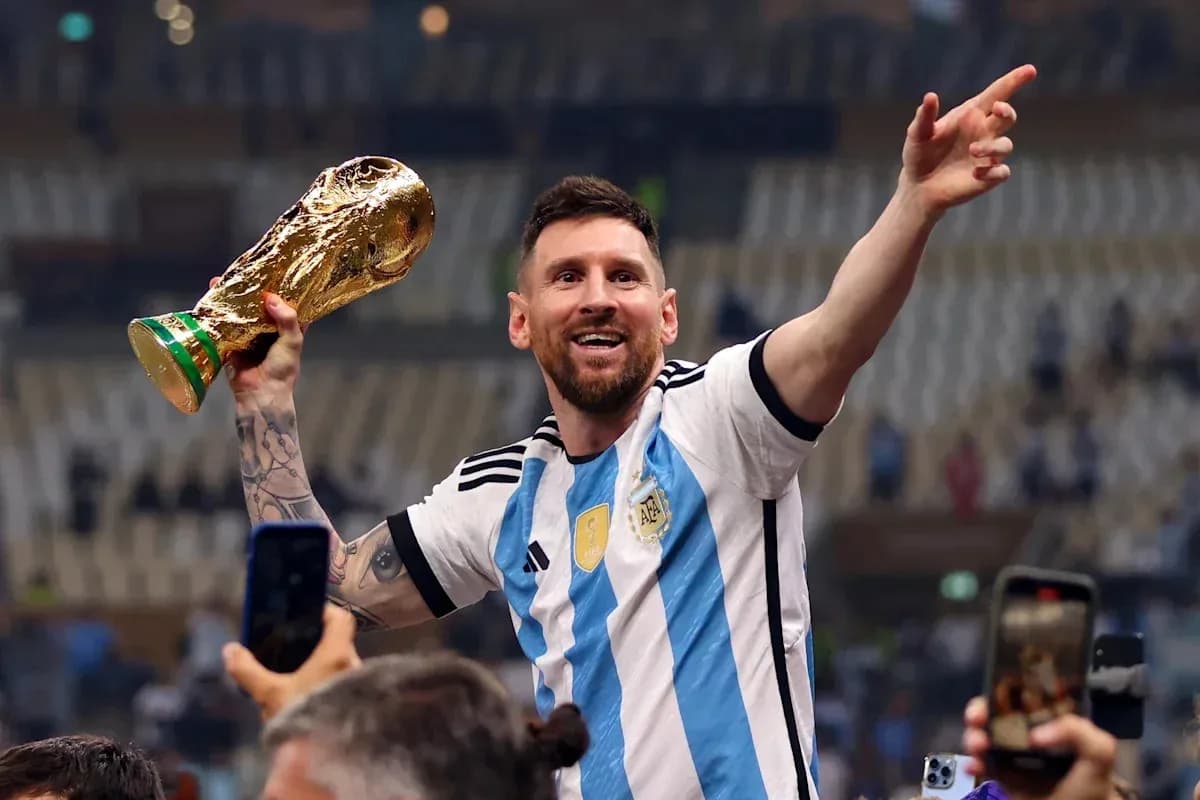
In 2021, at the Maracanã, against Brazil, the dam finally burst. Argentina won the Copa América on enemy soil and the emotion that poured out that night felt like 15 years of tension leaving his shoulders. Once the first trophy came, the rest followed in a rush.
Enzo Fernández and Julián Álvarez arrived. The team hardened. Argentina became a machine, swatting aside almost everyone in their path—Saudi Arabia the lone, surreal exception—on the way to three more titles, including the 2022 World Cup. “La Scaloneta” turned into a phenomenon, a side nobody wanted to face, built around a captain who inspired both fear and devotion.
Fast forward to 2026, and Messi steps away having overseen the greatest era in Argentina’s history. Before this final, schoolchildren had never seen their country lose a knockout match with him on the pitch. The man once branded an international failure now owns such an absurd list of honours that his critics have swung to the opposite extreme, muttering that the sport is rigged in his favour.
The numbers – and what lies beyond them
Football now loses its brightest light on the international stage.
- Ninety-one goals in a calendar year.
- Eight Ballons d’Or, four of them before he turned 26.
- 1,348 goal contributions.
- Forty-four trophies.
Those numbers will live in record books for decades. They still do not touch the full story.
Statistics cannot explain how he reached another World Cup final at 39, outplaying stars closer to his children’s age than his own, while his father lay on his deathbed. They cannot explain how a man who has conquered everything still plays every game as if it might be his last.
His impact escapes language. Generations of writers have tried to pin it down and fallen short, because the essence of Messi lies in something that does not fit into charts or tables. It lives in the feeling.
For some, he will always be the kid slaloming through Real Madrid, Athletic Club or Getafe defenders on solo runs that defied geometry. For others, it is the give-and-go with Jordi Alba, the telepathic MSN triangles, the interplay with the greatest midfield trio the club game has seen. Many will see him in their mind’s eye lifting Champions Leagues, Liga titles and, finally, that World Cup.
La Pulga gave the sport thousands of moments. The true gift, though, was the sense of watching someone who had mastered his craft to an almost uncomfortable degree. Billions of people have kicked a football; Messi seemed to speak its language better than anyone.
- A first touch into space.
- A casual layoff.
- A shoulder feint, a dummy, a pause.
Nothing outrageous on its own, yet it left you frozen because he made the impossible look routine. Then came the passes only he could see, the angles only he could find, the defences only he could unlock. On top of all that, he just happened to be the most prolific scorer the game has known.
A kids’ game, perfected
His retirement from the international stage has produced a rare sight: adults nodding in understanding at a crying child who cannot process why their hero is leaving. No textbook explains it. Football is a children’s game dressed up with tactics, GPS vests and television money, and one man managed to perfect it.
Beneath the analysis and the sports science, the core of the game never changed. Messi reminded the world of that. Every time he scored, every time he slipped between lines, he reawakened that childlike awe in anyone watching, whether they were seven years old or seventy. Nobody wants him to stop, because nobody wants that feeling to end.
Very few players in history have combined the talent to become an icon with the temperament to lead like one. Messi did both. His genius, his humility and his obvious love for the game shaped an entire generation.
That generation sold belongings to cross continents just to see him live. They sprinted home from school to catch his latest exhibition at Camp Nou. Some of them grew up, pulled on the Argentina shirt and found themselves sharing a dressing room with the man whose posters once hung above their beds.
On the pitch, they ran themselves into the ground for him. They knew that if football “owed” Messi a World Cup, they were the ones who had to pay that debt. They had watched him for years, dragging Argentina to finals, enduring heartbreak, then coming back for more. They understood they were playing for something bigger than themselves.
Perhaps the most telling tribute comes from those who shared that dressing room. As the messages pour in, they speak less about the goals and more about the man: the captain, the teammate, the friend. He changed the sport, yes, but he also changed careers, standards, lives. His selflessness, as much as his skill, made him impossible not to follow.
He leaves international football as an undisputed champion because he lifted others with him.
After the anthem
His career is not over. Not yet.
He will keep playing in Miami, surrounded by friends, still capable of scoring four in a week when the mood takes him. But the World Cup final feels like the last truly high-stakes chapter. There is a sense of injustice in that, because this tournament again showed that at 39 he remains the best player on any pitch he steps onto.
He has nothing left to prove. Not to himself. Not to Argentina. Not to anyone.
The national anthem will play without him now. Another captain will lead the team out. Another number 10 will eventually appear on the teamsheet. The shirt will be the same. The weight of it will not.
Argentina will move on. Football always does.
The question is whether it will ever see anything like him again.