
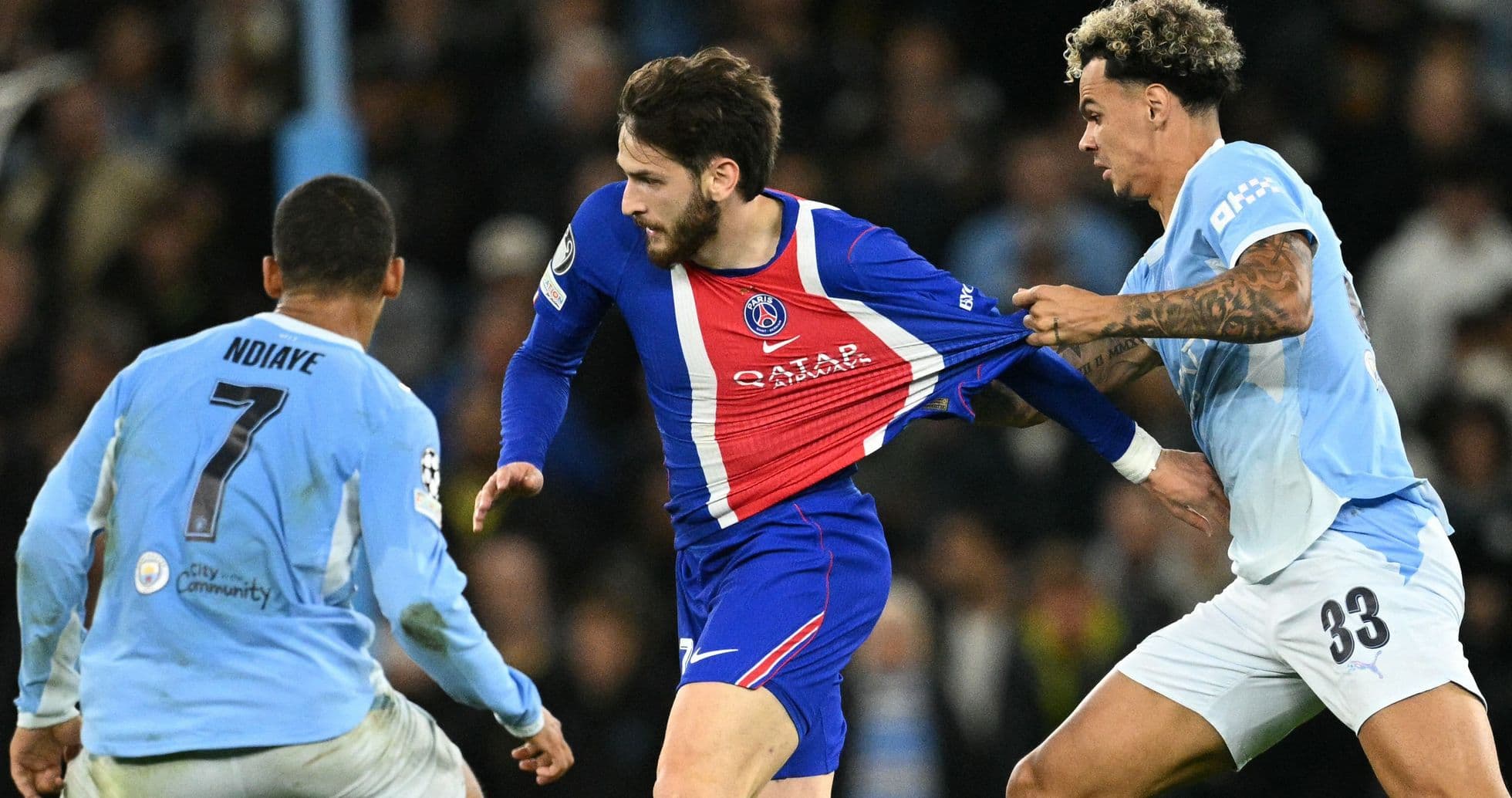
Luis Enrique’s PSG Outmaneuvers Manchester City with Sharp Transitions at Etihad
Paris Saint-Germain delivered an impressive display of swift counter-attacks to defeat Manchester City 4-2, exploiting City’s high defensive line early on. Despite a late resurgence led by Erling Haaland, City could not overcome their defensive lapses in the first half.
Contrasting Approaches from Maresca and Luis Enrique
Manchester City, under Enzo Maresca, aimed to dominate possession with a high-pressing 4-2-3-1 setup, focusing on controlling the tempo through Enzo Fernandez and Elliot Anderson in midfield. The plan involved using the creativity of Jeremy Doku and Rayan Cherki to break down PSG’s defense.
On the other hand, Luis Enrique’s Paris Saint-Germain adopted a flexible 4-3-3, emphasizing quick vertical attacks over possession. By drawing City’s players forward, PSG created large gaps behind the defense to exploit using Ousmane Dembele and Desire Doue’s pace, aiming to isolate City's center-backs during rapid transitions.
Manchester City’s Formation and Challenges
Maresca’s team often shifted into a 3-2-5 shape during build-up, with Josko Gvardiol dropping back to add security. The pressing was intense, pushing City's front four up whenever Safonov played short, forcing PSG into long balls. Yet, this left Ruben Dias and Marc Guehi vulnerable to direct runs behind the midfield.
City struggled to find rhythm in possession. Enzo Fernandez tried to steer play, but PSG’s mid-block effectively cut off passes to Cherki. Doku’s attempts to stretch play were neutralized by Achraf Hakimi and Warren Zaire-Emery. Despite holding 54% possession, City lacked penetration, leaving Haaland isolated until the break. Defensive transitions were fragile, with PSG repeatedly breaking through City’s high line with quick passes.
PSG’s Compact Setup and Clinical Execution
PSG dropped into a tight 4-5-1 when City entered the middle third, with Vitinha and Fabian Ruiz shielding the defense expertly. Their patience paid off as they let City keep the ball in non-threatening zones before pouncing on errors. Vitinha orchestrated recoveries and launched quick diagonal balls to Dembele or direct runs from Doue.
The build-up involved risk to bait City’s press. Using Safonov in circulation drew City out, then Zaire-Emery and Ruiz struck vertically into space. Maghnes Akliouche’s movements into half-spaces pulled Guehi out of position, opening lanes for wingers. PSG’s efficiency stood out, scoring three goals from just 46% possession in the first half—showcasing their elite counter-attacking prowess.
Tactical Battle in Wide Areas and Transitions
Luis Enrique targeted City’s full-backs, especially Gvardiol, who ventured forward, leaving space behind. By keeping Dembele wide and advanced, PSG prevented City from fully committing to attacks without fear of long balls. This forced City’s midfielders to cover more ground sideways than comfortable.
Enrique’s pragmatic tactics outmatched Maresca’s rigid positional play. The mismatch between PSG’s mobile front three and City’s slower center-backs in the first half was decisive. By the time City adapted, PSG had already built a three-goal lead through Doue, Dembele, and Vitinha within 32 minutes, shifting momentum firmly in PSG’s favor.
Second-Half Adjustments
Maresca responded with three substitutions at halftime, bringing on Matheus Nunes, Ayyoub Bouaddi, and Iliman Ndiaye, shifting to a more dynamic approach supporting Haaland. Ndiaye’s direct play helped create space for Haaland’s opening goal in the 53rd minute. City increased verticality, opting for crosses and faster ball recycling.
Luis Enrique refreshed his attack by introducing Khvicha Kvaratskhelia for Doue and adding Joao Neves to stabilize midfield. After Haaland’s second goal in the 75th minute reduced the deficit to 2-4, PSG retreated into a 5-4-1 block, reinforced by Lucas Hernandez and Lucas Beraldo. This solid defense blunted City’s late aerial threats, despite City taking 27 shots overall.
Key Match Statistics
- Possession: Manchester City 54%, PSG 46%
- Goals: PSG 4 (Doue, Dembele, Vitinha, plus one more), Manchester City 2 (Haaland twice)
- Shots: Manchester City 27 total
- Formations: City 4-2-3-1 / PSG 4-3-3 transitioning to 4-5-1 and 5-4-1 defensively
Final Thoughts
The match hinged on PSG’s ability to lure City into complacency before punishing them on quick counters. Haaland’s two goals highlighted individual talent and City’s improved intensity after halftime, but the damage done by Doue, Dembele, Vitinha, and Akliouche was too great to overcome. Luis Enrique’s focus on sharp, vertical play proved superior to Maresca’s possession-heavy strategy, showing that in top European football, managing space can be more impactful than controlling the ball.





