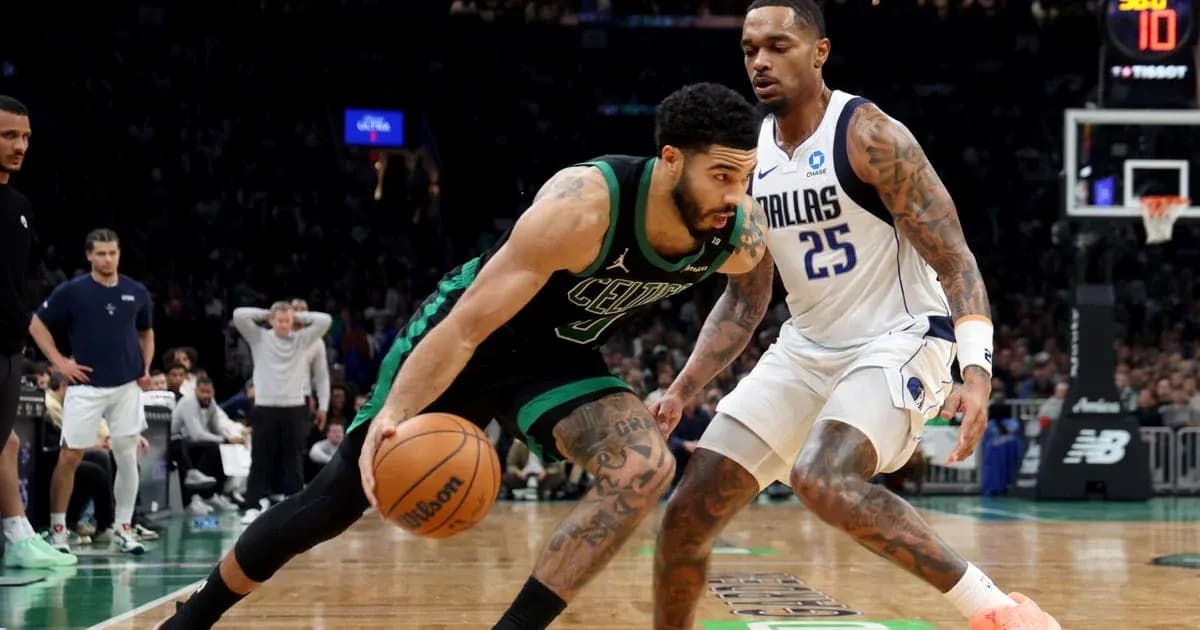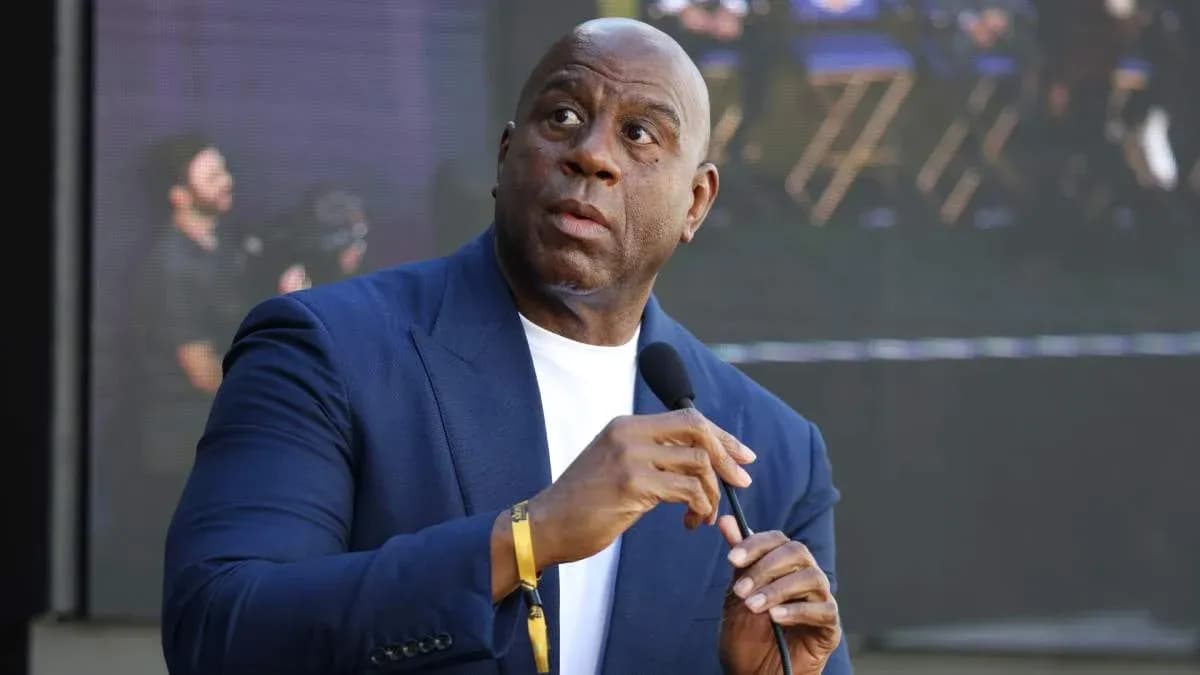
Magic Johnson Praises Lakers' Youth and Toughness
Magic Johnson didn’t mention LeBron James by name. He didn’t have to.
While toasting the Los Angeles Lakers’ blistering 10–2 start, the franchise icon lit up social media with one pointed comparison that many read as a clear shot at the previous era.
“Last year, the Lakers were a slow team that got beat in transition – but not this season,” Johnson wrote on X on Tuesday. “This team is mentally and physically tougher, and that’s why they’re 10-2!”
No LeBron. No Marcus Smart. No veterans in their mid-30s anchoring the lineup. Just a younger, faster, Luka Doncic-led group that Johnson clearly believes is built for the modern game.
A Younger Core, A Sharper Edge
The numbers back up what Johnson is seeing.
Last season’s starting unit carried an average age of 31.2 years, weighed down by aging stars such as James and Smart. This year, the contrast is stark: the starting five averages 26.2 years, the full roster sits at 25.1, and the oldest player in the building is 30-year-old Kevon Looney.
That youth shows every time the Lakers run.
Redick’s team is tied for 10th in transition points at 24.3 per game, fourth in transition field-goal percentage at .594, and seventh in points per fast-break possession at 1.18. Twelve months ago, the Lakers lived in the middle of the pack, ranking 18th in transition points (22.4) and 19th in attempts (14.5 per game). They were the team getting run off the floor, not the one doing the running.
Johnson’s “mentally and physically tougher” line landed with extra weight against that backdrop. The implication was obvious: this group holds up where the older version broke down.
Not Just Luka’s Show
Johnson’s praise didn’t stop at pace and toughness. He zoomed in on depth, too, and he had the perfect case study: Monday’s 124–114 win over the Atlanta Hawks.
Luka Doncic did what an MVP frontrunner is supposed to do, pouring in 32 points. But Johnson made sure to spotlight the cast around him.
“The Lakers’ win wasn’t just about Luka Doncic (even though he scored 32 points),” he wrote. “It was about Collin Sexton’s 18 points, Sandro Mamukelashvili’s five 3s on the way to 23 points, Walker Kessler’s 21 points and 10 rebounds, and Ziaire Williams’ 12 points. That production, along with Thiero’s defense, is why they were able to walk away with the win!”
That’s not throwaway praise. Sexton and Mamukelashvili are newcomers, and together they dropped 41 off the bench. Kessler bruised the Hawks inside with a 21-and-10 double-double. Williams chipped in 12, while Adou Thiero’s defensive work rounded out a bench performance that broke the game open.
For years, the Lakers’ formula often reduced to “LeBron plus help, if it shows up.” Johnson’s breakdown read like a celebration of something very different: a team with layers, options, and multiple ways to beat you on any given night.
Redick’s Stamp on the Sideline
One more figure drew Johnson’s admiration: JJ Redick.
“The Lakers’ win over the Hawks yesterday showed that JJ Redick has become a great NBA coach,” Johnson wrote. “His in-game switch from man-to-man to a zone defense changed the trajectory of the game, and he’s outstanding at drawing up plays out of timeouts!”
That’s a strong endorsement from a Hall of Famer who has seen every coaching archetype pass through the league. Redick, once the podcasting ex-shooter with a microphone, now has a 10–2 record and a public nod from Magic Johnson for tactical acumen.
The defensive switch Johnson referenced wasn’t subtle. Redick abandoned straight man-to-man, dropped the Lakers into a zone, and the rhythm of the game flipped. Atlanta’s offense stalled, the Lakers’ transition attack ignited, and the bench seized control. It was the kind of live adjustment that separates managers of talent from actual coaches.
A New Standard in Purple and Gold
Strip away the social-media intrigue and the question still hangs in the air: did Magic Johnson just draw a line between the LeBron-led Lakers and this new, Luka-driven version?
He never says it outright. He doesn’t need to when he’s contrasting “slow” with “mentally and physically tougher,” old with young, reactive with proactive.
What’s undeniable is this: at 10–2, younger, faster, and deeper, these Lakers have his full-throated approval. And for a franchise that measures itself in banners and legends, that kind of blessing can quickly turn from early-season excitement into a hard expectation for how far this team is supposed to go.