Manchester City Makes Statement at Old Trafford Despite Red Card
Manchester City walked into Old Trafford a man light and walked out with something far more valuable than three points: a statement.
Enzo Maresca’s team, down to 10 men from the 23rd minute, dug in, bent, snarled, and then – inevitably – let Erling Haaland deliver the punchline. A controversial one, yes, but the kind that wins titles and settles arguments in a city that never stops keeping score.
Foden walks, City stand tall
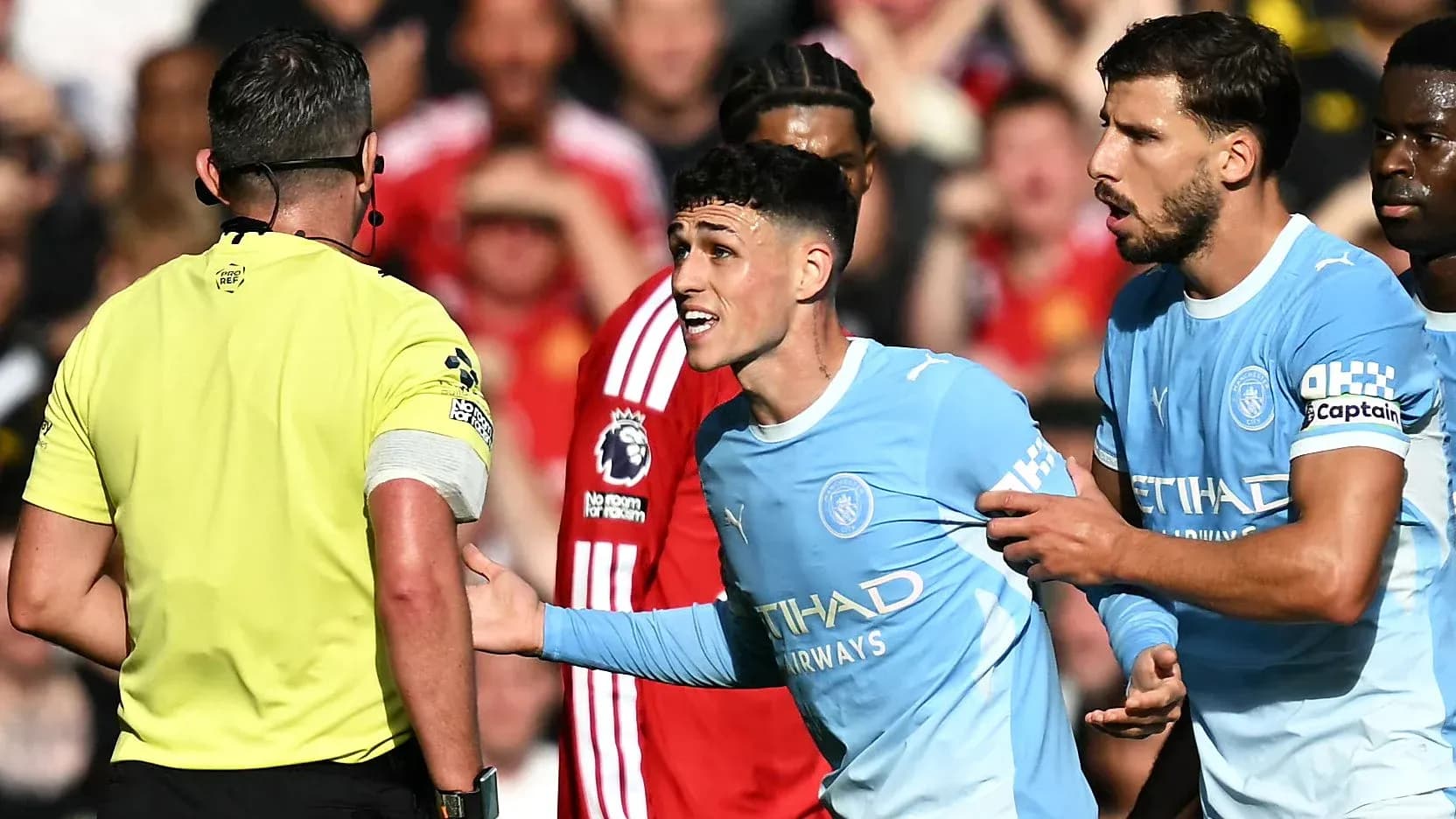
The game’s tone changed in a flash. Phil Foden, usually the local lad made good, became the villain in sky blue when he lashed out at Bruno Fernandes after the United captain had kicked him while he lay on the turf. The referee reached for red, Old Trafford roared, and City’s plans were shredded before they had really taken shape.
What followed was not the usual City. No carousel of passing, no sterile domination. This was something more old‑fashioned: backs to the wall, lines compact, runners chasing lost causes. Maresca’s side adjusted on the fly, sacrificing their English playmaker and with him a chunk of their attacking rhythm, but refusing to surrender control of the occasion.
The pressure built, United sensing blood, the home crowd demanding a response. City didn’t blink.
Haaland’s moment, United’s fury
The breakthrough, when it came, carried all the chaos and controversy you would expect from a Manchester derby. Haaland, starved of service for long spells, pounced with the kind of ruthless precision that has become his calling card. United protested, the home bench seethed, but the goal stood. City had their lead, and with it, their first win at Old Trafford in almost three years.
From there, it became a test of nerve and discipline. City dropped deeper, shut down space, and trusted their structure. United huffed, crossed, and chased shadows. City waited. And cleared. And tackled. And argued for every inch.
Anderson owns the midfield
At the heart of it all stood Anderson, the £116 million summer signing who had already hurt United in Nottingham Forest colours and clearly had no intention of stopping now.
He didn’t just screen the back line. He owned the central third. He won duels, snapped into tackles, and when the ball finally landed at his feet, he calmed everything down, threading passes through the lines instead of simply hacking clear. It was the kind of performance that wins Player of the Match awards without debate.
“I just gave everything for the team – duels and playing through the lines,” he said afterwards. “I thought I did quite well and just stayed calm in possession with the team and helped everyone.”
This was not the night for pretty numbers or heat maps. This was about survival, and Anderson played like a man who understood exactly what was required.
A dressing room bouncing, even without Foden
Inside the dressing room, the mood told its own story. Foden, dismissed before the game had even settled, might have been forgiven for sulking. Instead, Anderson painted a very different picture.
“He was gutted to not play in the full game,” the 23‑year‑old admitted, “but he was bouncing up and down the changing room. As we all were.”
The red card had forced City into a kind of collective grit test.
“[The red card] made the game a lot harder and we’ve all come together and it shows real fighting leadership from the lads,” Anderson said. “It wasn’t ideal, Phil going off, but we all fought for it. It changed the way of playing, but we did really well at it.”
For a club often praised for their artistry, this was about something else: mentality, stubbornness, the refusal to yield in enemy territory.
“Kings of Manchester” backs up his words
When Anderson arrived in July and declared City the “kings of Manchester,” he knew exactly what he was stepping into. Old Trafford did not forget. Every touch came with a chorus, every tackle with an extra edge.
He didn’t retreat from it.
“I was just trying to let my football do the talking,” he said. “I think we came here and we played really well. There’s no doubt we have all the quality, but we’re showing real mentality in the first four games, especially in this one. Not giving up, fighting for every tackle, every duel, and waiting for our chance, and obviously Erling scores.”
On this evidence, the slogan isn’t just noise. It’s a challenge, and City are playing like a team determined to defend it.
A new partnership with bite
One of the quieter stories of the night might prove one of the most important for City’s season: Anderson’s growing partnership with Enzo Fernandez. The two once clashed in a World Cup semi-final in the United States; now they form the axis of Maresca’s midfield.
“I found that obviously before I was playing against him,” Anderson said. “But no, he’s a brilliant guy. And he’s a real top player. He’s very good. He shows real quality on the ball and knowing you’ve got someone alongside you who’s got your back is a massive help. He’s top.”
Fernandez pulled strings when City had the ball and, when they didn’t, leaned into the darker arts that derbies often demand. Late on, with United chasing an equaliser and time slipping away, he drew contact from Kobbie Mainoo and made sure the clock kept ticking.
The home fans howled. City didn’t care.
“It’s a derby, isn’t it?” Anderson shrugged. “There’s always going to be that type of stuff in the game.”
Built to suffer – and still win
Perhaps the most ominous detail for the rest of the league is how comfortable Anderson sounded talking about life without the ball.
“I’ve been used to playing that way (without the ball) quite a lot,” he said. “I find either way quite comfortable for me and I’ll just try to give my very best to help the lads around me. It hasn’t been easy. I’ve been obviously challenged in all the games, and yeah, I thought I’ve done pretty well. I’ve trained hard to put myself in the best place for the games and it has started ever so well.”
City’s flawless start now carries a different kind of weight. They can still dazzle, still overwhelm teams with possession and patterns. But here, in the heart of their rival’s stadium, they proved they can also suffer, defend deep, and trust their big players to seize the one moment that matters.
If this is how the “kings of Manchester” play when they’re a man down and under siege, what happens when they’re at full strength and still chasing more?