Manchester United's Academy Faces Crisis Over Gabriel's Departure
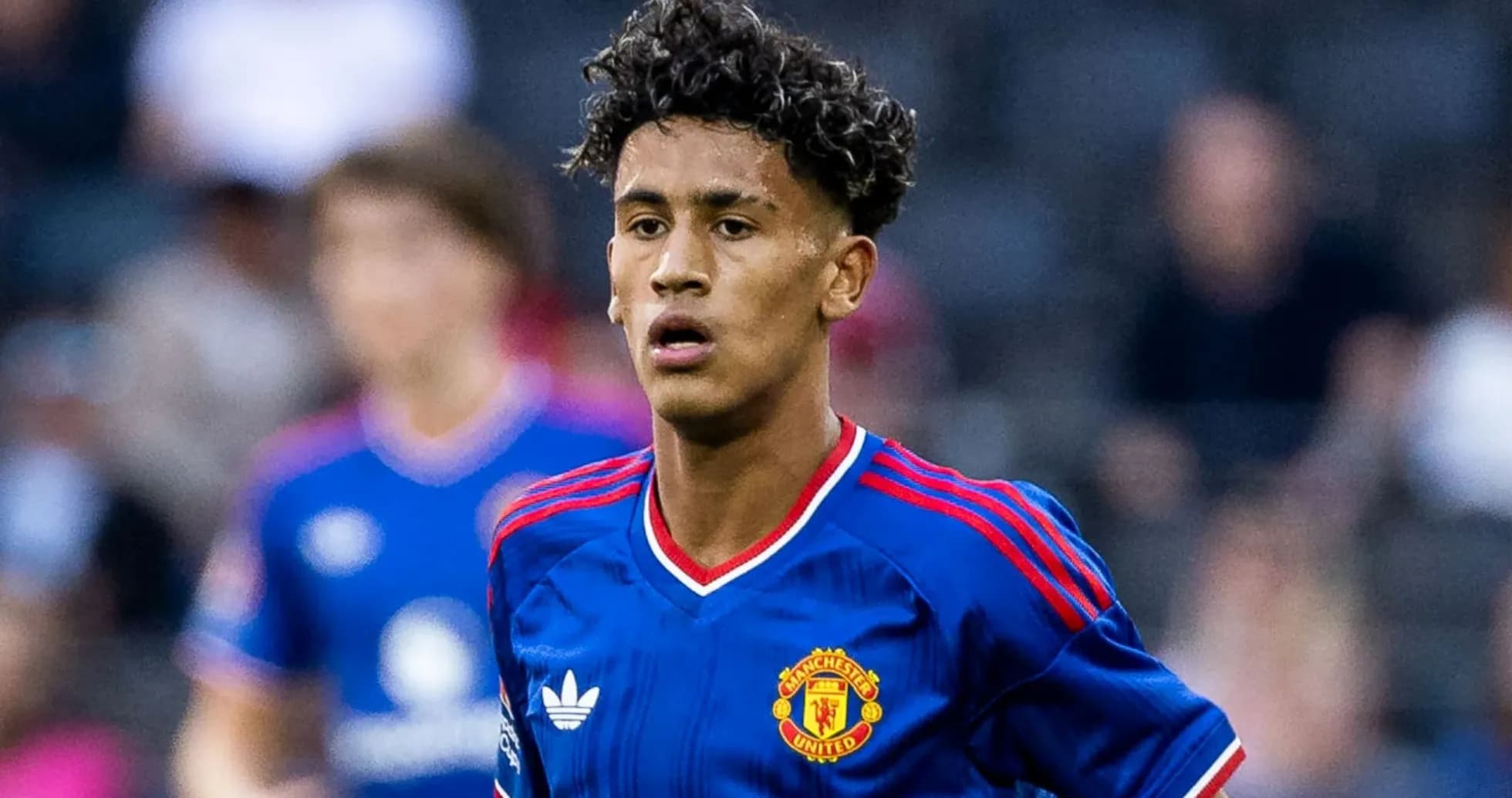
Manchester United face mutiny from within their own academy, and it comes from a boy who has not yet turned 16.
Gabriel, on the club’s books since the age of 11 and one of the most highly regarded prospects at Carrington, has formally asked to be deregistered and to have his deal terminated before it expires at the end of the season. United have flatly refused. They do not want to lose him. Not now. Not like this.
The request has stunned senior figures at Old Trafford. Gabriel was part of the senior squad’s pre-season and made a strong impression, underlining why many inside the club viewed him as a future first‑team forward. Yet that promise has collided with a brutal reality: he is nowhere near the current matchday picture.
Flashpoint after Champions League omission
The tension did not appear overnight. It spiked after a series of omissions that cut deep.
Gabriel was left out of the squad for a commanding 4-0 Champions League win over Sabah, a night that should have showcased United’s depth and offered a glimpse of the future. He did not even make the bench. Then came the Carabao Cup. United crashed out 3-2 to Brighton, a dismal exit that only sharpened questions around selection and opportunity. Again, no place for the teenager.
Inside his camp, that felt like a turning point. With his 16th birthday looming on 6 October, the traditional moment to step up and sign a scholarship, the idea of committing his next phase to United now looks remote.
This is not simply a case of a restless youngster wanting minutes. It cuts to how his family view the club’s place in the modern game.
A brutal verdict on United’s status
According to the Daily Mail, Gabriel’s family believe United have fallen well behind the game’s current powerhouses. Arsenal and Manchester City at home. Bayern Munich, Barcelona and Real Madrid on the continent. In their eyes, those clubs offer a sharper footballing education, a clearer pathway, a more elite environment.
They want him learning every day alongside the very best.
That stance has not gone unnoticed. Some of Europe’s biggest institutions have already moved into position. Early conversations have reportedly taken place with Barcelona and Real Madrid, and Gabriel’s Irish EU passport makes a move to Spain far simpler from a regulatory standpoint. Bayern Munich are tracking the situation closely as agents jostle for the right to represent one of the most coveted teenagers in the market.
If he chooses to stay in England, the picture changes but the interest does not. Chelsea are currently at the front of the domestic queue. A switch to Stamford Bridge, though, comes with its own complications. The club are serving a nine‑month ban on registering academy players, meaning Gabriel could join but would have to wait until January to be officially registered.
For a family already questioning development time, that delay is not a trivial detail.
Old Trafford’s decline laid bare
The family’s harsh assessment of United’s trajectory is not made in a vacuum. It reflects what the world can see on the pitch.
United have not lifted the Premier League trophy since Sir Alex Ferguson walked away in 2013. A decade on, the club that once set the standard now look like they are chasing it. This season’s start has only deepened the sense of drift.
Michael Carrick’s side sit 12th in the table after a 1-1 draw with Fulham, with just one win from their opening five league games. The Carabao Cup campaign is already over, that 3-2 defeat to Brighton compounding the gloom. Around Old Trafford, the mood is heavy, the standards questioned, the direction unclear.
For a teenager and his advisors, it is not just about loyalty or history. It is about environment. Who are you training with every day? Who are you learning from? What kind of team will you be stepping into at 18, 19, 20?
Right now, Gabriel’s camp do not see United as the answer.
Carrick urges patience amid stand-off
United, though, cannot simply shrug and move on. This is one of their brightest prospects, a player they have nurtured for five years, suddenly trying to force the exit door before he has even signed a scholarship. The club now face a delicate stand-off, knowing that if neither side backs down, the situation could turn bitter as early as next month.
Michael Carrick has tried to lower the temperature in public, framing the issue around the teenager’s welfare rather than the club’s pride.
“I think he’s a young boy, JJ, and I think it’s important that we certainly don’t put anything out here,” Carrick said recently. “I think the exposure and the scrutiny and everything that, you got to be careful and be sensible and think of him as much as anything.”
Behind those words lies a familiar modern tension. A club desperate to prove it can still develop and keep elite talent. A young player, barely old enough to drive, already being courted by Barcelona, Real Madrid, Bayern Munich and Chelsea. A family convinced that the old giant of English football no longer offers the best classroom.
United can refuse the deregistration request. They can appeal for patience. They can point to the pathway and the history.
What they cannot do is ignore the question Gabriel and his camp are really asking: in 2026, 2028, 2030, will Manchester United still be a place where the very best teenagers in Europe believe they will become the very best players in the world?