Manchester United's Attack Thrives, But Defense Struggles
Manchester United have finally remembered how to score. Seven goals in two Premier League games against Ipswich Town and Everton suggest an attack starting to click under Michael Carrick.
The problem is what’s happening behind them.
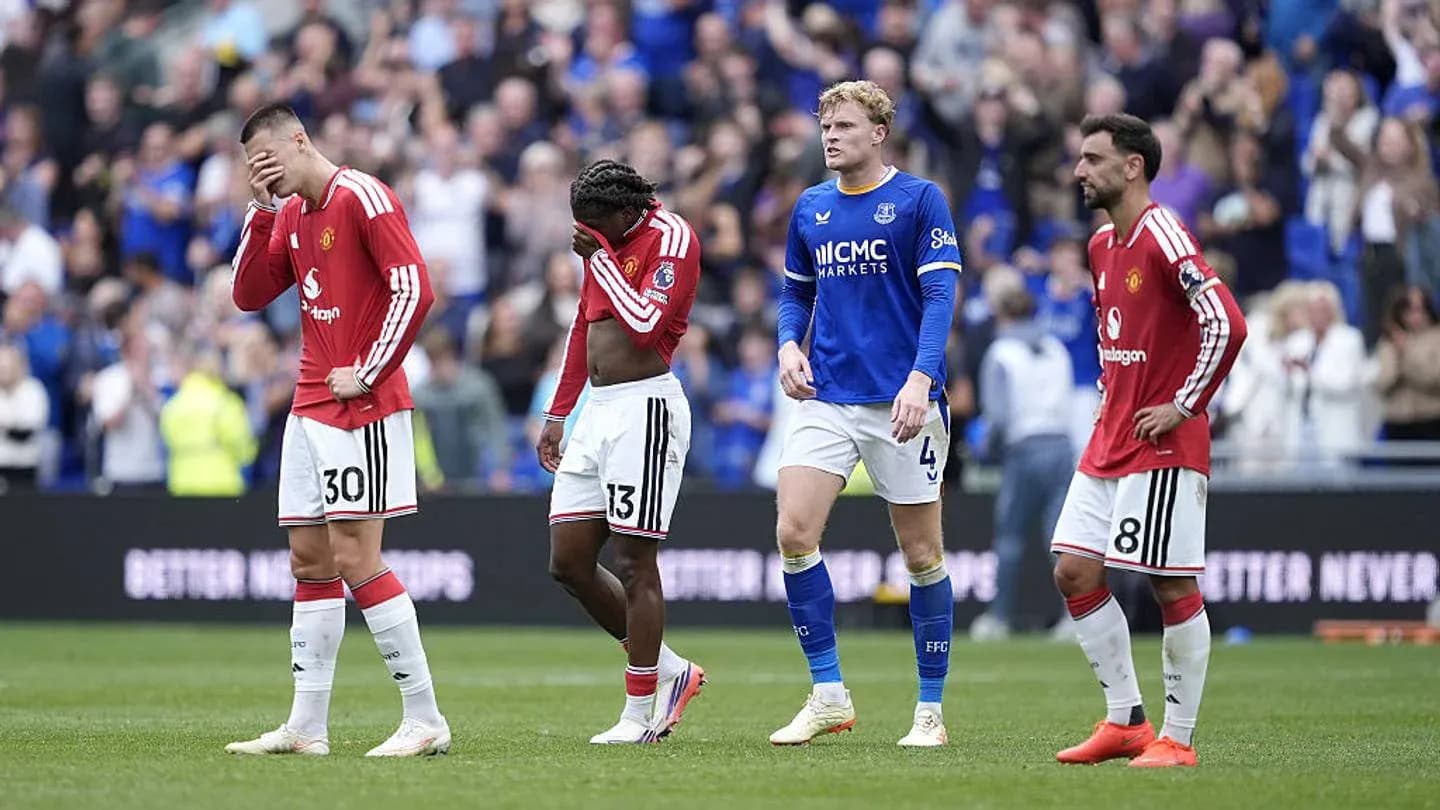
Carrick’s side have opened the season leaking goals at a rate that drags up uncomfortable echoes from some of the club’s more turbulent eras. Hull City’s 2–0 win on the opening weekend, Ipswich finding the net twice in a 5–2 defeat, and Everton’s 96th‑minute equaliser in Sunday’s 2–2 draw mean United have conceded at least two in each of their first three league fixtures.
For a club that built dynasties on defensive authority, that statistic cuts deep.
A Start That Belongs to the Wrong Kind of History
This is only the second time in the Premier League era that United have shipped two or more in each of their first three games. The last time it happened, in 2020–21, the warning signs flashed in neon.
Back then, Ole Gunnar Solskjær watched his side concede 11 times across an opening run that lurched from a 3–1 home defeat to Crystal Palace, to a chaotic 3–2 win at Brighton, and then that infamous 6–1 humiliation by Tottenham Hotspur at Old Trafford. The defending was ragged, the structure flimsy, the questions relentless.
Now, the numbers are beginning to rhyme again.
You have to go back more than 50 years for the previous instance before that. The 1972–73 campaign opened with a grim trilogy: Ipswich Town 2–1 Manchester United, Liverpool 2–0 Manchester United, Everton 2–0 Manchester United.
That was a very different United, but the mood music feels familiar. Four years on from lifting the European Cup in 1968, the club were sliding towards crisis. It was the farewell season for Bobby Charlton and Denis Law, the beginning of the end for George Best, and the final months of Frank O’Farrell’s tenure. He was gone by Christmas. Relegation followed two years later.
When United concede like this, history rarely tells a happy story.
Carrick’s Diagnosis: “Little Moments” With Big Consequences
Carrick has chosen not to dress it up. He talks about “little moments we can deal with a bit better,” but the pattern is too clear to ignore.
At Hull, set pieces undid them. Against Ipswich, the five goals going forward masked the unease of allowing two at the other end. At Everton, two long‑range strikes pierced United’s resistance, the second arriving deep into stoppage time to rip two points from their grasp.
“The mentality is there,” Carrick insisted after the draw at Goodison Park. From Everton’s perspective, he accepted, they were “two really good strikes from distance.” On another day, those efforts sail over, or clip the bar, or fall kindly for a defender. This time they flew in.
But United cannot keep living on “another day.”
Carrick knows it. “We obviously can’t ignore it. We need to concede fewer goals to give us a better chance of winning games. There’s things we need to get better at as a team.”
This isn’t about a single weak link or a lone tactical tweak. It’s about a unit that, right now, asks too much of its forwards.
The Weight on the Forwards
Last season laid the problem bare in the cold language of the table. United scored 69 league goals, almost level with Arsenal’s 71. Yet they conceded 50 to Arsenal’s 27. The gap in the standings? Fourteen points.
The lesson is brutal in its simplicity. Goals win games, but defense wins championships.
When you concede regularly, every match becomes a race. The forwards must chase, stretch, and rescue. There is no margin for an off day in front of goal, no space for a narrow, professional 1–0.
United’s recent scorelines read like basketball: 5–2, 2–2. Entertaining for the neutral, exhausting for a team that wants to be taken seriously as a contender.
Echoes of Busby – and a Crucial Difference
There is a precedent for a leaky start not derailing a season. In 1964–65, under Matt Busby, United conceded at least twice in each of their first three league games: a 2–2 draw with West Bromwich Albion, a 3–1 defeat at West Ham, another 2–2 draw at Leicester City.
They still went on to win the title.
But the game was different then. Formations leaned towards attack, with 3-2-5 shapes common across England. Teams carried more forwards, accepted more chaos, and lived with higher‑scoring contests as a natural by‑product of the era.
Today, the margins at the top are finer. The best sides press as a unit, defend as a unit, and suffocate games long before the final whistle. United’s current openness is an outlier in a league where the elite have tightened the screw.
A Turning Point, Not a Statistic
The numbers, the parallels, the history – they all frame the story, but they don’t decide it. Carrick’s United are not O’Farrell’s, and this is not 1972. The club is not teetering on the edge of the abyss.
What they are, right now, is unbalanced. Potent going forward, fragile when asked to protect what they have.
Carrick calls them “little moments.” The table will decide how small they really are.