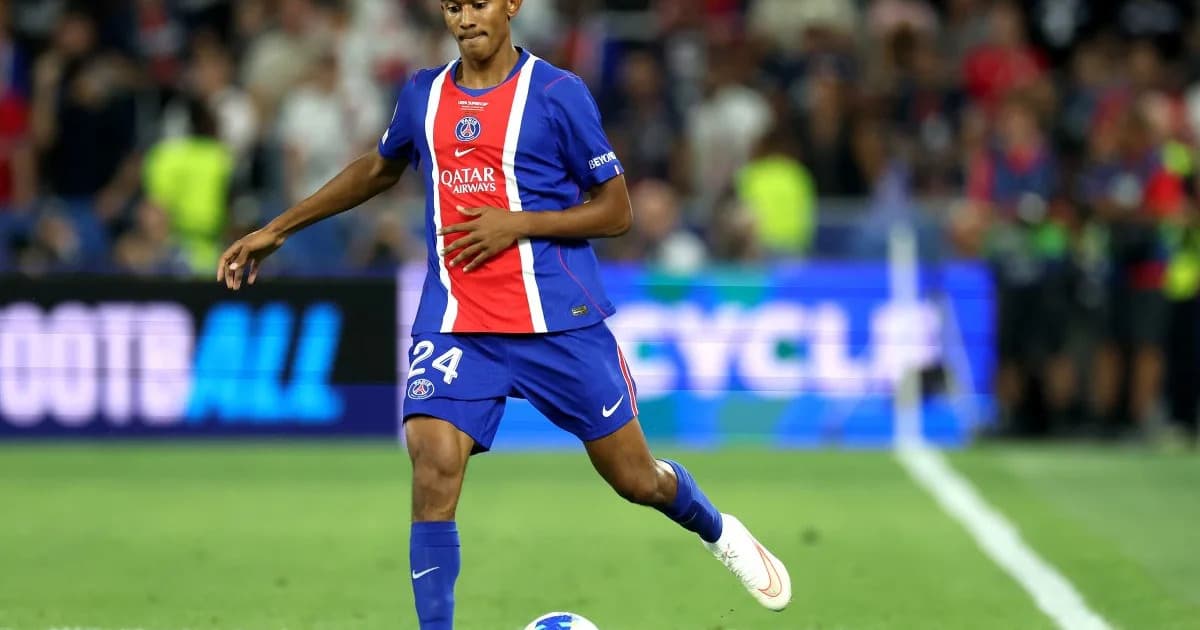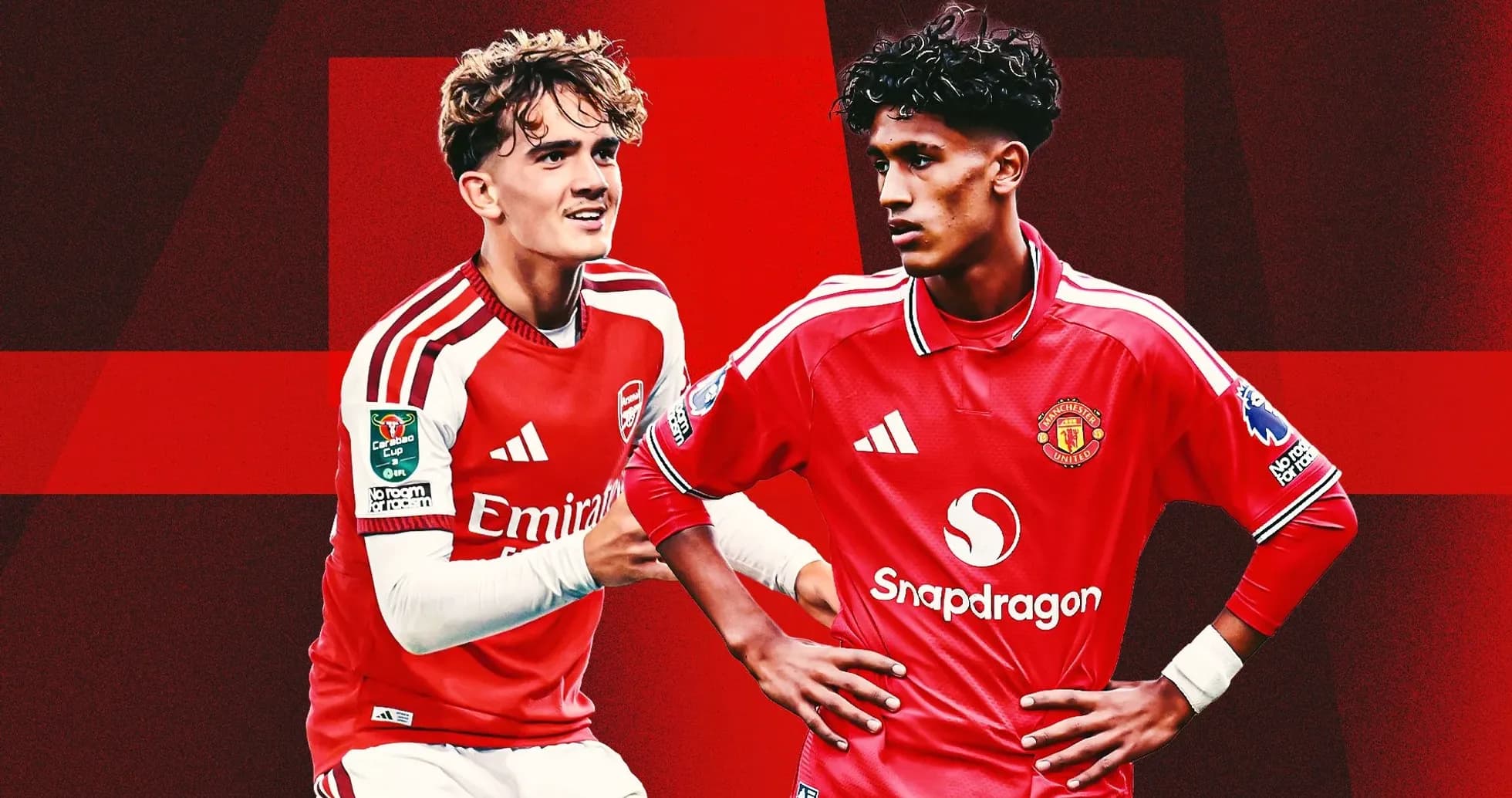
Manchester United's Battle for Teenage Prodigy Gabriel
Manchester United are locked in a battle they cannot afford to lose – and it is not for a Champions League place or a marquee summer signing. It is for a 15-year-old boy who has yet to kick a ball for the senior side.
Gabriel has Europe’s giants circling. Real Madrid, Barcelona, Paris Saint-Germain and Bayern Munich have all made their move. United, though, are refusing to blink.
A prodigy on the brink
Inside Old Trafford, the message is clear: Gabriel is not for sale. Senior figures are working overtime to change the teenager’s mind as the threat of a free departure looms ever larger.
He is under contract until next summer, but not as a full-time scholar. When he turns 16 on October 16, the rules change. If he holds a European passport, he can walk away. For nothing.
United are now digging into his background. His father, Joe O’Cearuill, is a former professional who represented Ireland. His mother is of Greek Cypriot descent. Under post-Brexit regulations, that heritage could allow Gabriel to move to any club within the European Union before turning 18 as a dual national.
That possibility has set alarm bells ringing at Carrington.
INEOS chairman Sir Jim Ratcliffe has already felt the heat from supporters over a string of unpopular calls since taking charge of football operations. Letting a once-in-a-generation academy talent slip through his fingers would not just be criticised. It would be hunted down and replayed for years.
The first cracks
United thought they had won this war once already. They fended off Manchester City last year, keeping Gabriel out of their rivals’ grasp. This time, the fight feels different. Colder. More distant.
The signs are ominous. Gabriel was due to join first-team training on Saturday. He did not turn up. He has not been seen at Carrington this week.
Michael Carrick had planned to include him in the squad for Wednesday night’s Carabao Cup third-round tie against Brighton at Old Trafford. Had he stepped onto the pitch, Gabriel would have become the youngest player in United’s history. That dream has been shelved. His involvement has been ruled out.
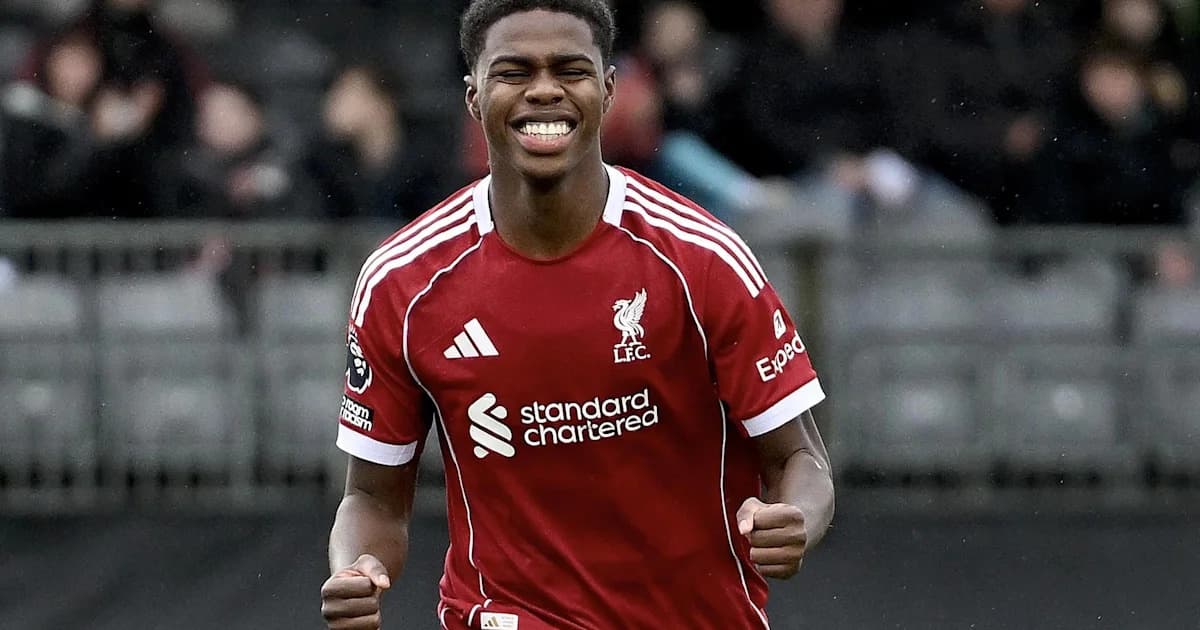
For a club whose academy has not produced a genuine global superstar since Marcus Rashford, Gabriel had become a symbol as much as a player. He arrived at 11 and quickly turned heads: a two-footed forward, electric over short distances, able to wriggle out of impossible spaces and punish any glimpse of goal.
The comparisons came early. Too early. The Messi talk was always nonsense, but the stylistic nods to Neymar are harder to ignore – the low centre of gravity, the dancing feet, the swagger in tight areas. He even wears the same model of Nike boots as the Brazilian, having signed a lucrative extension with the brand in March 2025.
Numbers that demand attention
The hype is not built on YouTube clips. It is built on numbers.
At 14, Gabriel broke into United’s Under-18s – another record. He scored 20 goals in 21 league games. That haul earned him the inaugural Premier League U18s Player of the Year award and United’s Jimmy Murphy Young Player of the Year, making him the youngest winner of that historic prize.
In August, he stepped up to the U21s. On debut against Ipswich, he ran the show: two assists and a deft chip in a 5-0 rout. A week later, he scored again in a 4-1 demolition of Leicester City.
Everything about his rise screams fast-track. No wonder there is a clamour for Carrick to throw him in, particularly with United crying out for inspiration in the final third and watching Max Dowman rewrite records at Arsenal.
The Dowman effect
The modern benchmark for teenage breakthroughs in England is Ethan Nwaneri. At 15 years and 181 days, he became the youngest Premier League player when he appeared for Arsenal against Brentford in September 2022. His path has not been linear – loans to Marseille and Borussia Dortmund, dips and surges – but he already has more than 50 senior appearances at 19.
Arsenal have doubled down on the “if you’re good enough, you’re old enough” mantra with Dowman. He became the Premier League’s second-youngest player when Mikel Arteta sent him on against Leeds in August 2025. By March, he had broken James Vaughan’s record as the league’s youngest goal-scorer, netting a brilliant solo effort against Everton at 16 years and 139 days.
He did not stop there. In May, he became the youngest title-winner in Premier League history. This week, he matched Wayne Rooney in another column, becoming only the second 16-year-old to score a brace for a Premier League club in a major competition, driving Arsenal to a 4-2 Carabao Cup win over Ipswich.
Fourteen senior appearances already, a blend of flair and physical power that Arteta cannot ignore. The Arsenal manager has even mentioned Dowman in the same breath as Messi – a dangerous comparison, but one that shows the scale of the belief.
Arteta, though, is picking his moments. “We have to look after him. He's 16 years old. You don't see that in this league,” he warned after the Ipswich tie, stressing the intensity of English football and the need to control when and how Dowman is exposed.
Why United cannot copy Arsenal’s script
This is where Gabriel’s story diverges.
He does not have Dowman’s frame. He is slight, often the smallest player on the pitch. His bravery and willingness to compete help close that gap, but they do not erase it. Throwing him into Premier League combat too early could be disastrous – for his body, and for his development.
Imagine the best-case scenario. Gabriel explodes on debut. Suddenly, the pressure on Carrick becomes suffocating. Play him every week. Build the team around him. Protecting him then becomes almost impossible.
Arteta can drip-feed Dowman minutes because Arsenal’s squad is deep and dominant. They can win while resting him. They can rotate without weakening themselves.
United are not in that position. Their form swings wildly. Their depth is thinner. If Carrick eased Gabriel out after a brief taste of the spotlight, he would be accused of stifling a generational talent. If Gabriel struggled, the narrative would flip: overrated, overhyped, another academy myth.
For now, Carrick has resisted the temptation. That restraint has impressed former United defender and academy graduate Danny Simpson, who came through at the tail end of the Sir Alex Ferguson era.
Speaking to GOAL via Free Bets, Simpson drew a sharp contrast with Arsenal. Dowman, he pointed out, is stepping into a side “flying in confidence, full of top, top talent, winning games,” where even the so-called second XI “could win the Premier League.” That safety net simply does not exist at United.
Simpson’s view is blunt: Carrick will know when the time is right. He referenced Shea Lacey as an example of careful integration and urged patience. Let Gabriel train with the group. Let him feel the environment. His moment will come.
The lure of Europe’s glamour
Patience, though, is in short supply among modern prodigies. Gabriel only has to glance across at Barcelona and Lamine Yamal to feel the pull of something faster, brighter, more glamorous.
Yamal made his senior debut in 2023 at 15 years, nine months and 16 days. He was skinny, too. Vulnerable to contact. Yet his acceleration and intelligence allowed him to evade the worst of the punishment.
La Liga suits that profile. The rhythm is slower, the emphasis on control and structure rather than relentless transitions. Technical artists can breathe. In the Premier League, where time on the ball is a luxury and the physical demand is relentless, Yamal’s rise might have been more complicated.
Gabriel might look at that and see a shortcut. Barca or Real Madrid, in his mind, could be the express lane to superstardom.
The reality is more nuanced. When Yamal broke through, Barcelona were on their way to the La Liga title under Xavi but reeling from a Champions League group-stage exit. The forward line was in flux. Raphinha, Ousmane Dembele and Ferran Torres were not the forces they are today. There was space for disruption.
That landscape has shifted. Barca now boast Yamal, a peak Raphinha, Anthony Gordon, Karim Adeyemi and Gabriel Jesus in attack. At Real Madrid, Jose Mourinho has Kylian Mbappe, Vinicius Junior, Jude Bellingham and Yan Diomande. Walking into either dressing room does not guarantee anything except a steeper climb.
Wherever Gabriel goes, he will have to wait. The difference is simple: the route to a regular starting role is clearer at United than at any of the clubs courting him.
Entitlement, identity and a line in the sand
United, though, cannot allow a teenager who is still 18 months away from sitting his GCSEs to dictate terms. However gifted he is.
The club has invested in him. Carrick and the academy staff have managed his progress carefully. If he chooses to stay, they will continue to do so. If he insists on forcing the issue, there is little value in dragging out a saga that overshadows a season already under scrutiny.
The suspicion inside the club is that Gabriel is being emboldened by a sense of entitlement – whether self-generated or fuelled by those around him. The danger is obvious: a young player believing the world owes him acceleration, not opportunity.
United’s history screams the opposite. George Best, Sir Bobby Charlton, Ryan Giggs, David Beckham, Paul Scholes, Gary Neville – none of them were handed anything. They fought for it. They met the highest standards on and off the pitch, every day, for years.
Former manager Ruben Amorim, whose spell at Old Trafford ended in January, understood that much, even if he misjudged plenty else. “There is a feeling of entitlement we have in our club,” he said before his dismissal. Difficult moments, he argued, can be good for young players. They do not always need praise. They need to stay, fight, overcome.
His tenure is gone. His warning is not.
Right now, with his stance and his absence from training, Gabriel is not behaving like a player ready to carry the weight of United’s shirt. Talent alone is not enough. It never has been at this club.
The hard truth for United is brutal but simple: no one is bigger than the badge. If Gabriel cannot accept that, if he chooses the fast track and the personal brand over the grind and the graft, then the club may be better off letting him walk – and finding the next boy willing to grow into the shirt rather than use it as a launchpad.