
Manchester United's Crisis: Carrick's Captaincy Dilemma
The rain has barely stopped falling on that wretched night in Lombardy, yet Old Trafford already feels like the stage for a reckoning.
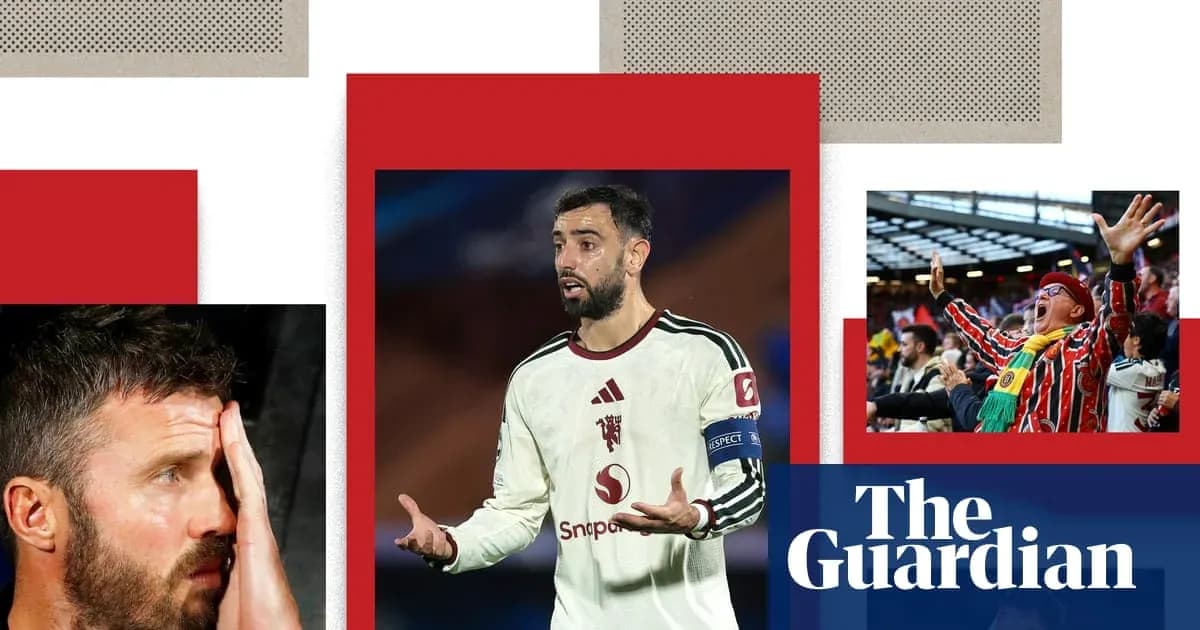
Bournemouth arrive for Sunday’s 2pm kick-off, but the real drama may unfold before a ball is kicked. All eyes are on Michael Carrick and one decision that would define his authority: does he strip Bruno Fernandes of the captaincy, and perhaps even drop him?
On Friday, Carrick pointedly refused to rule it out. That alone tells its own story.
Captaincy, control – and the £65m question
Fernandes is not just the captain. He is the face of this Manchester United side, the five-time player of the year, the man who once dragged the team forward almost by force of will. Now he stands at the centre of a storm of his own making.
His comments after Wednesday’s 4-1 humiliation at Como still reverberate. “It’s a decision from the staff to not press man-to-man and sometimes leave space behind and try to get the ball, wait for them, but sometimes when you give space to these teams they get confidence,” he said. In one breath, he questioned the tactical approach and, by extension, the head coach’s authority.
Lisandro Martínez, another senior figure and described internally as a fellow mutineer, sits alongside him in the dock of public opinion. Both are out of contract in the summer, with the club holding an extra year’s option. The mood around them suggests they intend to leave.
That raises a brutal, practical calculation. Cash in now, or cling to fading symbols of a project that has stalled. Around £40m for Fernandes and £25m for Martínez in January has been floated as realistic business. Money that could fund a reset rather than prolong a slow decay.
If Carrick acts decisively – strips the armband, reshapes the hierarchy, even sanctions exits – he risks short-term turbulence but sends a message that this is his dressing room. If he ducks it, the sense of a lame-duck head coach hardens. And if he does show steel, even a future successor inherits a cleaner slate.
A bond fraying at the edges
Seven hundred United supporters trudged through the incessant Lombardy rain to watch their team fold to Cesc Fàbregas’s Como. They saw a horror show: no control, no fight, no recognisable identity. They will still be there on Sunday, filling Old Trafford with hope they barely dare admit to.
Carrick often speaks of the fans as the club’s lifeblood. The question is whether all of his players feel that in their bones.
Performances like Como suggest a disconnect. Not just between players and tactics, but between players and people. A manager can talk about values; he now has to inscribe them. A clear creed, hammered home in the dressing room: the supporters are not a backdrop, they are the point. United’s worst days in the modern era have come when that bond snaps. Its restoration starts with honesty and effort, not slogans.
Where has the joy gone?
For decades, United’s identity was non-negotiable. Sir Matt Busby’s holy trinity of Best, Law and Charlton. Sir Alex Ferguson’s flying wingers and the relentless “attack, attack, attack” roar from the Stretford End. Football with risk, with swagger, with joy.
Right now, none of that is visible.
Carrick admitted on Friday that something fundamental has been “lost”. He knows what it looks like when it works, because he has already delivered it. On 17 January 2026, in his first game of this second tenure, he sent out a side that tore into Manchester City from the opening whistle. They suffocated Pep Guardiola’s team, denied them air, and ran out 2-0 winners. Old Trafford went home buzzing, not just at the result but at the intent.
That was the template last season: a team that played with bounce and belief, finishing third and feeling like a rising force. This campaign, the smile has drained away. A fog of doom has settled over the club, the same mood Carrick initially blew away after the bleak final days under Ruben Amorim.
The cavalry charge has become a laboured trudge. The answer is not nostalgia, but a return to that cavalier edge: front-foot, aggressive, risky football that fits the badge rather than suffocates under it.
A possession plan without the pieces
Part of United’s struggle comes from Carrick’s attempt to evolve. He wants a more possession-based side, one that controls games rather than lives in chaos. On paper, it makes sense. On grass, the pieces don’t fit.
Youri Tielemans was recruited as a key figure in that shift, a technician to dictate from the middle. The problem is his legs. He cannot cover the ground required in a central two, so he has been pushed higher into the No 10 role. That robs United of a true controller deeper and leaves Tielemans somewhere between conductor and passenger.
Kobbie Mainoo, who does have the engine and the intelligence to run a midfield, is injured. Without him, the structure wobbles. And then there is Fernandes. His relentless running, once hailed as selfless industry, now often drags him out of position, leaving gaps where a passing option should be. The very player tasked with linking play instead vacates the spaces others need.
The result is a team caught between identities: not secure enough to dominate the ball, not wild enough to thrive in chaos.
Time for kids, not comfort zones
The spine of this squad is familiar, and that is part of the problem. Fernandes, Luke Shaw, Harry Maguire, Diogo Dalot, Marcus Rashford, Amad Diallo, Martínez – long-serving, senior, and right now, underperforming.
The atmosphere feels stale. The solution might be brutal simplicity: play the kids.
The old “just throw in the youngsters” line can sound lazy, but at United it has always carried a certain truth. Youth brings energy, fearlessness, and a refusal to accept that this, right now, is as good as it gets.
Shea Lacey, a sharp, direct wide player. Harry Amass, a promising left-back. The Fletcher twins, Jack – a clever No 10 – and Tyler, a defensive midfielder. All are 19. Between them they have 22 senior appearances. On form, none could realistically do worse than some of the names ahead of them.
Give them minutes, real minutes, not token cameos. Let them run, make mistakes, chase lost causes. At the very least, they jolt the dressing room out of its comfort zone. At best, they become the foundation of the next United side, not a footnote to the current one.
An attack that has forgotten how to threaten
The numbers are damning. In seven of their 11 games this season, United have scored either once or not at all. Ten goals in seven league matches. Five in three Champions League outings, four of those against Sabah, a side they were expected to brush aside.
Strip away the context and it still looks bad. Add in the details and it is worse. At Como, once again, there was no discernible pattern of play, no sustained control, and precious few chances. For a club of United’s size, that is not a blip. It is a structural failure.
Carry on like this and the table will not lie. Talk of a relegation fight no longer sounds hysterical when the goals dry up and the performances sag.
The irony is that Carrick has forwards who thrive in a more instinctive, high-tempo game. Matheus Cunha wants chaos, space to drive, combinations to spark off. Bryan Mbeumo lives off quick transitions and sharp movements, not sterile horseshoe passing in front of a packed defence. Others in the squad fit that mould too.
Let them off the leash. Loosen the script. Marry an attacking outlook with an off-the-cuff edge, the kind that unsettled City, Arsenal, Chelsea and Liverpool last season. Those scalps were not accidents. They were the product of a United side that believed it could hurt anyone, anywhere.
The question now is whether Carrick is prepared to tear up what is not working and lean again into what once did. Because Old Trafford will not wait forever for this team to remember who it is supposed to be.





