Manchester United’s Gabriel: A Dilemma of Talent and Timing
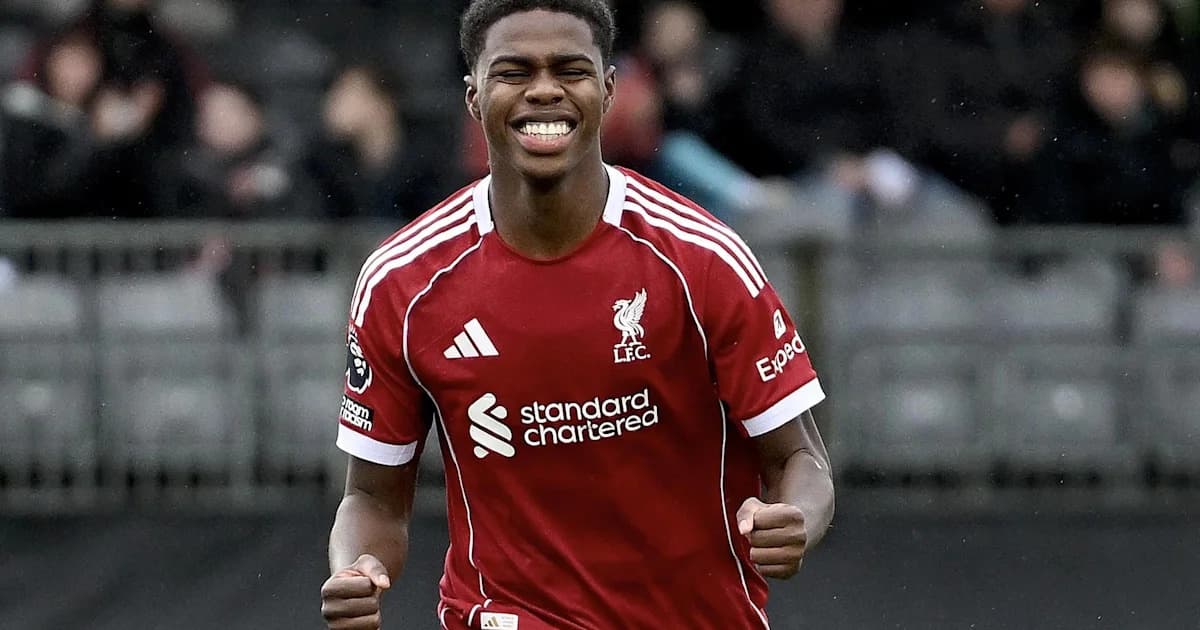
Manchester United are fighting to keep hold of a boy who has not yet turned 16 but already has Europe’s elite at his feet.
Real Madrid, Barcelona, Paris Saint-Germain and Bayern Munich all want Gabriel. United, for now, are refusing to even entertain the idea. Senior figures are working overtime behind the scenes, trying to convince the teenager that his future still lies in Manchester.
For Sir Jim Ratcliffe, the stakes are brutal. The INEOS chairman has already felt the heat from supporters for a string of unpopular football decisions. Losing a homegrown, once-in-a-generation prospect on his watch would be a public relations disaster. It would also be a sporting one.
Gabriel is under contract until next summer, but there is a catch. He is not a full-time scholar and not tied into the club’s long-term model. Under the current rules, he can walk away when he turns 16 on October 16, provided he holds a European passport.
United are scrambling to understand exactly how vulnerable they are. Gabriel’s father, Joe O’Cearuill, played twice for Ireland. His mother is of Greek Cypriot heritage. That mix potentially hands Gabriel dual-nationality options that change everything. Under post‑Brexit regulations, a dual national can leave England for a club in the European Union before turning 18.
The door is open. The giants are waiting.
A prodigy who has stopped turning up
United already won one battle for Gabriel. They kept him away from Manchester City last year. This one feels different. This one feels like they might already be chasing a shadow.
He was due to train with the first team on Saturday. He did not show. He has not been seen at Carrington all week.
Michael Carrick had planned to include him in the squad for Wednesday night’s Carabao Cup third-round tie against Brighton at Old Trafford. Had he stepped onto the pitch, Gabriel would have become the youngest player ever to appear for United’s senior side. That dream is off the table. His involvement has been ruled out.
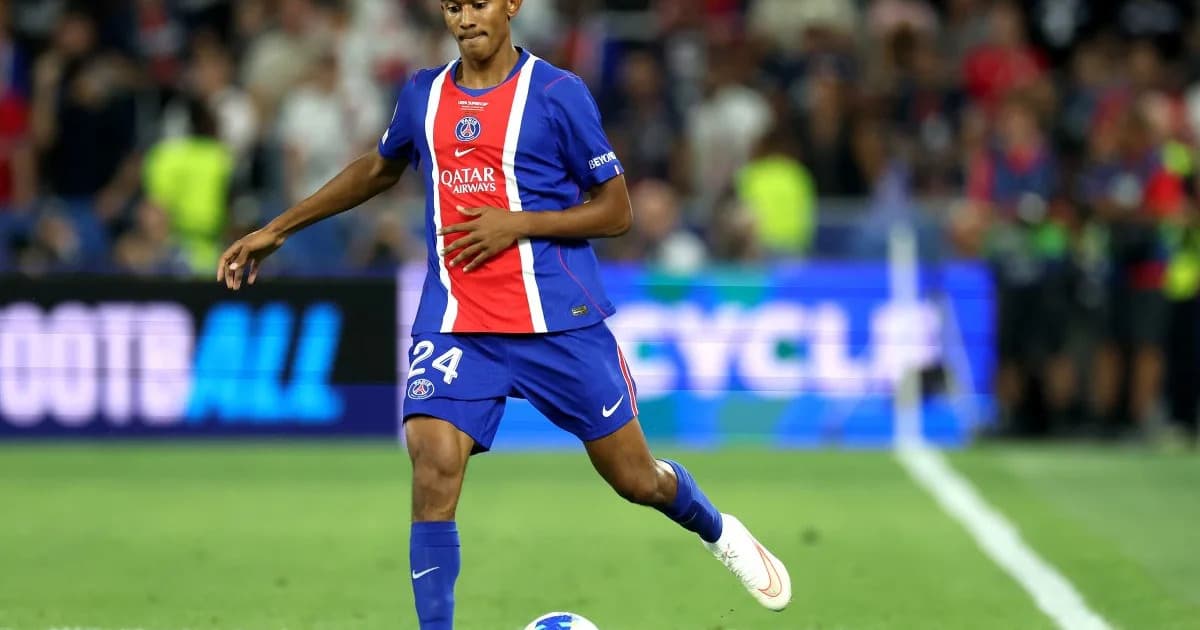
For a club whose academy has not produced a genuine global superstar since Marcus Rashford, Gabriel has been the bright light in a murky period. He joined United at 11 and has looked a level above almost every step of the way. Two-footed, slippery in tight spaces, with the balance and agility to dance through traffic and the composure to finish when it matters.
The Messi comparisons do him no favours. The Neymar ones, stylistically, are easier to understand. He even wears the same model of Nike boots as the Brazilian, after signing a lucrative extension with the brand in March 2025.
The numbers back up the hype. At 14, he broke into United’s Under-18s, another record, and promptly scored 20 goals in 21 league games. He took home the first ever Premier League U18s Player of the Year award and became the youngest recipient of United’s Jimmy Murphy Young Player of the Year prize.
In August, he stepped up again. U21 debut against Ipswich, two assists and a delicate chip in a 5-0 rout. A week later, on the scoresheet again in a 4-1 win over Leicester City.
This is not a normal 15-year-old. On the football pitch, at least, he is miles ahead of schedule.
The Dowman effect – and the danger of shortcuts
So why the hesitation? Why the stand-off?
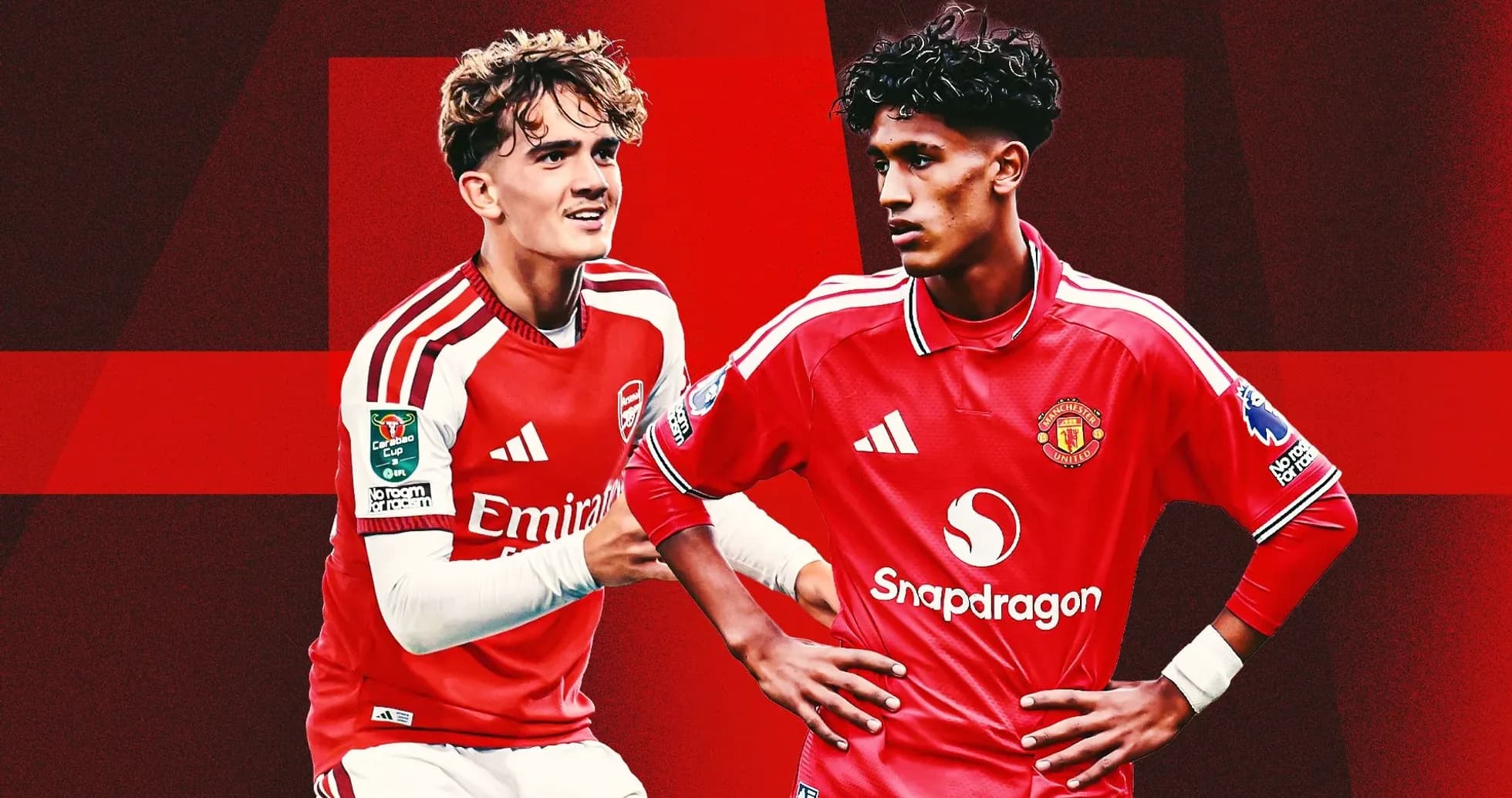
Look at Max Dowman and the answer starts to take shape.
Arsenal have turned “if you’re good enough, you’re old enough” into a manifesto. Ethan Nwaneri broke the Premier League appearance record at 15 years and 181 days back in 2022. His path has been uneven since, with loans to Marseille and Borussia Dortmund, but he already has over 50 senior games under his belt at 19.
Dowman has gone even further, even faster. Thrown on by Mikel Arteta against Leeds in August 2025, he became the Premier League’s second-youngest player. By March, he had broken James Vaughan’s record as the league’s youngest goal-scorer, with a brilliant solo strike against Everton at 16 years and 139 days.
In May, he became the youngest title-winner in Premier League history. This week, he joined Wayne Rooney in a tiny club: only the second 16-year-old to score a brace for a Premier League side in a major competition, helping Arsenal past Ipswich 4-2 in the Carabao Cup.
Fourteen senior appearances already, and every one of them under a spotlight. Dowman has the flair, the frame and the fearlessness to handle it. Arteta has compared him to Messi in terms of potential, then immediately wrapped him in cotton wool, choosing his moments carefully.
“We have to look after him. He’s 16 years old. You don’t see that in this league,” Arteta said after the Ipswich game, stressing the unique physical and mental demands of English football and the need to control the context around a teenager’s exposure.
That is the key difference. Dowman looks physically ready. Gabriel does not.
United’s prodigy is slight, often the smallest player on the pitch. His bravery and toughness bridge some of the gap, but only to a point. Throwing him into the Premier League too early could do real damage, especially if he explodes straight away.
Imagine he comes in, lights up Old Trafford, and becomes the new obsession. The pressure to play him every week would be enormous. Carrick would have to run a 16-year-old body through a grown man’s schedule, in a team that is not yet stable.
Arteta can rotate Dowman in and out because Arsenal are strong everywhere. He can win games without him. He can hide him when needed. United cannot say the same. Their performances lurch from promising to fragile. Every selection is politicised. Every omission is a talking point.
If Gabriel plays and then disappears, Carrick gets accused of caution and conservatism. If he plays and struggles, the teenager gets branded overrated. Either way, the noise drowns out the nuance.
Inside the academy perspective
Danny Simpson understands that noise better than most. The former United defender, who came through the academy in the final years of Sir Alex Ferguson’s reign, has watched this unfold with a mixture of excitement and concern.
Speaking to GOAL courtesy of Free Bets, Simpson drew a sharp contrast between Dowman’s situation and Gabriel’s.
He recalled coming into a United side that was already cruising, often 2-0 or 3-0 up, surrounded by a “second XI” that was still good enough to win the Premier League. It was the perfect environment for a kid to dip a toe into senior football. Low risk, high support.
That is Dowman’s world now. Arsenal are “flying in confidence”, loaded with “top, top talent”, with even their backups capable of controlling games. It is far easier to make an impact from the bench when the team is purring.
United, Simpson pointed out, are in a very different place. The margin for error is tiny. The scrutiny is suffocating.
He also pointed to the recent handling of Shea Lacey as a model. Lacey has been allowed to train with the first team, to feel the rhythm of senior football, without being thrust into the spotlight before his body and game are fully formed.
Simpson’s message was simple: Carrick will know when the time is right. Let Gabriel train. Let him grow. His moment will come.
The pull of Barcelona, Madrid and the Yamal example
Patience is easy to preach and hard to live by when you are 15 and watching your peers conquer Europe.
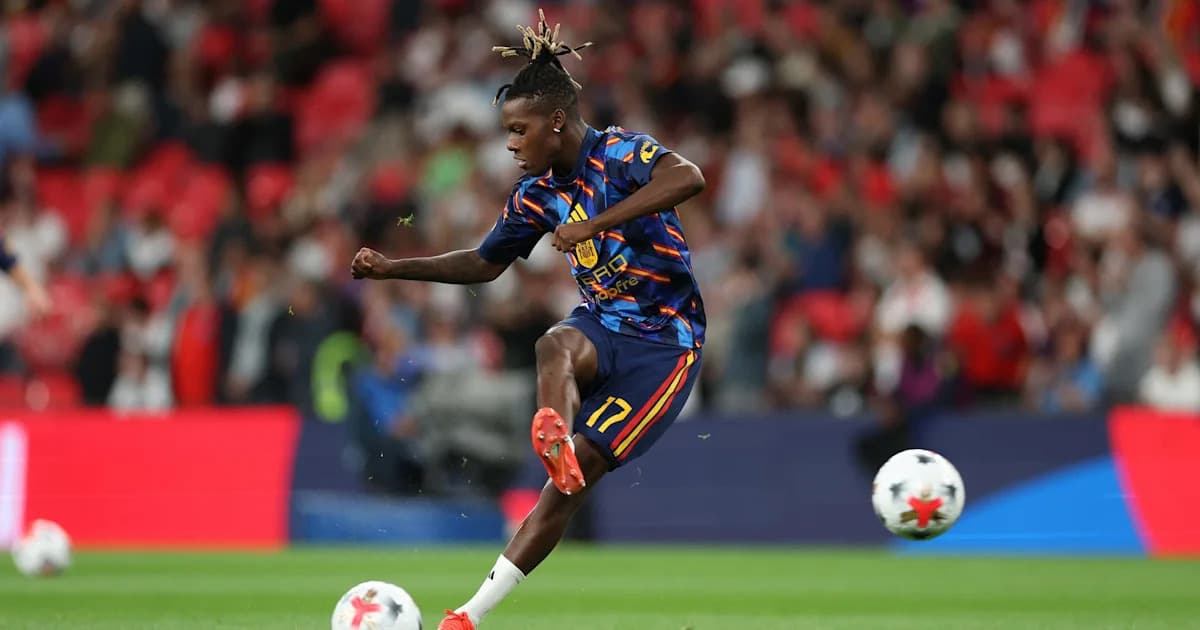
Lamine Yamal is the poster boy for the accelerated route. He made his Barcelona debut in 2023 at 15 years, nine months and 16 days old. Slight, skinny, a target for heavy challenges, he survived and then thrived through speed of thought and sharpness of movement.
La Liga’s rhythm helped. The game there is less about relentless transitions and more about control, structure and possession. It gives gifted technicians a little more space, a little more time to breathe. Drop Yamal into the Premier League at the same age and his rise might not have been so rapid.
Gabriel will be looking at that and wondering why he should wait. Why not Barcelona? Why not Real Madrid? Why not the fast track?
On the surface, it makes sense. Underneath, it is more complicated.
When Yamal broke through, Barcelona were heading for the La Liga title under Xavi but licking their wounds after a Champions League group-stage exit. Raphinha, Ousmane Dembele and Ferran Torres were still inconsistent. There was room for disruption. A vacancy in the hierarchy.
That landscape has shifted. Barca now have Yamal established, a peak Raphinha, and attacking options like Anthony Gordon, Karim Adeyemi and Gabriel Jesus. At Madrid, Jose Mourinho can already call on Kylian Mbappe, Vinicius Junior, Jude Bellingham and Yan Diomande.
Where does a 16-year-old Gabriel fit into that? On paper, he would still be waiting for opportunities, just in a different language and a different climate.
United, by contrast, offer something rarer: a realistic pathway to becoming the face of a new era. The route is not smooth, but it is there.
If he insists on having everything now, he risks ending up with less later.
United’s line in the sand
This is where the club must hold its nerve.
United cannot allow themselves to be held to ransom by a boy who is still 18 months away from sitting his GCSEs, no matter how gifted. The badge has to mean more than any individual. That has always been the standard at Old Trafford.
Carrick and the academy staff have handled Gabriel sensibly so far. They have challenged him, promoted him aggressively through the age groups, and mapped out a route into the senior setup. If he stays, that plan continues. If he walks, they will not beg.
The club has lived this story before, in different forms. George Best, Sir Bobby Charlton, Ryan Giggs, David Beckham, Paul Scholes, Gary Neville – none of them had their careers handed to them. They fought for every step. They endured setbacks, criticism, and competition. The culture demanded it.
Ruben Amorim, during his short and troubled spell in charge, touched on something similar before his January sacking. He spoke of a “feeling of entitlement” creeping into the club, of a generation that expects accolades without the hardship that used to define United’s rise.
“Sometimes, difficult moments is not a bad thing for the kids,” he said. “We don’t always need accolades in everything. We are not helping. Nowadays, they speak and go against the club because they feel entitled. Let’s stay. Let’s fight. Let’s overcome. That is the way we can solve things.”
Amorim failed in many areas, but he was right about that.
Right now, Gabriel does not look like a teenager ready to embrace that fight. He looks like one tempted by shortcuts and seduced by status. In that mindset, he will not change United’s fortunes, no matter how talented he is.
The most important lesson for any youngster at Old Trafford has never changed: no one is bigger than the club.
If that truth does not land with Gabriel, United may be better off letting him chase his brand elsewhere and trusting that the next great talent will choose to build his legacy where so many legends did – by staying, fighting, and earning the right to wear the shirt.