Manchester United's Left-Back Gamble: A Season of Risks
When the clock nudged past 23:00 BST on 1 September and the window slammed shut, one question echoed around Manchester United’s support: how have they gone into another season with one senior left-back?
All summer, as arguments raged over Michael Carrick’s priorities and the shape of his evolving squad, the assumption felt almost universal. United would surely bring in cover – and competition – for Luke Shaw.
They didn’t. Not in the end.
A gamble in plain sight
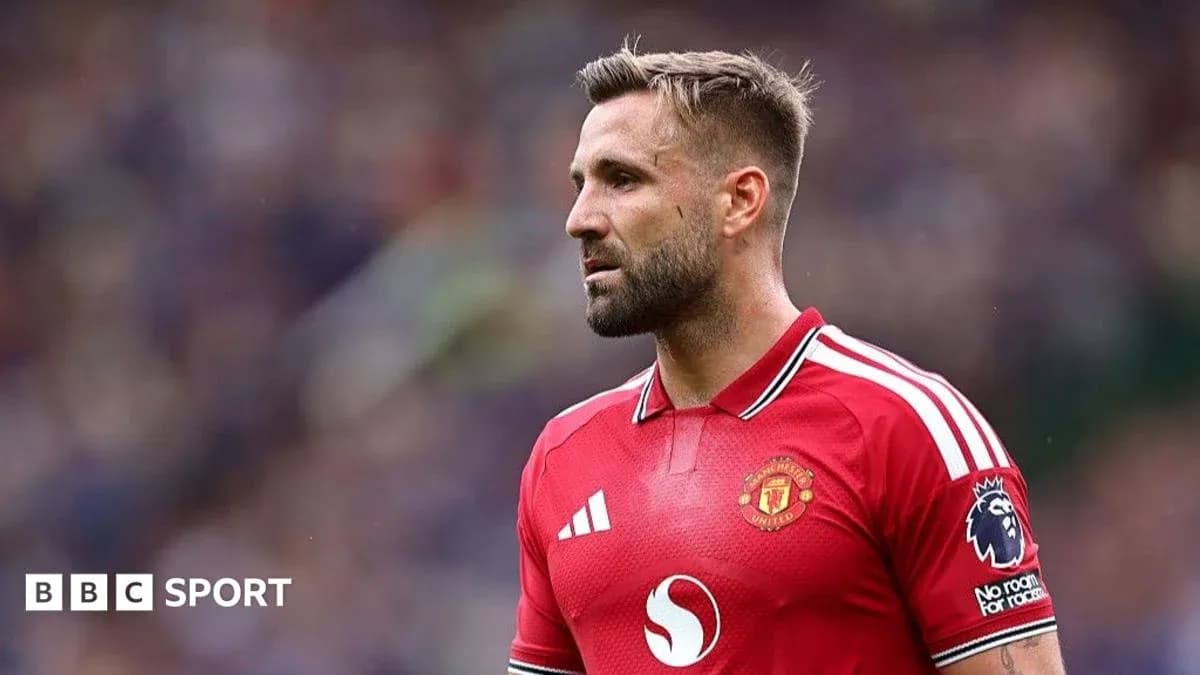
On paper, the logic is easy enough to follow. Shaw started all 38 Premier League games last season, a remarkable feat given his injury history. He was excellent, consistent, a cornerstone of Carrick’s defensive structure.
But he is 31. United’s season could run beyond 60 matches. Tyrell Malacia, the only other orthodox left-back, was allowed to leave when his contract expired in June. The gap in the squad was obvious. So was the risk.
Targets were lined up. The recruitment department did not sleepwalk into this. Lewis Hall at Newcastle. Alejandro Balde at Barcelona. Jorge Salinas at Racing Santander. Each name ticked boxes in different ways, each came with its own complications.
The chase eventually narrowed to Rayan Ait-Nouri, the idea being to tempt him across the city on loan. Manchester City shut that down. For the deal to move, United would have had to commit to an obligation to buy at a later date. They chose not to.
Instead, they chose to wait.
So, until January at least, this is the bet: United will live or die with Shaw as first choice, and a patchwork of solutions behind him. It is calculated. It is also undeniably a gamble.
The Hall decision
Inside the club, there is no ambiguity about Lewis Hall. They rate him highly. If Newcastle had opened the door even a fraction, United would have walked through it.
The problem was the price.
Newcastle, stripped of key players by Premier League rivals over the summer, were never going to let a 22-year-old they value so highly leave on the cheap. As talks unfolded, the numbers ballooned. Any realistic deal would have eaten a massive chunk of United’s budget.
And that budget was not limitless.
Faced with that reality, United doubled down on what they viewed as the more pressing need: central midfield. They eventually put £70m on the table for Carlos Baleba from Brighton, a move that effectively closed the door on Hall for this year.
The conclusion was stark: Hall is worth waiting for. Next summer, not this one.
Doors that never opened
Balde was another option, but the terms were wrong. United wanted a loan. Barcelona would only entertain a permanent sale.
Salinas, with a relatively low release clause, looked like the sort of opportunistic deal United used to miss. This time, they were not the quickest. Atletico Madrid moved into pole position, and by the time United’s interest sharpened, they were chasing shadows.
Nicolas Tagliafico came into view late in the window. Experience, pedigree, a short-term fix that might have soothed some nerves. They missed out there as well. By then, the club had effectively decided to turn inward rather than scramble for a compromise signing.
The late move for Ait-Nouri betrayed a flicker of doubt. An initial approach from an agent was finally acted upon, a sign that the club knew exactly how exposed they might be. City’s refusal ended that route, and with it, any illusion that United were entirely at peace with their plan.
Shaw, Mazraoui… and the kids
So this is the structure Carrick will work with.
Shaw remains the clear first-choice left-back. Behind him, Noussair Mazraoui is viewed as the primary alternative, a role he understands from his work with Morocco. Diogo Dalot, who has switched flanks before, offers further flexibility. And then there is Harry Amass.
Amass is the curious subplot in all of this.
A natural left-back from the academy, he impressed on loan at Sheffield Wednesday last season before injury struck soon after a winter move to Norwich. This summer, he shadowed Shaw in pre-season and caught the eye. Sharp, composed, fearless. The sort of profile that usually earns minutes in a squad stretched by multiple competitions.
Yet United were, for a long time, open to letting him leave.
Two summers ago, Erik ten Hag left him out of the Community Shield squad despite a strong showing against Mo Salah in a pre-season game in the United States just a week earlier. Ten Hag felt he was not yet physically ready. Two years on, that argument should be weaker, not stronger.
Interest has never been in short supply. Clubs lined up to ask about a loan. When he was left out of the Premier League 2 game against Leicester on Monday, many inside and outside the club assumed a move was imminent.
It never came. Amass stayed. His role, though, remains undefined. He is close enough to be considered, yet not clearly trusted enough to be anointed as Shaw’s deputy. For a position crying out for clarity, it is an odd limbo.
Yoro’s emergence and the knock-on effect
The willingness to lean on Mazraoui as a left-back option stems partly from another pre-season development: Leny Yoro’s emergence on the opposite flank.
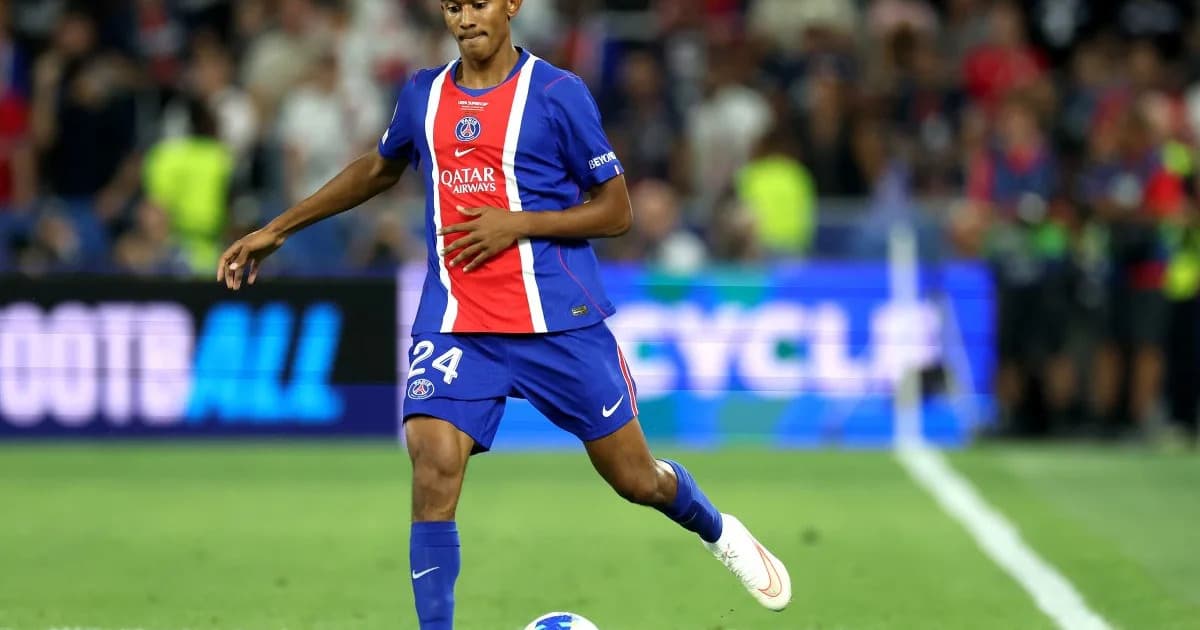
Signed from Lille in 2024 for £52m as a central defender, Yoro spent much of this summer at right-back. Carrick clearly sees tools he can shape there – pace, strength, comfort on the ball, and the bravery to step into advanced areas.
Against Ipswich on Sunday, Yoro came on at right-back for Dalot, with Mazraoui replacing Shaw at the same time. It felt like a snapshot of the coaching staff’s thinking: a back line built on versatility, rotation, and adaptability, rather than strict positional specialists.
At 20, Yoro is still learning the nuances of full-back play. The timing of overlaps. The body shape in wide one-v-ones. The angles of recovery runs. But the template is there, and United only have to glance across the city to see how a defender like Josko Gvardiol has morphed from centre-back to full-back without losing his core strengths.
That is the blueprint. That is the risk.
Scar tissue from past mistakes
The other factor shaping this window is more emotional: regret.
United have been here before, plugging gaps in the squad with players who never truly looked like United players. Alex Telles. Matteo Darmian. Sergio Reguilon. Signings that felt pragmatic at the time, but ended up as reminders of a club drifting without a clear recruitment identity.
This summer, there was a line in the sand. United took a hard stance on fees. They refused to be dragged into paying above their own valuations. They resisted the urge to grab the nearest available full-back just to soothe anxiety.
From a distance, it makes sense. From a financial and strategic perspective, it is probably the correct call.
But football is not lived at a distance.
It is lived in the heat of a tight away game when Shaw feels a hamstring and looks to the bench. It is lived in December when the fixtures stack up and Carrick has to decide whether to push his only specialist left-back through another 90 minutes, or trust a makeshift solution in a hostile stadium.
United have chosen structure over short-term comfort. Logic over panic. A long-term plan over another Telles or Reguilon.
The theory is sound. The execution will be judged in real time, under floodlights, with points on the line. By January, we will know whether this was smart restraint or a risk that dragged their season off course.