Manchester United's Managerial Dilemma: Pochettino vs Carrick
Manchester United thought they were finally being decisive. After a decade of flirting with the idea, they moved for Mauricio Pochettino, convinced that this time the choice would blend hard-earned experience with what one senior figure called “something extra”.
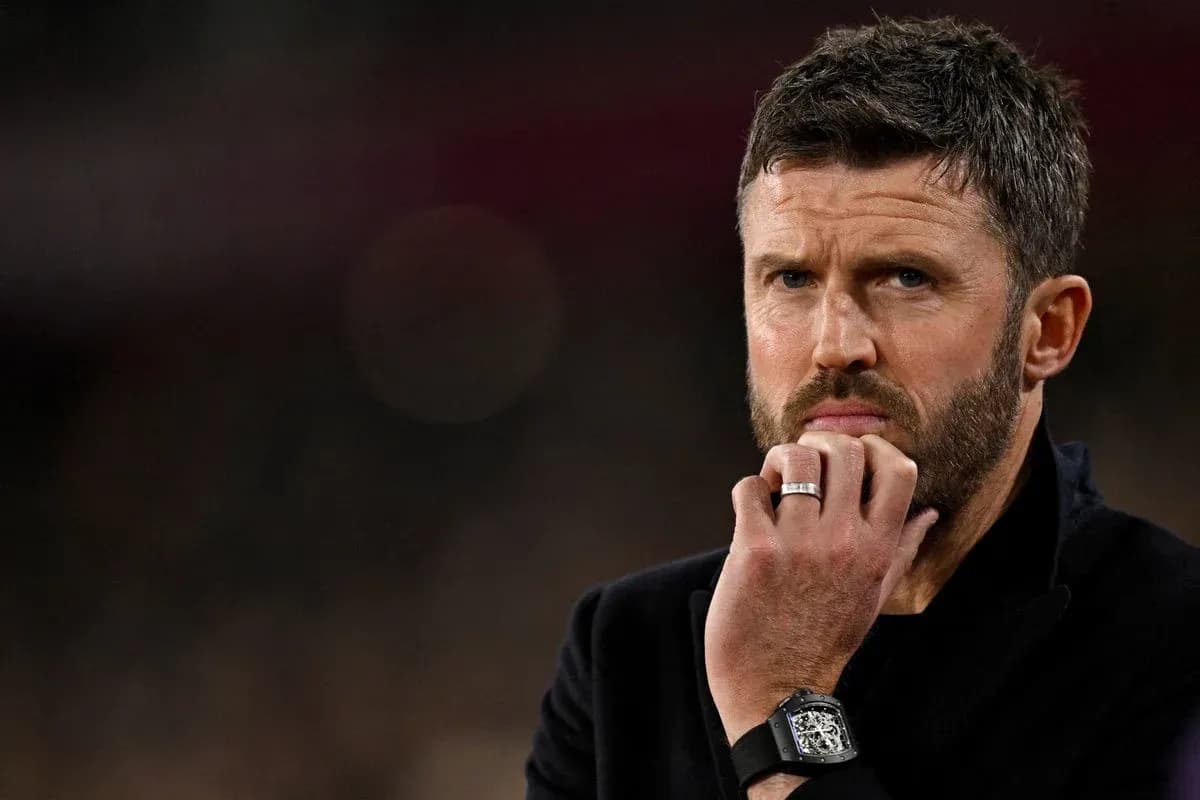
They had spent the spring wrestling with a different question: whether Michael Carrick could ever be that man.
Carrick, stability – and a ceiling
Inside Old Trafford, the logic around Carrick had been clear enough. He had steadied the club. He had delivered the Champions League return that had been demanded. He had shown tactical acumen in big games, not least with the clever decoy runs that unpicked Manchester City.
He had, in short, earned the job.
But even as that run gathered pace, doubts grew. Some in the hierarchy feared that what Carrick offered in stability, he lacked in edge. The “x factor” required not just to keep United in the top four, but to drag them back into a title race.
This, they felt, was the moment to pounce. Guardiola was leaving City. Xabi Alonso and Andoni Iraola were starting new projects at Chelsea and Liverpool. The landscape was shifting. Opportunity was there.
What they didn’t foresee was United themselves becoming part of the upheaval.
The collapse was brutal. Performances nosedived almost immediately. Executives who had convinced themselves that calm had finally been restored suddenly “didn’t know which way to turn”, as one source put it. They had banked on consolidation. Instead, they were watching a team fall apart.
In truth, some inside the club had seen it coming.
A game-plan coach in a long-haul league
Carrick’s football was always going to have to evolve. Last season’s surge had been built on bespoke, opponent-specific plans. They were clever, detailed, and occasionally devastating. But they were also hard to sustain.
You can only spring certain tricks once.
When Carrick tried to move towards a more proactive style – United on the front foot, dictating games – the cracks widened. The backline, built around some of the club’s longest-serving players, was repeatedly exposed. The defensive shape was too flat, the distances too big, the gaps too easy to find.
Rivals sensed it.
“You just didn’t fear them in any way,” said a source at one club who beat United. “You’d play them knowing you could easily get at them.”
Even within the dressing room, players could see that structural issues were being magnified by something deeper. Recruitment.
A squad built in pieces, not as a team
Carrick has never gone public with his frustration, but the anger around transfers is real. He expected backing. He didn’t get it.
United, people across the game now repeat, “just don’t have the money”. The long shadow of the Glazer era and Sir Jim Ratcliffe’s approach is starting to show in hard numbers.
Every time they went after a major target this summer, they were outpaced. The Elliott Anderson pursuit was telling. United were £30m short of City’s bid. The player had been open to the move, but such a gap sends its own message: how much are you really wanted?
Forest, knowing what City were prepared to pay, were never going to deal low.
There was even a suspicion – voiced long before City’s guilty verdict in the financial investigation – that the champions had driven Anderson’s price up deliberately, skewing the market and squeezing rivals.
The ripple effect was immediate. Morgan Rogers slipped away as well, with Chelsea instantly pointing to Anderson’s fee as a benchmark. United, boxed in, turned to more compromised options.
Which only made one deal stranger: £50m on Andrey Santos.
The result is a squad that feels lopsided, with lines of the team upgraded in isolation rather than in sync. United insist they are rebuilding “line by line”. Those on the outside are baffled.
As one experienced executive put it, others were “laughing at them”: “They did midfield one year, and did it awfully, but then you’re leaving a problem area like defence for two seasons. It’s so odd to do and also means you’re just building up sections of the pitch as opposed to the whole thing being integrated as one – in the way teams are actually built. And that’s also why you’re cycling through different managers and styles.”
The pattern is obvious: a disjointed squad, a revolving door of coaches, no coherent football identity.
Power, politics and pressure at the top
All of this has thrown a harsher spotlight on Omar Berrada and Jason Wilcox. Their leadership is being questioned. Their futures are being discussed.
The Glazers, whose presence had felt more distant at times, are said to have become more involved in recent weeks. With the club’s value dropping in real time, they could hardly sit back and watch.
That involvement changes the mood around this week’s Monaco summit, where United’s next move is being thrashed out. Berrada and Wilcox may not just be pitching a manager. They may be fighting for their own positions.
The structure makes it awkward. Appointing a new permanent manager and then replacing the chief executive or sporting director who chose him would be an admission of chaos. But then, chaos has hardly been a stranger at Old Trafford.
Ratcliffe remains a strong admirer of Wilcox, valuing his football judgement and his ability to handle a notoriously abrasive billionaire. Others in the game are less convinced.
“He’s a lovely guy but you don’t see the vision you do with other top sporting directors,” said one seasoned executive.
There are those who argue Wilcox has simply been promoted beyond his original brief. The evidence supports that. United’s most coherent recent work has often come in younger signings and academy development – areas where Wilcox is regarded as far more adept.
The summer of 2025 still earns respect. Benjamin Sesko, Bryan Mbeumo, Matheus Cunha and Senne Lammens arrived and made sense within a broader plan.
The summer of 2026 did the opposite. Andrey Santos, Youri Tielemans and an injured Carlos Baleba came in. The team’s intensity dropped. The mindset dulled. United began to look alarmingly easy to play through.
From Atletico Madrid to Como to Aston Villa, opponents cut them open with a speed that stunned people inside the club.
The Emery question – and the Pochettino answer
As Villa were slicing through teams with clarity and conviction, United’s gaze drifted towards Unai Emery. One well-placed source says his name “was always there in the background”.
It did not go unnoticed at Villa Park. The Midlands club had long been pushing Emery to commit to a new contract, aware of United’s interest and the pull of Old Trafford in crisis.
In the end, United never made the move.
Sebastian Hoeness at Stuttgart was also discussed, but his lack of experience at this level saw him quickly ruled out. Decision-makers were acutely aware of the weight of the job. United, in this state, can “break” people who are not ready.
That argument strengthened Pochettino’s case.
He has been through the furnace before. Paris Saint-Germain. Chelsea. Two superclubs, two volatile environments, two dressing rooms loaded with ego and expectation. Staff at both clubs still speak well of him. They talk of a good atmosphere, a coach who can lift a culture rather than suffocate it.
Voices from the United States, where Pochettino’s work has also been studied closely, echoed that sentiment.
But it is not warmth United need most. It is intensity.
The memory that lingers is of Pochettino’s Tottenham, around 2016, snarling and sprinting their way into title races. That was the summer he met Sir Alex Ferguson, when he was one of three serious candidates to replace Louis van Gaal. The others were Ryan Giggs and Jose Mourinho.
United went with Mourinho, convinced that the Portuguese was “a winner” who could take Van Gaal’s team and push it over the line.
That decision now looks like a lesson in the danger of labels.
What United actually need
United don’t need a “winner” in marketing terms. They don’t need a slogan about “experience” to stick on a press release. They need a coach whose ideas, temperament and energy match the mess in front of him.
Someone who can live with the scale of the club without being consumed by it. Someone who can weld a fractured squad into something resembling a team, even while the boardroom politics churn above.
For now, they have decided that man is Mauricio Pochettino.
The question, as ever at Old Trafford, is whether the structure around him will finally allow the right appointment to become the right era – or whether another manager is about to be fed into the same machine.