Manchester United's Struggles Continue After Defeat to Manchester City
For the third time in less than 10 months, Manchester United have contrived to lose to a side reduced to 10 men before half-time. Once is unfortunate. Twice is a warning. Three times, and the pattern starts to say something about who you are.
The latest instalment, a 1-0 home defeat to Manchester City, has been framed around one moment: Erling Haaland’s winner and the subsequent apology from Pro Ref for what they called “an error of judgement”. The noise around that decision has been deafening.
The questions inside Carrington will be louder.
Carrick’s reality check
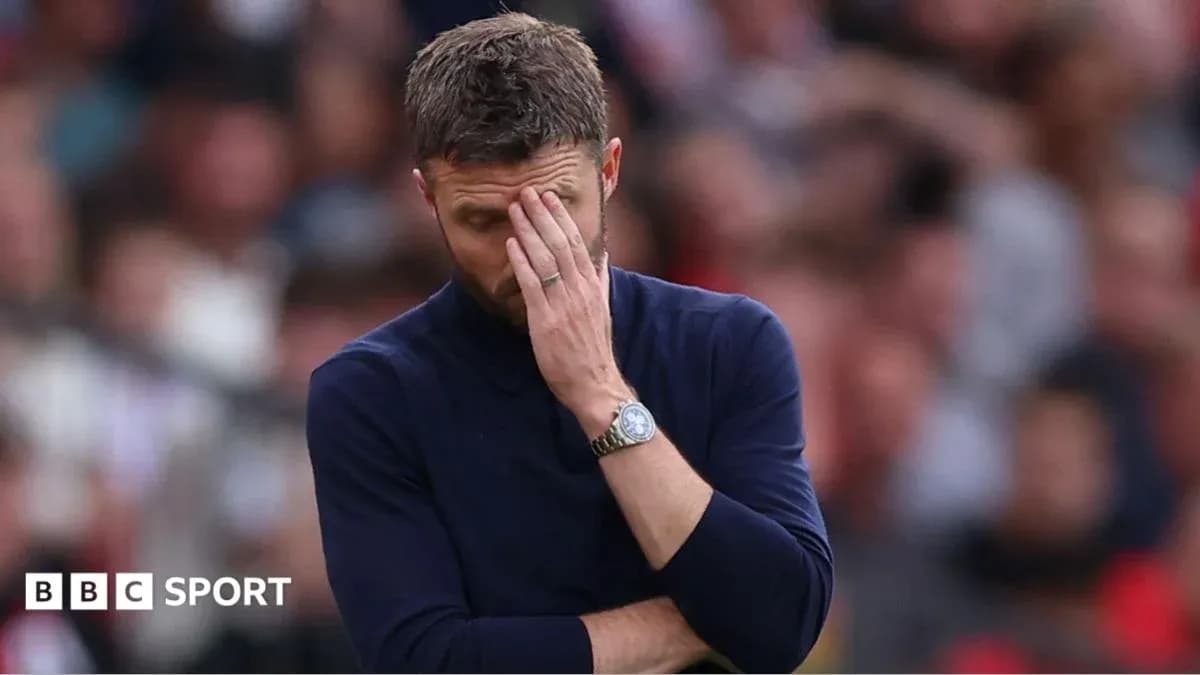
Michael Carrick pushed back last weekend at Everton when it was suggested four points from three games represented a poor start. After City, there was no room left to argue. Four points from four matches is not what Manchester United consider acceptable, whatever the mitigating factors.
“One win, at home to newly-promoted Ipswich” is the kind of line that lands heavily at a club of this size. It drags everything else into the spotlight: recruitment, team selection, in-game management, the bigger tactical idea, and Carrick himself.
“We don't need a break or a restart,” he insisted. “We've just got to move on and get winning again.”
The calendar offers no mercy. Brighton visit Old Trafford in the Carabao Cup on 16 September. Four days later, United go to Fulham. Two games that suddenly feel like a stress test of an entire project.
Carrick doesn’t just need results. He needs performances that calm the conversation before a three-week international break turns into an extended public inquest into what, exactly, is going wrong.
Ten men, one problem
New City manager Enzo Maresca did not pretend Phil Foden’s first-half red card helped his side. It made his job harder. It also, he pointed out, complicated United’s.
“They are a team that loves transitions and space in behind,” he said.
City’s response to the dismissal was ruthless in its simplicity. “With 10 players, we just dropped and waited for them, so we didn't concede any transitions and didn't concede any space in behind. That is why the game became more difficult for us and for them.”
The pressure finally told, but not in United’s favour. Once City sat in, the home side were stripped of their favourite weapon. No space to attack. No broken field to run into. No chaos to exploit.
This is not a new story. Since Jose Mourinho’s arrival more than a decade ago, United have often looked most dangerous when they can spring forward, not when they are asked to probe and patiently dismantle a set defence. Ole Gunnar Solskjaer tried to evolve that identity but never truly escaped the counter-attacking template. Erik ten Hag and Ruben Amorim arrived from leagues where their teams dominated the ball, yet both found it difficult to impose that same control at Old Trafford.
Carrick, as a player, was the embodiment of calm possession. He wanted the ball, kept it, moved it. It is not a stretch to assume he wants his United to reflect that.
Wanting it and achieving it are very different things.
A £155m midfield still on mute
United’s summer strategy revolved around reshaping the midfield. The numbers tell their own story: £155m spent, very little to show for it so far.
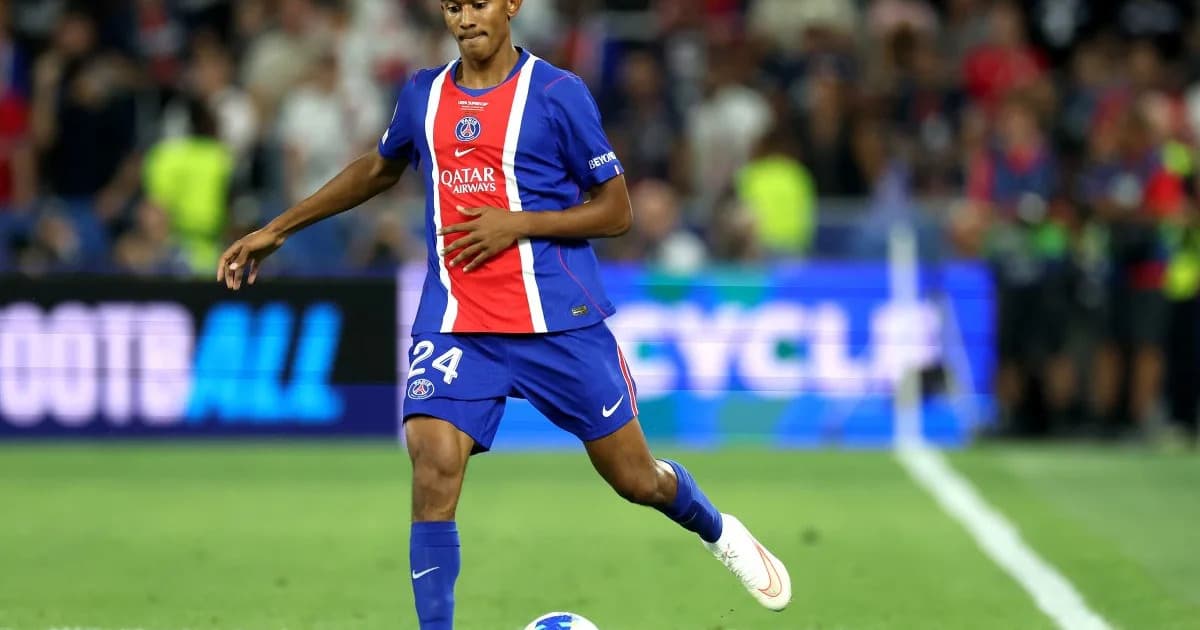
Youri Tielemans, signed to bring craft and control, has yet to find anything close to his best form. Carlos Baleba is still waiting for his debut. Andrey Santos started on opening day at Hull, then disappeared from the picture against City, dropped to the bench and unused.
The plan was clear on paper: build a platform that could both protect the defence and unlock stubborn opponents. On the pitch, it has looked disjointed, undercooked, and, at times, timid.
At the same time, the decision not to reinforce at left-back has already bitten. Luke Shaw’s run of 41 consecutive Premier League starts came to an end, and with it went the balance and reliability he brings. Most observers expected fresh cover in that area during the window. It never arrived.
Squad building is about more than headline signings. It is about depth, about what happens when first choices are unavailable, about who you trust from the bench when a game is drifting away.
Thin bench, heavy burden
The sight of Joshua Zirkzee coming on for Marcus Rashford with seven minutes left, one of only two substitutions Carrick made, said plenty. Zirkzee had been available for transfer all summer. Now he was being asked to rescue a derby in front of a restless Old Trafford.
It was less a bold tactical roll of the dice than an admission of how little real depth United possess in key areas.
That lack of options feeds into another issue: the load being carried by Bruno Fernandes.
Last season, Fernandes was extraordinary. He won both the PFA and Football Writers’ Player of the Year awards, scored nine times and set a Premier League record with 22 assists. He was United’s creative heartbeat, their emotional barometer, their constant.
This season, the numbers look decent at first glance: three goals and one assist. The goals are flowing. The assists are not. More importantly, his overall influence has dipped.
Against City, some observers felt he looked tired. Heavy-legged. That perception only sharpened scrutiny of Carrick’s decision-making in midweek, when United faced Sabah FK in the Champions League.
The Azerbaijani champions are lowly ranked, but United were returning to Europe’s elite competition after a two-year absence. Carrick understandably picked a strong side. By half-time, his team led 3-0. With City looming three days later, it seemed the perfect moment to wrap key players in cotton wool.
Carrick used all five substitutes. Fernandes stayed on for the full 90 minutes.
A reliance that cuts both ways
United hold an option to extend Fernandes’ contract to 2028. He remains central to everything they want to be. That is the problem.
When one player becomes the solution to every question, the whole structure starts to look fragile. Over-reliance doesn’t just risk physical fatigue; it blurs tactical clarity. Teammates look for him too often. Coaches feel compelled to pick him too much. Rotations become harder, not easier.
United’s season is still young. The table is not yet set. But the patterns are emerging: a team that struggles when denied space, a midfield rebuild still waiting to click, a squad that looks thin the moment you scratch beneath the surface, and a captain asked to carry too much.
Brighton and Fulham will not care about any of that. They will sense vulnerability and come to exploit it.
The question now is not whether United can respond. It is whether they can finally break the cycle that keeps dragging them back into the same old story.