Maresca on Manchester Derby: Adapt to the Schedule
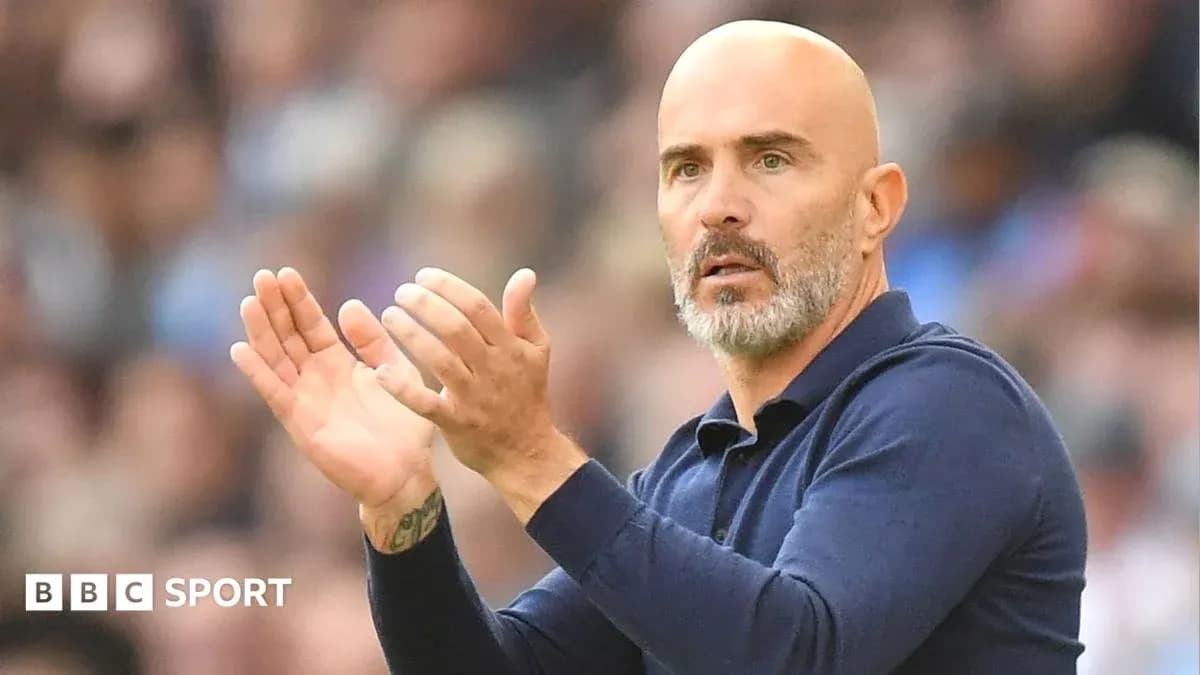
Enzo Maresca is not interested in excuses. Not his, and certainly not Manchester United’s.
As Manchester City prepare for Sunday’s derby with two extra days’ rest in the bank, the Italian brushed aside any suggestion that the fixture list has tilted the balance decisively in his favour.
“You need to adapt,” he said. Simple as that.
Derby framed by the calendar
City wrapped up a controlled 2-0 win away to Porto in the Champions League on Tuesday night. United were still at it 48 hours later, hammering Sabah 4-0 on Thursday. The gap leaves Michael Carrick’s side with less time to recover, less time on the training pitch, and less time to plan for the champions.
On paper, it looks like a clear advantage. Maresca is having none of it.
He reached back to last September, when City went to Napoli for a late Thursday kick-off before facing Arsenal days later. The Gunners had already played their Champions League tie at Athletic Club in the early Tuesday slot, banking precious rest and preparation time.
City’s then-manager Pep Guardiola even joked he was taking his players “hiking in the mountains” to get them ready for the Emirates. The scheduling quirks were a talking point then. They are again now.
“To be honest, the club mentioned to me that it happened exactly the same last year when the club played Napoli and then, after two days, played Arsenal,” Maresca told BBC Sport. “Sometimes it happens in football. I don't have any doubt that Man United are going to be ready for that. It just matters to adapt.”
No complaints. No noise. Just a reminder that the wheel turns for everyone.
Champions League expansion tightens the screw
This season, that wheel is spinning faster. The expanded Champions League format has loaded two extra group-stage fixtures into an already cramped calendar before the end of January. For English clubs, the Carabao Cup adds another layer of congestion.
City host Norwich in the third round next Thursday. United face Brighton at Old Trafford the night before. Another midweek, another game, another logistical puzzle for managers to solve.
Asked whether the scheduling eventually evens itself out across a campaign, Maresca stuck to his theme.
“I think that happens and you need to adapt,” he said. “It happened last year with us, this season with them, next season it will happen with a different team.”
The message is clear: the calendar is not a problem to be solved, it is a reality to be endured.
Pressed on how Carrick might be feeling about the short turnaround, Maresca refused to speak for his opposite number.
“That's a question for Michael. The only thing I can say is it happened and you need to adapt.”
Maresca’s first Manchester derby
Beneath the scheduling debate lies the real story of the weekend: Maresca’s first taste of the Manchester derby.
He steps into one of English football’s fiercest fixtures with City in ominous form. Three league games, three wins. A perfect start, a familiar sight for a club used to setting the early pace.
Across town, the mood is more uncertain. United have taken four points from their opening three matches, a stuttering beginning under Carrick that leaves them already glancing up at their neighbours.
“It is very important for different reasons,” Maresca said of the derby. “We know how important a derby is, especially here. It is a special game.”
He did not lean on the table, did not talk about statements or psychological blows. Instead, he returned to the internal standard that has defined City in recent years.
“The most important thing we can do is try to be ourselves and then we see the final result.”
Adapt to the schedule. Ignore the noise. Be yourselves.
For Maresca, the calendar is just background. The real test comes when the whistle goes and Manchester divides for 90 minutes.