Mark Magsayo Defeats Andres Cortes in Controversial Decision
Mark Magsayo walked out of T-Mobile Arena with his hand raised and a unanimous decision on the cards, but the numbers barely told the story of a strange, scrappy, and often ill-tempered 10-rounder against hometown favorite Andres Cortes.
All three judges scored it 97-93 for Magsayo. On another night, in another city, the debate might have raged long into the early hours. Here, it was the body language, the rhythm, and the chaos that lingered more than the mathematics.
An awkward war
From the opening bell, Cortes tried to turn this into his kind of fight. He pressed forward, set up behind a sharp jab, and went downstairs with authority. His right hand quickly became the defining punch of the early rounds, snapping Magsayo’s head back and forcing the former world champion to retreat or fall into clinches.
The first three rounds belonged largely to Cortes. He dictated the geography, walked Magsayo to the ropes, and ripped to the body. The Las Vegas native looked comfortable, confident, and in control.
Then came the first flashpoint.
Late in Round 3, Cortes clipped Magsayo with a short shot in close. Magsayo went to a knee and the referee initially ruled it a knockdown. The replay told a different tale: Magsayo didn’t look hurt, more off-balance than rocked. That theme — balance, posture, interpretation — would run through the night.
By Round 4, the confusion deepened. Cortes again landed a right, again Magsayo dropped to a knee, and again it was scored a knockdown in real time. Moments later, the commentary team clarified both supposed knockdowns had been wiped off. The official ledger was clean. The optics were not.
Cortes in control, Magsayo searching
While the paperwork changed, the pattern of the fight did not. Cortes kept marching forward, punching in combination and punishing Magsayo whenever he dipped low. The right hand over the top and inside became a constant problem. Each time Magsayo tried to change levels, Cortes met him with something hard and straight.
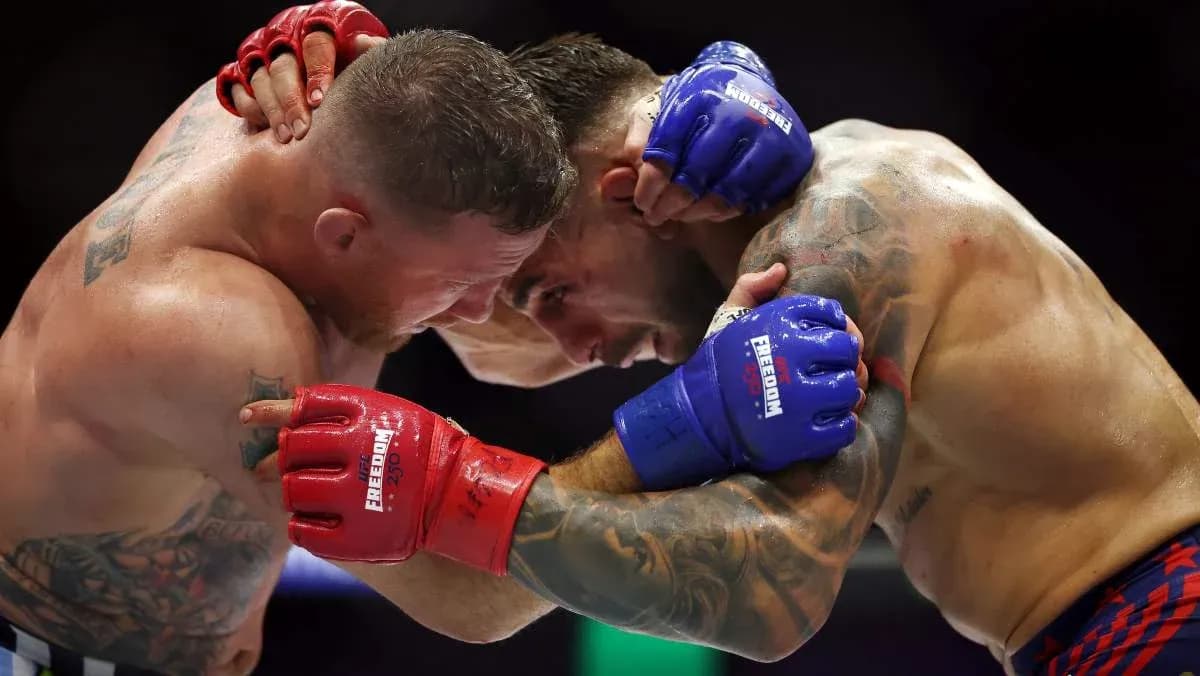
By the halfway mark, Cortes looked to be cruising. His volume, his footwork, and his ring generalship had him seemingly several steps ahead. Magsayo was game, throwing back with fast hands and landing enough to stay honest, but he couldn’t find a consistent rhythm. Too often he ended up bent at the waist, head buried in Cortes’ chest, stumbling to a knee in those odd, non-knockdown moments that frustrated everyone — Cortes, his corner, and the crowd.
The referee repeatedly warned Magsayo about ducking too low. It didn’t stop. Each time he dipped, Cortes’ right hand found him. Each time he tried to reset, Cortes was already there, jabbing, stepping around, racking up rounds.
On many unofficial cards, Cortes was building a healthy lead.
Momentum swings late
Then the fight changed.
In Round 8, Magsayo finally began to look like the fighter who once sat near the top of the featherweight division. He started to string his punches together, found a home for the uppercut, and refused to be bullied backward. Cortes still landed the right hand, but the exchanges were no longer one-way traffic.
Magsayo fought like a man who knew he was behind. He took more chances, committed to his combinations, and dug to the body with real intent. The awkward duck-ins didn’t disappear, yet his offense began to overshadow the clumsy moments.
Round 9 brought the clearest surge from the Filipino. He mixed his attack beautifully — body, head, then up the middle with the uppercut. A left hook appeared to trouble Cortes, and for the first time, the Las Vegas fighter looked slightly shaken, forced to respect the incoming fire rather than simply walk through it.
The arena felt the shift. Cortes, who had spent much of the fight in control, suddenly had to think his way through exchanges instead of simply imposing himself.
The finish and the fallout
The 10th and final round opened with Magsayo still on the front foot. Cortes clipped him with a right, but Magsayo answered with a flurry and continued to press. Cortes dug to the body, steady behind his jab, trying to reassert order. Magsayo complained briefly about a low blow, then went straight back to work downstairs.
The closing minute didn’t bring the wild exchanges the fight seemed to promise. No desperate last stand, no knockdown, no dramatic swing. Both men traded in pockets, both landed, but neither found the definitive statement.
On MMA Fighting’s unofficial card, Cortes had done enough to edge it 97-93. The judges at ringside saw it the other way: 97-93, three times, for Magsayo.
It was a verdict that will divide opinion. Cortes had the early control, the cleaner structure, and the visual dominance in the middle rounds. Magsayo had the late surge, the eye-catching uppercuts, and, crucially, the scorecards.
The official record will show a unanimous decision win for Mark Magsayo. The memory of this one, though, will be less tidy — a night of right hands, near-knockdowns that weren’t, and a hometown fighter walking away on the wrong end of a result he thought he’d secured.
For Magsayo, it’s a significant step back toward the top of a crowded field. For Cortes, the question now is simple and brutal: how do you rebuild when you’ve just boxed the kind of fight that usually gets you the nod, and still walked out with nothing?