Marta Eyes Historic Farewell at 2027 Women’s World Cup in Brazil
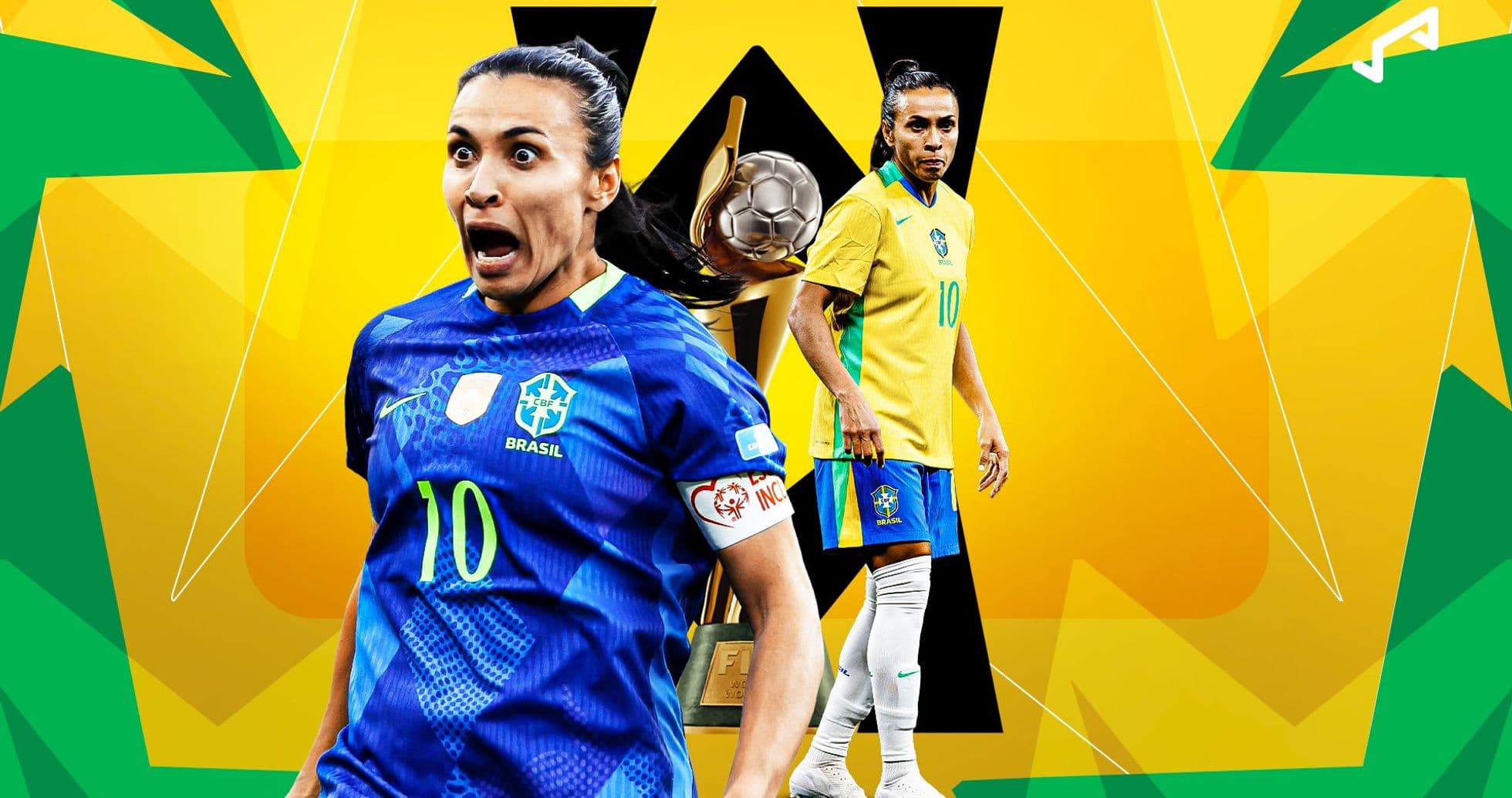
Known as the greatest in women’s football, Marta is preparing to lead Brazil one last time during the 2027 Women’s World Cup, held on home soil. At 41 years old when the tournament starts, she aims to inspire her nation and leave a lasting legacy.
The Unmatched Legend of Women’s Football
Almost every sport has debates about the greatest players ever. In men’s football, names like Lionel Messi, Cristiano Ronaldo, Diego Maradona, and Pelé often come up. On the women’s side, though, Marta stands apart. The Brazilian icon, once called "Pelé in a skirt" by Pelé himself, is widely regarded as the undisputed GOAT.
Her brilliance has shone for over two decades, defining a style that captivated fans before women’s football gained its current popularity. She’s lifted trophies like the Champions League and Copa America, but most notably holds the record as the all-time top goal-scorer in Women’s World Cup history. What still eludes her is a World Cup winners’ medal.
After announcing retirement following the 2024 Olympics—where Brazil narrowly lost the gold medal match to the United States—she reversed course to play a key role in Brazil’s recent Copa America victory. Hosting the 2027 World Cup offers her one more chance to claim the crown on home ground.
A Golden Generation Without the Crown
In 2007, Marta was the standout player as Brazil reached the Women’s World Cup final. That team featured stars such as Cristiane, who placed third twice for FIFA World Player of the Year; Formiga, the world’s most capped female footballer; Pretinha, known for clutch goals; and Rosana, who helped Lyon secure a Champions League title.
Despite this talent, Brazil fell short, losing 2-0 to Germany in the final. Marta then won four more consecutive FIFA World Player of the Year awards, cementing her status. Yet, that golden era never secured a major international title.
Challenges Off the Pitch
The Brazilian Football Confederation (CBF) didn’t provide enough support or funding when it mattered most. Rosana reflected that investment arrived too late, after women’s football had to prove itself through results rather than receive early backing. Brazil dominated South America, winning nine of ten Copa America Femenina tournaments since 1991, but global success remained elusive.
With silver medals at the 2004 and 2008 Olympics, Brazil’s golden generation became perhaps the strongest women’s team never to win a major championship. Rosana lamented how lack of investment limited their chances despite their skill and dedication.
Club Success and Individual Accolades
Marta’s club career took her to Sweden’s Umeå IK in 2004, where she won four straight Damallsvenskan titles and the UEFA Women’s Cup. Her coach praised her unique approach to the game, highlighting how she broke the mold to win matches.
She later played in the United States, securing two national titles, and returned to Sweden, where she gained citizenship and mastered the language. Alongside team triumphs, Marta collected many personal honors including Golden Boots, Player of the Year awards, and Best XI nominations.
International Setbacks
At the 2011 Women’s World Cup, Brazil exited in the quarterfinals after a penalty shootout loss to the United States. The following year at the Olympics, Japan ended their run in the same round. In 2015, Brazil was eliminated in the round of 16 by Australia, raising concerns. They made the semifinals at the 2016 Olympics on home soil but missed out on a medal again.
An Emotional Moment in 2019
The 2019 Women’s World Cup felt like the end of an era. Marta, then 33, gave an emotional speech after Brazil’s round of 16 loss to France, urging younger players to value women’s football and fight for its survival. Tears in her eyes, she acknowledged that legends like herself, Formiga, and Cristiane wouldn’t last forever.
“Women’s football depends on you to survive. Think about it, value it more. We’re asking for support. You have to cry at the beginning and smile at the end.” – Marta
One More Chance to Shine
Despite expectations that 2019 might be her last World Cup, Marta continued. After a disappointing group stage exit in the 2023 tournament, she showed resilience. At 38, she led Orlando Pride to NWSL Shield and Championship titles while helping Brazil reach the Olympic gold medal match, their best showing in years.
Now, with only Marta left from the 2007 squad, she carries the hopes of a new generation capable of challenging for the World Cup. Wearing the captain’s armband, she will guide Brazil on home soil in 2027, aiming to finally bring the trophy to her country.