Mauricio Pochettino Takes Charge of Manchester United
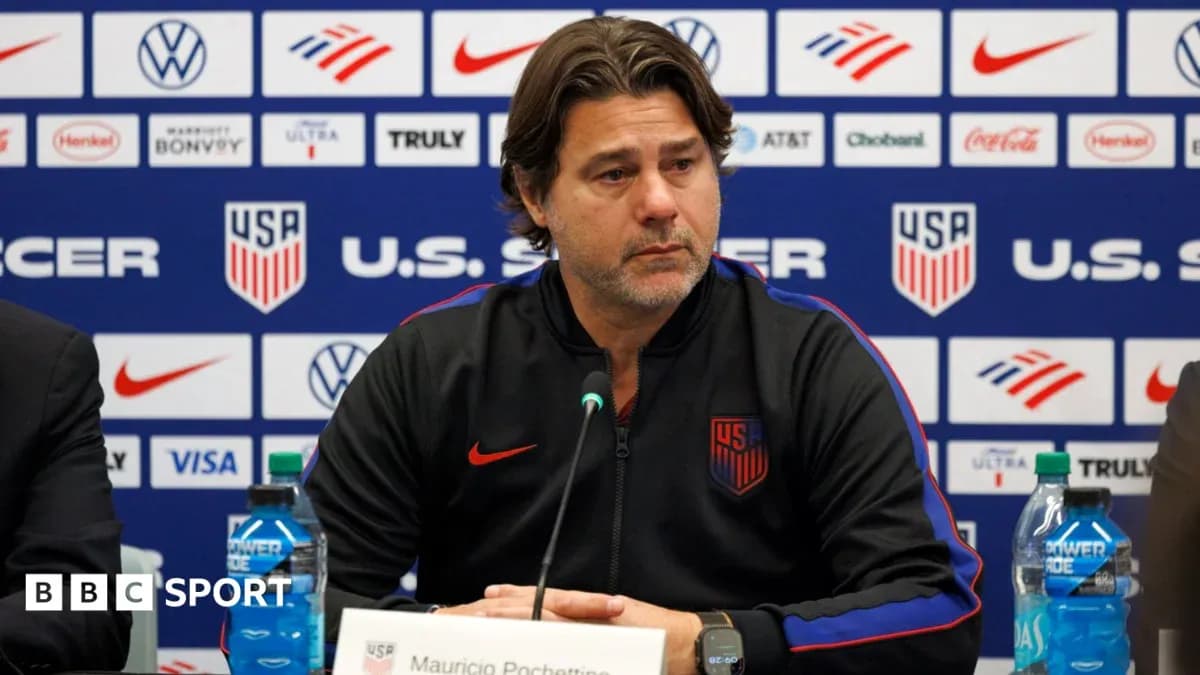
Mauricio Pochettino wiped away tears as he tried to explain it. Leaving the USA national team. Walking into Old Trafford. Calling it “one of the most difficult” decisions of his career.
Behind the emotion sits a ruthlessly ambitious move – from international stability to the chaos and possibility of Manchester United.
A Dream He Couldn’t Turn Down
United confirmed Pochettino as Michael Carrick’s successor on Friday, tying the 54-year-old to a two-and-a-half-year contract after triggering a release clause in the region of £7.4m and agreeing further compensation for his backroom staff.
He had only just committed his future to the USA in the summer, signing a new four-year deal. On paper, he was the cornerstone of a long-term project. In reality, one club still had the power to change everything.
“It’s difficult to talk now,” he admitted, visibly emotional at his first news conference after the move was confirmed. “I’m a very emotional guy. It’s a very sad decision. But we are professionals and we are trying to make our dreams come true.”
The dream, in this case, wears red and plays under the glare of Old Trafford’s floodlights.
Asked why he had signed a fresh contract with the national team only to walk away months later, Pochettino didn’t bother to dress it up.
“I never said I wanted to go back but they know there aren’t too many opportunities that happen in your career like Manchester United,” he said. “When it arrives, it’s difficult to turn down.”
He will lead the USA in their fixtures against Haiti on 14 and 18 November, then cross the Atlantic to take charge of a club that has been courting him, and repeatedly rejecting him, for the best part of a decade.
Walking Into a Crisis
If this is a dream job, it comes wrapped in a nightmare start.
Carrick was dismissed on Thursday after overseeing United’s worst opening to a domestic campaign in 40 years. The club sit 18th in the Premier League, one point off the bottom, with a solitary win from 10 league matches. Only Sunderland are beneath them.
That is the team Pochettino inherits. Fragile. Drained of confidence. A giant in name, a relegation candidate in the table.
His first assignment could hardly be more unforgiving: Liverpool away on 22 November. Anfield. A new manager. A squad under scrutiny from every angle. The stage is brutal, and perfect.
No one at United can pretend this is a gentle reset. This is surgery on a moving patient.
A Courtship Finally Consummated
Pochettino’s arrival feels inevitable only because it has been delayed so often.
His stock soared during an 18-month spell at Southampton, where he drove the Saints to an eighth-place finish in his only full season on the south coast. Tottenham moved quickly in 2014 to secure one of Europe’s brightest young coaches, and north London became the platform that propelled him into the elite.
Before Pochettino, Spurs had reached the Premier League’s top four just twice in 22 years. Under him, they did it four times in five full seasons. He rebuilt the club’s identity, sharpened its mentality and carried them to a Champions League final.
That was when United first hovered with real intent.
Two years into his Spurs tenure, the Argentine sat down for dinner with Sir Alex Ferguson in Mayfair. The timing was no coincidence: Louis van Gaal’s future was under review, and Pochettino’s name was circling the boardroom. Yet when the decision came, United chose Jose Mourinho.
The pattern repeated. When Mourinho left in 2018, Ole Gunnar Solskjaer’s electric interim run forced the board’s hand. The Norwegian got the job permanently; Pochettino watched from afar.
In 2022, it was framed as a straight shootout: Pochettino versus Erik ten Hag. The Dutchman, fresh from leading Ajax to a Champions League semi-final in 2019 – where his side were dramatically knocked out by Pochettino’s Tottenham – won that battle too.
Even after his Chelsea exit in 2024, when United again held talks, the club turned instead to Ruben Amorim from Sporting to replace Ten Hag.
Four times the door seemed to open. Four times it slammed shut. Now, finally, United have handed him the keys.
Power, Blame and a Club Under Fire
This appointment does not sit in isolation. It lands in the middle of a power structure under intense examination.
United have made it known that Pochettino is the only coach they spoke to directly about the role this time. Names like Eddie Howe, Julian Nagelsmann and Antonio Conte were floated in the aftermath of that dismal 3-0 home defeat by Bournemouth three weeks ago, but there was no formal approach. The club wanted Pochettino, and only Pochettino.
Off the pitch, questions swirl. United officials have felt compelled to stress privately that any suggestion of a split between the Glazer family and Sir Jim Ratcliffe is “categorically false”. Earlier this week, a mechanism emerged by which the Glazers could, in theory, reclaim control of football operations from Ratcliffe. There has been no Stock Exchange announcement that such a shift has taken place, only the previous statement from December 2023 confirming Ratcliffe had been handed that control when he agreed to buy into the club.
The fanbase is unconvinced by almost everyone above the dugout. Sporting director Jason Wilcox is a lightning rod for criticism over recruitment, but the budget and the broader direction are set higher up. United insist there is unanimity in the hierarchy, a united front behind the new head coach.
The league table says something else. Eighteenth place. Three managers sacked in three seasons. Owners under siege from their own supporters.
Pochettino steps into all of this with clear eyes. He leaves a federation that backed him, that he thanked through tears, to take on a job that could either restore a fallen institution or drag another big name into its recent cycle of failure.
His emotions told one story. His choice tells another.
Now comes the only verdict that matters: what he can make of Manchester United when the whistle blows at Anfield.