
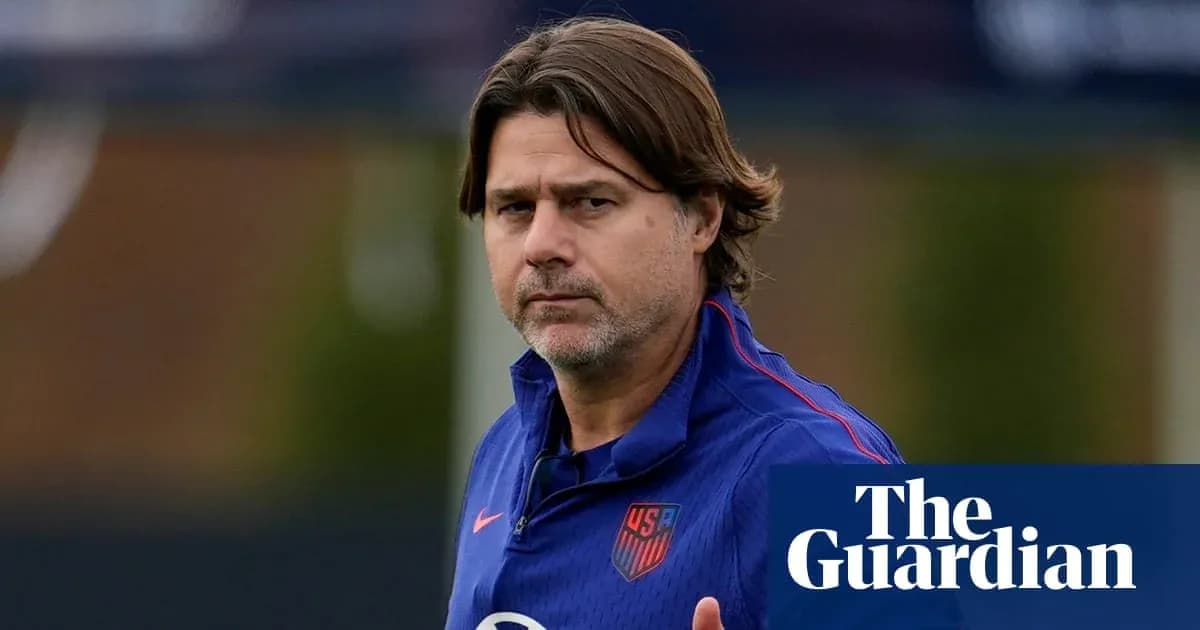
Mauricio Pochettino Takes Over at Manchester United Amid Crisis
Manchester United have finally made their move. Mauricio Pochettino will leave the US men’s national team and take over at Old Trafford, walking straight into a crisis and straight into Anfield.
The Argentinian has signed a two-and-a-half-year deal to replace Michael Carrick, who was sacked on Thursday after overseeing United’s worst start to a season in 40 years. One win in 11 league games. In the relegation zone. A club built on domination now staring at survival maths before winter.
Pochettino will first finish his work with the US, leading them through two Concacaf Nations League fixtures on Saturday and Tuesday, the second against Haiti. Only when that job is done will he cross the Atlantic. His first day at Carrington is expected to be Thursday, with his debut on the United touchline coming at Liverpool next Sunday. No soft launch. No gentle bedding-in. Liverpool away.
United pick their man – and pay for him
United’s hierarchy had long accepted Carrick’s position was untenable. Once the decision was made, the search did not become a sweepstake. They went straight for Pochettino.
Eddie Howe and Julian Nagelsmann were noted as potential options, but they never truly entered the race. United opened talks only with Pochettino and quickly made him their first and only choice. The leadership group at the club settled on him early and saw the appointment signed off this week by Sir Jim Ratcliffe.
They were sold on more than just his CV. United believe Pochettino’s personality, his presence in a dressing room, and his insistence on a defined playing identity can drag the club out of its current drift. After the gamble on a relative novice in Carrick, they wanted someone battle-hardened: a coach who has built projects at Southampton and Tottenham, and survived the pressure of Paris Saint-Germain and Chelsea.
To get him, they had to pay. Pochettino signed a new four-year deal with US Soccer as recently as August, a contract that handed him sweeping influence over youth development and the broader direction of the men’s programme. United have paid about $10m (£7.5m) in compensation to the US federation, plus an additional fee to bring in his long-time assistants.
Back in Manchester, players not on international duty were told on Thursday they did not need to return to training until next week, a pause that now doubles as a reset. When they walk back into Carrington, a different voice will be waiting.
A complicated legacy in the US
Pochettino leaves the United States job with a mixed but undeniably eventful record. Hired in September 2024 to guide the national team into a home World Cup, he departs having gone 21-12-2 and taken the US to the last 16. On paper, those numbers stand up well against his predecessors.
On the pitch, there were flashes of something bigger. He oversaw what many in the US consider the best group stage in the nation’s World Cup history, highlighted by a ruthless 4-1 demolition of Paraguay that showcased the intensity and attacking cohesion he demands from his teams.
Then came Belgium. A 4-1 defeat in the last 16 that did more than just end a tournament run. The match was overshadowed by the handling of a red card controversy involving Folarin Balogun, a saga that damaged trust in both the federation and the coach. The momentum of that group stage vanished in one chaotic evening.
There were other bruises. A shocking fourth-place finish in the 2024-25 Nations League. A painful loss to Mexico in the 2025 Gold Cup final. Heavy defeats in friendlies against elite opposition that exposed the gap the US still need to close. Behind the scenes, Pochettino did not always find harmony with his stars. His relationship with Milan midfielder Christian Pulisic never fully clicked, and Juventus midfielder Weston McKennie drifted in and out of the squad.
Yet he does not leave scorched earth. Across his tenure, 75 players earned at least one cap. After signing his contract extension, he used a four-match international window to blend more than a dozen newcomers into an undefeated run, offering a glimpse of a deeper, more competitive player pool.
On Friday, he said farewell.
“The opportunity to represent the USA crest was one of the greatest honours of my career. We are so grateful to the players for their commitment, to the fans for their belief, and to the federation for always supporting our staff and creating the opportunities to impact the culture of soccer in this great country,” Pochettino said.
“We want to thank Cindy Parlow Cone, JT Batson and Dan Helfrich for their partnership and incredible working relationships throughout our time here. There is tremendous talent in the US player pool from the youth teams through to the senior team, and it’s one of the reasons we have so much belief for the future of US Soccer. You will always have a special place in our hearts, and we will be supporting the teams whenever they step on the field.”
Steve Cherundolo, currently in charge of the US U-23s, will lead the senior team’s December camp, which is expected to feature a roster largely drawn from Major League Soccer.
A fractured United dressing room awaits
What Pochettino walks into at Old Trafford is not just a tactical mess, but a fragile ecosystem. United’s slide has not been quiet. Results have been poor, performances worse, and the dressing room increasingly restless.
At the heart of it stands Bruno Fernandes. The captain has turned down a second offer of a new contract, though the club remain confident they can persuade him to stay. His current deal runs until the end of the season, with United holding an option for a further year. If that clause is not activated, Fernandes will be free to speak to overseas clubs in January. Saudi Arabia and Galatasaray have both shown interest in the past.
Last season, Fernandes was the creative engine of a far more coherent United side, winning the Professional Footballers’ Association men’s player of the year award after a campaign in which he delivered a record-breaking 21 assists and helped the club to third place in the league. That version of Fernandes has felt distant this term. His form has dipped, his influence has waned, and his frustration has boiled over.
After last month’s Champions League defeat by Como, he publicly criticised Carrick’s tactics. It was a pointed moment: the captain questioning the manager’s approach in the middle of a slump. Now Pochettino must rebuild that relationship, re-energise his most important playmaker and convince him that United is still the right stage for the final prime years of his career.
From crest to crest: culture as the battleground
United’s decision-makers were drawn to Pochettino’s reputation as a culture builder. At Tottenham he forged a tight, ambitious group that punched above its financial weight and reached a Champions League final. At Southampton he transformed a talented but unproven squad into one of the most coherent sides in the league.
This, more than any tactical tweak, is what United crave. The club has lurched from project to project, manager to manager, without a sustained identity. They want a dressing room that believes in something again.
Pochettino’s time with the US offers clues. He was given broad control over youth pathways and long-term planning, and he used that power to cap 75 players and push the system to think beyond the next tournament. That appetite for development will now be tested in a squad that has lost its way, with big names out of form and younger players unsure of their place.
There will be no grace period. A fanbase worn down by false dawns will not settle for warm words or vague promises. They will look to Anfield, to that first game, to see whether this is just another reset or the start of something sturdier.
Pochettino has swapped one crest for another. The USA badge, with its promise of a distant peak on home soil, is gone. In its place, the red of Manchester United, a club that used to live at the summit and now spends its weekends staring up.
Liverpool away is not just his first test. It is his new reality.





