
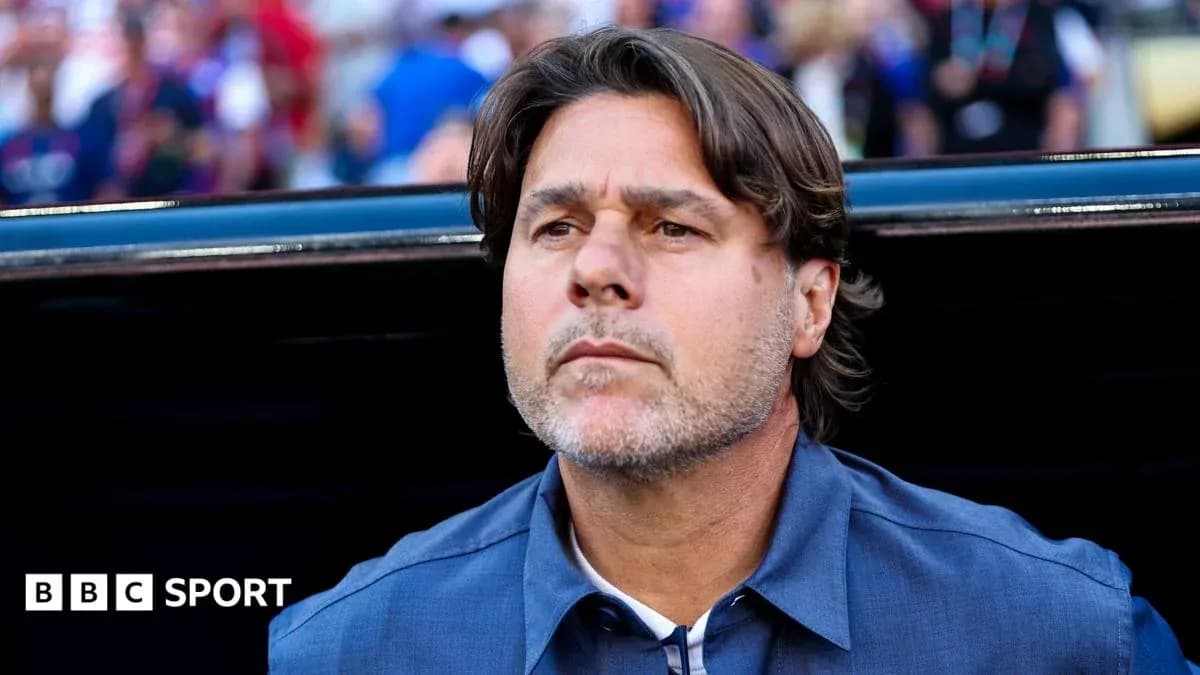
Mauricio Pochettino: New Manchester United Head Coach
Mauricio Pochettino is living out football’s version of a long-haul red-eye: one job barely landing before the next one takes off.
Confirmed as Manchester United’s new head coach, the Argentinian will still front up for the USA’s next two Concacaf Nations League games against Haiti before he swaps the national-team tracksuit for the blazer at Old Trafford. On Friday, at around 14:15 GMT, he is due to face the media in a pre-match news conference.
Whether he leans into questions about United or keeps his answers welded to the USA’s camp will set the tone for this unusual handover. He is, effectively, managing one team while already belonging to another.
United’s revolving door
The scale of the challenge waiting for him in Manchester is written in one stark Opta statistic.
Pochettino will be the 12th different person to take charge of Manchester United for a Premier League game since the 2013-14 season. Only Chelsea, with 14, and Crystal Palace, with 13 (pending Pierre Sage’s replacement), have churned through more in that period.
This is not a job that forgives missteps. It chews through reputations and philosophies alike. Pochettino, renowned for his high-intensity pressing and development of young players, walks into a role that has tested almost every profile of manager the modern game can offer.
United have confirmed that he will officially become men’s head coach on 18 November, after an agreement with the US Soccer Federation to release him and his staff once their current camp concludes. The club’s statement leans heavily on his track record: Espanyol, Southampton, Tottenham, Paris St-Germain, Chelsea, and now the USA. Every stop has carried the same imprint – intensity, structure, and a willingness to elevate individuals.
A brutal opening chapter at Old Trafford
There will be no gentle easing-in period. Pochettino’s first five games as United boss are laced with jeopardy.
His debut is set for Anfield, against Liverpool, a week on Sunday. Few fixtures expose a new United manager more ruthlessly. From there, United head to Portugal to face Sporting in the Champions League, before he finally walks out at Old Trafford for his first home game in the Premier League against Brentford on 28 November.
A baptism of fire, yes. But also a ready-made stage for a coach who has built his reputation on shaping teams quickly and demanding buy-in from day one.
The USA chapter: short, sharp, and significant
If United is the next epic, the USA stint has been a concentrated, impactful novella.
Pochettino took charge of the US men’s national team in September 2024. In 35 matches, his side won 21 and lost 12. The numbers are solid; the milestones more telling. He led the team to the final of the 2025 Concacaf Gold Cup and steered them to the round of 16 at a home World Cup last summer, when the USA were co-hosts.
US Soccer’s leadership is in no doubt about the footprint he leaves behind. Chief executive and secretary general JT Batson described how Pochettino’s influence extended beyond the touchline: raising standards, strengthening the culture, and building clearer connections from youth national teams to the senior side. Those changes, Batson said, are now “embedded” in the federation’s daily work.
Pochettino, for his part, signed off with clear affection. In the US Soccer statement, he called the chance to represent the USA crest “one of the greatest honours” of his career, thanking players, fans and the federation for their commitment and support. He highlighted the “tremendous talent” running through the US player pool from youth to senior level, and closed with a promise: the USA “will always have a special place” in his heart, and he will be supporting the teams whenever they step onto the field.
The search to replace him
His departure leaves US Soccer with a crucial decision.
For the December men’s camp, Under-23 coach Steve Cherundolo will lead the team, providing short-term continuity while the federation starts the process of appointing a permanent successor. The search will not be confined to familiar faces.
Emma Hayes, head coach of the US women’s national team and one of the most respected English coaches of her generation, will be involved in the process, alongside former USA and Sheffield Wednesday defender Oguchi Onyewu. US Soccer has made it clear it will consider candidates from a broad range of backgrounds, drawing on input from leaders across both the federation and the wider global game.
The message is obvious: this is not just a replacement exercise. It is a chance to build on the framework Pochettino helped install.
A manager built for the spotlight
For United, this appointment is both bold and logical.
Pochettino’s coaching journey has been a steady climb through increasingly unforgiving environments. At Espanyol, he stabilised a struggling side. At Southampton, he delivered a club-record Premier League points tally in 2014. At Tottenham, he turned a nearly-club into a Champions League regular, qualifying for four consecutive seasons and reaching the 2019 final.
At PSG, he collected trophies – Ligue 1, the Coupe de France, the Trophee des Champions – in a dressing room stacked with egos and expectations. Chelsea brought a different type of chaos, yet again he was tasked with welding together a squad in flux. With the USA, he entered the international arena and proved he could translate his ideas to the rhythms of national-team football, guiding a young group through a home World Cup and into the knockout rounds.
Now comes Manchester United, a club still wrestling with its identity more than a decade after Sir Alex Ferguson stepped down. The pressure will be relentless, the scrutiny daily, the margin for error slim.
For Pochettino, it is the job his career has been circling for years. For United, it is another roll of the dice in a position that has become the defining question of their modern era.
The next answers will not come in a boardroom or a press release. They will come at Anfield, in Lisbon, under the floodlights at Old Trafford – where a club, and a manager, both search for the version of themselves they believe still exists.





