
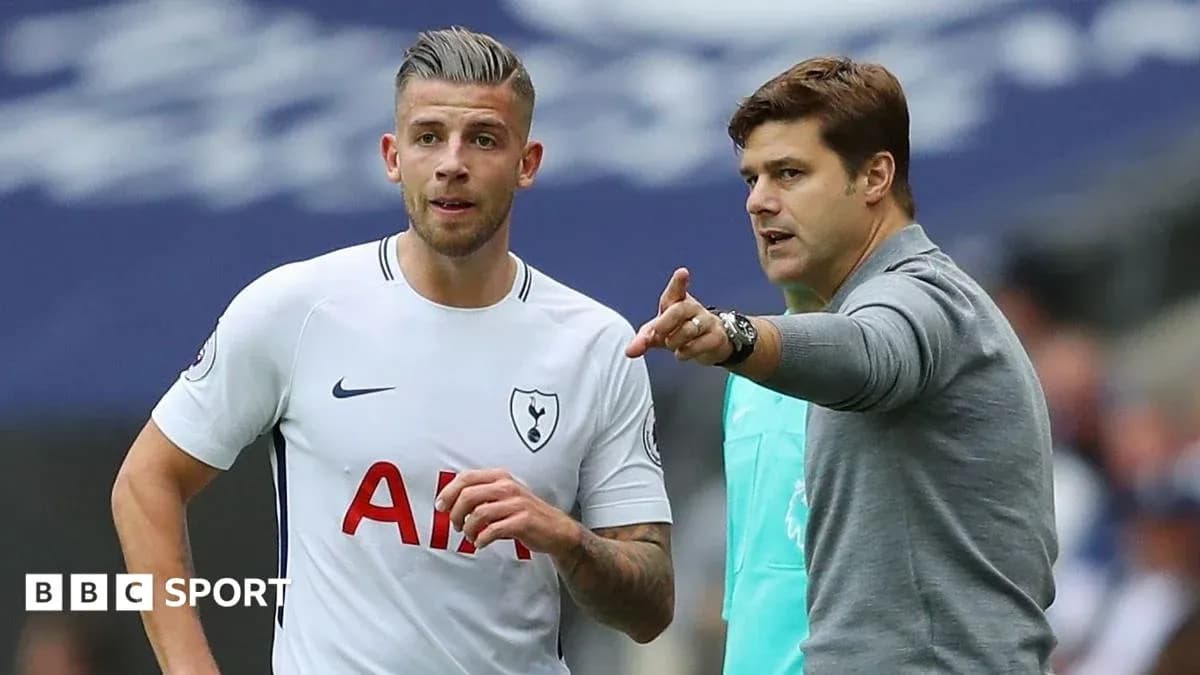
Mauricio Pochettino Takes Charge at Manchester United
Old Trafford is about to get a shock to the system.
Manchester United have handed the keys of the club to Mauricio Pochettino, confirming on Friday that the Argentine will take over from Michael Carrick on 18 November on a deal running until June 2029. With it comes a clear message to a drifting squad: the comfort zone is closed.
This is not a manager who eases his way into a job. He storms the training ground first.
‘Brutal’ means brutal
Ask Toby Alderweireld. The former Tottenham defender spent four years under Pochettino at Spurs, a period that took the club to a Champions League final and a second-place finish in the Premier League. He still winces at the memory of those early weeks.
“Pre-season was brutal,” he recalls. Not demanding. Not tough. Brutal.
Pochettino’s football has always been built on one non-negotiable: running. Relentless, repeated, high-intensity running. Pressing high, defending on the front foot, squeezing up with a daring line and then going again. And again.
That is exactly where United have been found wanting. This season they sit in the bottom five in the league for distance covered and for high-intensity runs. The numbers tell a story: they don’t run enough. Pochettino’s arrival rips that chapter out of the book.
“The way he wants to play – on the front foot, putting people under pressure, a high line, very dynamic play – you need to run,” Alderweireld says. “The basic is to be fit.”
At Carrington, players are about to discover what “fit” really means.
The main man, one way only
Behind the stopwatch and the running lanes sits something even more uncompromising: Pochettino’s authority.
“He is very approachable,” Alderweireld explains, “but you need to follow his plan. If you don't follow his plan, you go on the side and you're not coming back any more.”
There is no grey area here. No half-in, half-out. At Spurs, that clarity forged a dressing room that knew exactly where it stood. At United, a club that has often felt riven by competing egos and mixed messages, it could be the jolt they have lacked.
“You need to think about team, team, team. If you're thinking about yourself, you're gone,” Alderweireld says. Pochettino will listen, he will talk, he will empathise – “I understand and you can talk to me about it” – but the hierarchy never moves: “the team is number one”.
Those who cannot live with that will not linger. “He's straightforward, has his own ideas and maybe you agree with them or don't, that's up to you. But you need to follow him,” Alderweireld adds. “That's something Manchester United need – a big character, everyone in the same direction, following the plan and if not, no problem, you can go. He's the main man.”
United have cycled through philosophies and personalities since Sir Alex Ferguson retired. Pochettino brings something less flexible but more coherent: his way, or the highway.
A control freak with a cause
The new manager’s grip will extend far beyond the training pitch. At Spurs, nothing escaped his gaze.
“At Spurs there was coaching staff but he will be there. He knows everything,” Alderweireld says. “If he's not there, he's looking at video and data. He knows everything about the players on and off the pitch – the players will be watched.”
For some, that will feel intrusive. For Pochettino, it is simply logical. “He is, in a positive way, a control freak because he says your body is your weapon and it needs to be ready to perform.”
United’s players, long accused of drifting through games and seasons, will find that every sprint, every lapse, every choice is logged. Standards will not be suggested; they will be enforced.
The intensity will not be reserved for the summer either. “This is every day at the training ground, it's 100% – that's what he asks, what he demands,” Alderweireld says. “It will be a big difference for the players and they're going to see results there straight away.”
The message is blunt: work, or watch.
Us against the world
Pochettino’s methods are not only physical. He builds a siege.
“He's a very smart man, knows how to talk to the press and what to say,” Alderweireld notes. At Spurs he wrapped his squad in an “us against the world” mentality, a tight inner circle that fed off criticism and doubt. “We are getting fit, we are together as a team. It doesn't matter what people say, let's work together and get results together.”
Old Trafford, with its glare, its noise and its constant debate, is fertile ground for that narrative. United, under Pochettino, will be invited to ignore the commentary and live inside the group. The outside world becomes a backdrop. The work becomes everything.
When that message lands, it can turn games on their head.
One half-time, one demand
Alderweireld still carries the clearest example. Amsterdam, Champions League semi-final, 2019. Tottenham 3-0 down on aggregate to Ajax, outplayed and out of ideas. Season over, it seemed.
Pochettino did not reach for the tactics board.
“In the Champions League semi-final, we were 3-0 down and he didn't have a tactical half-time talk,” Alderweireld remembers. “He just said 'you're going to be physical, you're going to fight, you only need one goal to be back in the game, believe that everything is possible'.”
No intricate adjustments. Just a challenge. Fight. Run. Believe.
“That was a big moment because we were nowhere near Ajax at that time, especially in that game,” Alderweireld says. “But we changed everything by intensity, by duels. I remember the long ball to [Fernando] Llorente and just fighting and asking 'how badly do you want it?' It changed from that moment.”
Tottenham, powered by that raw surge of belief and effort, completed one of the great European comebacks. For Pochettino, it was vindication: mentality and physicality, fused, can bend football matches to your will.
Now he walks into a Manchester United side accused of lacking both.
The contract runs to 2029. The real question is simpler, and it starts on day one at Carrington: who in this squad is ready to run with him – and who will find themselves on the sideline, watching a new United take shape without them?





